




 Inglês (pdf)
 Artigo em XML
 Tradução automática
 Enviar este artigo por email
 Permalink

1 Introduction
Internally displaced persons (IDPs) often face numerous challenges while adapting to new living conditions, especially in the context of war. This study examines the relationship between adaptation and foreign language learning conditions and social-emotional skills. Adapting foreign language courses, particularly English, to the specific needs of IDPs is an important step toward improving their situation and facilitating successful integration. IDPs face numerous challenges while adapting to new living conditions, especially in the context of conflict, which is often accompanied by stress, loss of property, and social support. One of the critical needs that arise in such situations is the necessity of learning a foreign language to gain access to Education, employment, and other essential resources (French, Mooney, 2018; Kelcey, Guven, Burde, 2022).
Language Education is a key element in ensuring the successful integration of IDPs into a new society. Learning English allows IDPs to expand their opportunities in various areas of life. Knowledge of English provides access to international educational programs, courses, and seminars, which contribute to professional growth and skill enhancement. English is one of the most widely spoken languages in business. Proficiency in English broadens employment opportunities both locally and internationally, especially in large corporations and international organizations. The ability to read and understand English provides access to a wide range of informational resources, including scientific articles, technical documentation, and news from around the world.
Considering the psychological difficulties faced by IDPs, such as PTSD, anxiety, and depression, learning English can also have a therapeutic effect, promoting psychological rehabilitation and boosting self-esteem. However, traditional foreign language courses often do not take into account the specific needs of this population, which reduces their effectiveness. According to research, effective language Education for IDPs must address their social and cultural needs as well as provide support in overcoming psychological barriers related to traumatic experiences (Kaplan et al., 2016; Papadopoulos, 2020; Greenberg, 2023). IDPs often face cultural barriers and social isolation, which can complicate the learning and adaptation process. Therefore, foreign language courses should be designed to account for these aspects and offer comprehensive support to participants.
The psychological difficulties faced by IDPs include post-traumatic stress disorder (PTSD), anxiety, and depression. These conditions can significantly impact their ability to learn and adapt. It is known that PTSD has three stages, and anxiety and depression are components of PTSD that can vary in their manifestations and severity across different stages. Treatment for PTSD depends on its type and includes crisis psychology, neurology, psychoneurology, psychotherapy, and psychiatry. PTSD is a serious consequence of war, and its impact should not be underestimated (Muzychko, 2018).
Learning a foreign language requires significant concentration, motivation, and cognitive effort. Psychological disorders such as PTSD, anxiety, and depression can significantly diminish learning abilities. For example, PTSD can lead to difficulties with attention, impaired memory, and reduced motivation, all of which directly affect the ability to acquire new information. Anxiety and depression can also create barriers to learning. Anxiety can lead to excessive focus on potential mistakes and failures, which hinders effective material absorption. Depression, on the other hand, is often accompanied by feelings of hopelessness and a loss of interest in activities, which also negatively impacts the learning process (Derevyanko, 2017).
It is important to recognize that effective language learning for IDPs suffering from PTSD, anxiety, or depression requires not only pedagogical efforts but also comprehensive psychological support. Psychotherapy, crisis psychology, and other forms of psychosocial assistance can help mitigate the negative impact of these disorders on learning, creating more favorable conditions for cognitive development and adaptation. Therefore, it is important that language courses incorporate elements of psychological support and social-emotional learning (SEL), which can help IDPs manage stress and develop the necessary skills for effective communication (Pashmdarfard, Azad, 2020; Blyskun, 2020; Seff et al., 2024).
Given these challenges, it is essential to develop a comprehensive approach to Education that incorporates not only linguistic but also socio-emotional aspects. SEL plays a crucial role in this process, promoting the development of the skills necessary for effective communication and stress management (Mollaoğlu, Yanmış, 2015; Aslan, Çetkin, Demir, 2021). Courses that integrate language Education with SEL elements can significantly improve learning outcomes and support IDPs in adapting to new living conditions.
The analysis of IDPs’ needs in language Education reveals that they face a range of challenges, such as limited language proficiency, cultural barriers, psychological difficulties, and social isolation (Lubi, 2019; Livneh, 2021). In light of these issues, foreign language courses should be designed to address these needs and provide comprehensive support to participants. SEL, as part of these courses, can help IDPs develop the essential skills for effective communication, managing stress, and establishing positive social connections (Ge et al., 2021; Thomas, 2022).
Thus, our study aims to fill the gap in the literature related to the adaptation of foreign language courses for IDPs and to provide recommendations for educators and course organizers working with this population.
2 Materials and Methods
This cross-sectional correlational study was conducted among IDPs participating in foreign language courses in a conflict setting. The study was conducted at the Cherkasy Regional Center for Social Services, which offers English language courses for IDPs.
The minimum sample size for the study was calculated to be 200 participants using G*Power 3.1.9.7 software (80% power, α = 0.05 significance level, d = 0.15 effect size). In total, 250 IDPs currently residing in the Cherkasy region1 who agreed to participate in the study at the Cherkasy Regional Center for Social Services2 were recruited. However, individuals who were unable to complete the courses (n = 20) and those who could not provide sufficient information for analysis (n = 10) were excluded. Therefore, data from 220 individuals were analyzed.
The selection of study participants was based on the following criteria:
Age: Participants had to be over 18 years old.
IDP Status: Participants had to be IDPs currently residing in the Cherkasy region.
Consent to Participate: All participants voluntarily agreed to participate in the study.
Course Completion: Participants had to complete the courses offered by the Cherkasy Regional Center for Social Services.
Provision of Sufficient Information: Participants had to provide sufficient information for data analysis.
These selection criteria were established to ensure the representativeness of the sample and the reliability of the results obtained.
Before data collection, all participants were informed about the purpose and scope of the study and signed informed consent forms. Data were collected through personal interviews using the following questionnaires: a demographic information form, the Adaptation to Conflict Conditions Scale (ACIS), the Language Competence Scale (LCS), and the Social-emotional learning Assessment (SELS). To ensure the objectivity and accuracy of the study results, an initial language proficiency test was conducted among the participants at the beginning of the language courses. This testing included an assessment of their baseline language proficiency and determination of their initial skills and knowledge. The data obtained from this initial testing served as control points for subsequent measurements and analysis of participants’ progress throughout the course.
The form included questions about age, sex, Education level, marital status, employment status, income level, participation in educational courses, and experience in learning foreign languages. Participants also self-reported their language proficiency level and the main difficulties they faced in learning a foreign language. The ACIS was developed to assess the level of adaptation of IDPs to conflict conditions. The scale consists of 20 questions covering physical, social, and psychological adaptation. The maximum score on the scale is 100, while the minimum score is 20. Higher scores indicate better adaptation to conflict conditions. In our study, the Cronbach’s alpha value for this scale was 0.85.
The LCS was developed to assess the level of foreign language proficiency among IDPs. The scale includes 15 questions evaluating various aspects of language competence, such as listening, speaking, reading, and writing. The maximum score on the scale is 75, while the minimum score is 15. Higher scores indicate a higher level of language proficiency. The SELS was used to evaluate the level of SEL among participants. It consists of 10 questions covering aspects such as self-awareness, self-regulation, social awareness, relationship skills, and responsible decision-making. The maximum score on the assessment is 50, while the minimum score is 10.
Data were analyzed using SPSS (Statistical Package for the Social Sciences) version 23.0. The normality of the data distribution was assessed using skewness and kurtosis coefficients, with variables having coefficients within the range of -1.0 to +1.0 considered normally distributed. Descriptive statistics included frequencies, percentages, means, and standard deviations. For comparative analysis, the independent samples t-test and one-way ANOVA were used for normally distributed data, while the Kruskal-Wallis test was applied to non-normally distributed data. Post hoc analysis was conducted using Tukey’s B test (for ANOVA) or Bonferroni test (for Kruskal-Wallis). To evaluate the impact of the independent variables on the dependent variable (adaptation to conflict conditions), multiple linear regression analysis was employed. A p-value of less than 0.05 was considered statistically significant.
3 Results
In this study, the majority of participants were women (58.3%), which may reflect a general trend of greater female involvement in language courses and educational programs. A significant portion of the participants were married (75.0%), indicating a possible need for support for families and the provision of stability in displacement conditions. Employed individuals constituted 64.5% of the total participants, with more than half of them living with their families (52.7%). This underscores the importance of language Education in ensuring employment and supporting family connections.
Two-thirds of the participants (66.4%) reported having prior experience in learning foreign languages before their displacement. This indicates that many IDPs already had a certain level of language proficiency but faced the need to further improve their language skills due to displacement. Nearly all participants (89.1%) indicated that their language proficiency needed improvement, highlighting a significant gap between their current skills and the demands of the new linguistic environment.
A large proportion of participants (77.2%) expressed a need for the adaptation of educational programs to meet their specific needs. This underscores the importance of developing specialized courses that address the unique challenges and needs of IDPs. Program adaptation may include consideration of cultural and social aspects, as well as providing psychological support to address the stress and anxiety associated with displacement (Table 1).
Table 1 Sociodemographic characteristics of the study participants
| Characteristics | n | % |
|---|---|---|
| Age (Mean ± SD) (min-max) | 35,7 ± 0,69 (18–60) | |
| Mean age by level of Education | ||
| Secondary school students (7–17 y. o.) | 32 | 14.50% |
| University students (18–25 y. o.) | 62 | 28.20% |
| Age groups | ||
| 18–29 y. o. | 78 | 35.50% |
| 30–44 y. o. | 88 | 40.00% |
| 45–60 y. o | 54 | 24.50% |
| Sex | ||
| Female | 128 | 58.20% |
| Male | 92 | 41.80% |
| Marital status | ||
| Married | 165 | 75.00% |
| Not married | 55 | 25.00% |
| Education | ||
| Secondary Education | 94 | 42.70% |
| Higher Education | 126 | 57.30% |
| Employment status | ||
| Employed | 142 | 64.50% |
| Unemployed | 78 | 35.50% |
| Share their dwellings with | ||
| Alone | 25 | 11.40% |
| With family | 117 | 53.20% |
| With other IDPs | 78 | 35.40% |
| Conflict experience | ||
| Yes | 147 | 66.80% |
| No | 73 | 33.20% |
Source: Developed by the author (2024)
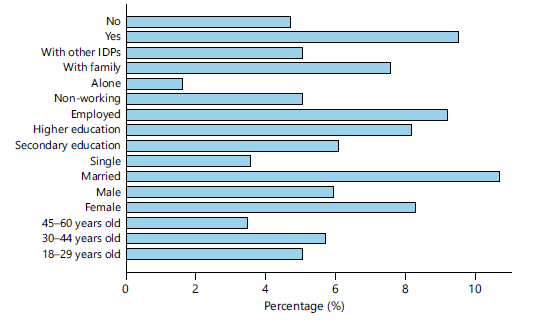
Figure 1 and Table 2 show the sociodemographic characteristics of the study participants in percentages. The chart shows the distribution of participants by age group, sex, marital status, Education, employment status, living conditions, and conflict experience.
Source: Developed by the author (2024)
Figure 1 Sociodemographic characteristics of the study participants
Table 2 Characteristics of participants related to learning foreign languages
| Characteristic | n | % |
|---|---|---|
| Previous experience in language learning | Yes | 146 |
| No | 74 | |
| Current level of language proficiency | Elementary | 116 |
| Intermediate | 64 | |
| High | 40 | |
| Need for adaptation of programs | Yes | 170 |
| No | 50 | |
| Types of support you would like to receive | Psychological | 110 |
| Academic | 130 | |
| Social | 98 |
Source: Developed by the author (2024)
Most participants reported facing difficulties in learning the language due to stress and social barriers (65.5%). These difficulties may include feelings of anxiety, isolation, uncertainty about their language skills, and fear of making mistakes. Social barriers may also arise from cultural differences that hinder effective communication and interaction with local residents.
Additionally, 72.3% of the participants indicated that integrating SEL into language courses could significantly enhance their success. Integrating SEL involves developing skills such as self-regulation, empathy, critical thinking, and collaboration. IDPs receiving support in these areas are better equipped to handle stressful situations arising in a new social and cultural environment.
SEL promotes the creation of a supportive learning environment where participants feel safe and comfortable, which is crucial for their successful adaptation and learning. IDPs who receive support in developing social-emotional skills are better able to focus on their studies, grasp new material more quickly, and interact more effectively with instructors and peers.
Participants in the study also noted that integrating SEL helped reduce levels of anxiety and depression, which positively impacted their motivation to learn. Furthermore, the development of social-emotional skills contributes to the formation of positive social connections and support from peers, which is a crucial factor in adapting to a new environment.
Overall, participants emphasized that courses that address social-emotional aspects can not only enhance language skills but also improve the overall quality of life. Integrating SEL into language programs helps IDPs manage the challenges encountered during adaptation to new conditions more effectively and supports their successful integration into the new community (Table 3).
Table 3 Comparison of the mean ACIS scores among participants
| Characteristics | ACIS (Mean ±SD) | p-value |
|---|---|---|
| Age groups | < 0.05 | |
| 18–29 years old | 83.2±12.5 | |
| 30–44 years old | 79.6±11.8 | |
| 45–60 years old | 85.1±13.1 | |
| Sex | 0.80 | |
| Female | 81.5±13.2 | |
| Male | 83.4±12.7 | |
| Marital status | 0.67 | |
| Married | 82.2±12.9 | |
| Single | 84.7±11.6 | |
| Education | 0.53 | |
| Secondary | 81.1±13.5 | |
| Higher | 83.9±12.2 | |
| Employment status | 0.27 | |
| Employed | 84.5±13.1 | |
| Unemployed | 80.8±12.7 | |
| Share their dwellings with | 0.91 | |
| Alone | 82.4±12.9 | |
| With family | 83.1±13.4 | |
| With other IDPs | 81.9±12.6 |
Source: Developed by the author (2024)
The results showed that integrating SEL significantly enhances adaptation to language courses (p < 0.001). The impact of SEL on adaptation was notable in several key areas, including improved social integration, reduced anxiety levels, and increased overall motivation to learn. Participants who were involved in programs where SEL was integrated into the curriculum demonstrated a higher readiness to interact with other students and instructors, as well as greater confidence in their language abilities.
It was also observed that participants who interacted more frequently with their peers during the course had higher scores on the ACIS. These participants showed greater engagement in group discussions, participated in joint projects, and demonstrated a willingness to assist their classmates. Interaction with peers created additional opportunities for practicing language skills in real-life situations, which contributed to better assimilation of the material and an improved level of language proficiency.
Additionally, participants who actively engaged in the SEL programs demonstrated fewer psychological barriers, such as fear of making mistakes or lack of self-confidence. This allowed them to communicate more freely and participate more fully in the learning process, contributing to an overall improvement in learning outcomes. High ACIS scores among these participants indicated better adaptation to new living conditions, encompassing not only language proficiency but also social and psychological integration.
The results also underscore the importance of creating a supportive learning environment where students feel comfortable and safe. In such an environment, students are more open to new knowledge and more actively engaged in the learning process. This fosters-positive interactions between students and instructors, which is crucial for the successful adaptation and learning of IDPs (Table 4).
Table 4 Comparison of the mean ACIS scores among participants based on learning-related variables
| Characteristics | ACIS (Mean ±SD) | p- value |
|---|---|---|
| Previous experience in language learning | < 0.05 | |
| Yes | 85.2±12.5 | |
| No | 79.6±13.1 | |
| The need for program adaptation | < 0.001 | |
| Yes | 86.4±11.8 | |
| No | 77.5±14.2 | |
| Integration of social-emotional learning | < 0.001 | |
| Yes | 88.1±10.5 | |
| No | 79.9±13.6 |
Source: Developed by the author (2024)
Overall, the data from our study indicate that integrating SEL into language courses not only enhances language skills but also has a positive impact on the overall adaptation of IDPs to new living conditions. This underscores the need for developing comprehensive training programs that address the linguistic and social-emotional needs of students.
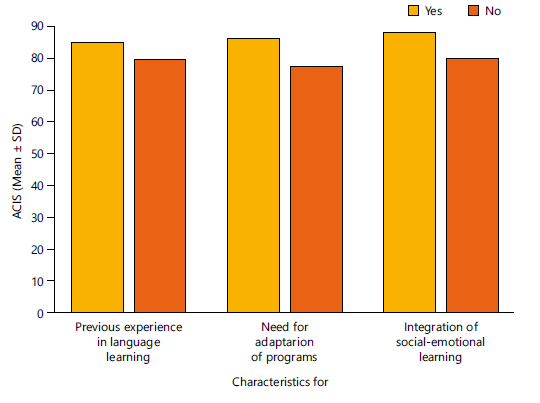
Figure 2 illustrates the comparison of the mean ACIS scores among the participants based on the learning-related variables. As shown, previous language learning experience, the need for program adaptation, and the integration of SEL had a significant impact on the mean ACIS scores.
Source: Developed by the author (2024)
Figure 2 Comparison of the mean ACIS scores based on learning-related variables
Thus, the results of our study emphasize the importance of adapting language courses to the needs of IDPs in conflict conditions by incorporating SEL. This approach facilitates better adaptation and enhances success in learning foreign languages. SEL enables IDPs to develop essential skills for effective communication, stress management, and establishing positive social connections, which are critically important in a new environment.
Integrating SEL into educational programs also helps reduce anxiety and depression levels among IDPs, enhancing their ability to learn and adapt. Studies show that programs that consider social-emotional aspects can lead to greater student engagement and successful completion of academic tasks. This, in turn, positively impacts their motivation to learn and increases their chances of successful integration into a new society. SEL involves developing skills such as self-regulation, empathy, critical thinking, and collaboration, which are essential for effective functioning in a social environment.
Considering the unique traumatic experiences of IDPs, SEL helps them cope more effectively with stressful situations, contributing to their overall adaptation and improved quality of life. IDPs often experience high levels of stress and anxiety, which can hinder their learning ability. Programs that incorporate SEL elements provide tools for stress reduction, emotion management, and mental health improvement. This in turn creates a more supportive environment for learning and development.
Thus, incorporating SEL in the design of language courses for IDPs not only enhances their academic performance but also contributes to the overall improvement of their mental and emotional well-being, which is crucial for their successful adjustment to new living conditions. This highlights the need for developing comprehensive educational approaches that consider all aspects of the life and experiences of IDPs, enabling them to integrate more easily into new social and cultural contexts. A holistic approach should include the adaptation of learning materials, teaching methods, and the creation of a supportive environment that promotes social and emotional adaptation.
Given the results of the study, it can be concluded that integrating SEL into language programs for IDPs is essential for their successful adaptation and integration. It is recommended to develop specialized educational programs that address the specific needs of IDPs while providing psychological support and fostering the development of social skills. These programs should include interactive teaching methods, group activities, and individual consultations to create an effective support system for IDPs.
This study underscores the importance of a comprehensive approach to educating IDPs, which includes not only linguistic aspects but also social-emotional components. This holistic method facilitates full integration and successful adaptation in a new environment.
4 Discussion
The obtained data indicate a significant correlation between participants’ adaptation to foreign language learning conditions and their social-emotional skills. Our study aimed to examine the relationship between stress levels and learning success among different groups of IDPs. However, an unexpected observation was that stress and social isolation were more pronounced than anticipated, significantly complicating the learning process. This required us to refine our analysis to better understand how stress, along with other factors, influenced the adaptation of IDPs to foreign language learning. Despite these challenges, we continued to explore the impact of peer interactions, task completion, and participation in SEL, identifying significant correlations with learning adaptation.
The main challenges faced by IDPs during learning include stress, social isolation, and cultural barriers (Blyskun, 2020). Learning a foreign language in conflict conditions requires significant adaptation and understanding of new social contexts. According to the results of our study, the average score of participants on the ACIS was 82.83. In several literature studies, the average ACIS score among adults with high stress levels was 83.64 (Mollaoğlu, Yanmış, 2015; Lubi, 2019; Aslan, Çetkin, Demir, 2021), while for those actively interacting with their peers, it was 84.99 (Livneh, 2021). These results align with our findings, indicating that the integration of SEL significantly improves adaptation to learning conditions.
SEL plays a crucial role in enhancing the academic success and adaptation of IDPs. Research shows that integrating SEL into educational programs fosters the development of emotional self-regulation, empathy, and positive social skills, which are critically important for successful adaptation to new living conditions (Jones, Doolittle, 2017). IDPs often face high levels of stress and psychological difficulties due to traumatic experiences and forced relocation. Implementing SEL programs helps these individuals better manage stress, improves their learning abilities, and contributes to the creation of a supportive learning environment (Greenberg, 2023).
Research has shown that SEL programs can enhance academic achievement, reduce behavioral problems, and improve students’ emotional well-being (Durlak, Mahoney, Boyle, 2022). For instance, children participating in SEL programs develop better conflict resolution skills and the ability to cooperate, which aids in their adaptation to the school environment and leads to more successful learning outcomes (Mahoney et al., 2021).
IDPs who receive support through SEL can more easily adapt to new social contexts, establish positive social connections, and improve their academic performance, which is critically important for their integration into a new society (Kim et al., 2023). Therefore, the implementation of SEL programs is a crucial step in ensuring the successful adaptation and development of IDPs. Most participants in our study experienced difficulties due to insufficient support and understanding of their emotional needs. Comparing the participants’ knowledge levels about SEL with their ACIS scores revealed a significant positive correlation, indicating that increasing knowledge about SEL contributes to better adaptation to learning conditions.
A negative correlation was found between participants’ adaptation and variables such as age and duration of stay in the conflict zones. For example, studies have shown that increasing age and longer duration in conflict zones negatively affect the ability to adapt to new conditions. This may be due to older individuals and those who have been in stressful situations for a longer time being less flexible in learning new skills and adapting to changes in their environment. In a study on sociodemographic characteristics and their impact on health, it was noted that older individuals and those who have been in stressful conditions longer have lower adaptation scores (BMC Public Health) (Ge et al., 2021).
Studies on negative correlation indicate that the duration of stay in stressful conditions, such as conflict zones, can significantly impact the reduction of adaptive abilities (Outlier) (Thomas, 2022). Correlational studies highlight that a negative correlation between age and adaptability is often observed in various socio-economic contexts, including conflict conditions (Tol, Song, Jordans, 2013). Additionally, it has been noted that increasing age and longer duration in stressful conditions negatively affect cognitive and physical adaptation abilities (Picardo, 2022). This result indicates that increasing age and duration of stay in conflict deteriorate adaptive capabilities. However, contrary to these findings, in our study, older participants and those who had been in conflict zones for longer showed better adaptation, which is likely related to the experience and knowledge gained over years of coping with these challenges.
Adaptation issues also affect participants’ performance in daily tasks and their independence (Kim et al., 2023). Most participants (71.0%) were fully or partially dependent on others for completing daily tasks. Our study found that an increased degree of dependence led to a significant decrease in the ability to adapt to learning conditions, and difficulties with self-care emerged as a negative predictor of adaptation. Similar results were observed in Fong’s study, where the level of dependency in performing daily tasks was higher among those with significant socio-emotional problems (Mahoney et al., 2021).
Our study also revealed that an increase in the number of study hours negatively affects the level of adaptation. This may be related to overload and increased stress among participants, which adversely impacts their ability to learn (Durlak, Mahoney, Boyle, 2022). Additionally, participants who interacted more with their peers and actively engaged in SEL had significantly higher adaptation scores. Thus, the results of our study underscore the importance of adapting language courses to the needs of IDPs by incorporating SEL. This approach enhances their adaptation to new living conditions and improves their success in learning foreign languages.
5 Conclusions
Our study highlights the complex relationship between adaptation to foreign language learning conditions for IDPs, their social-emotional skills, and their success in learning. Our findings indicate a significant link between the level of adaptation to new learning conditions and the participants’ dependence on external support, as well as their ability to effectively interact with peers. This suggests that improving SEL components and providing targeted support are crucial for enhancing the adaptation and learning outcomes of IDPs. By integrating SEL into language courses, we can address the unique challenges faced by IDPs and support their successful integration into new educational environments.
Our research underscores the critical role of SEL and support in the adaptation of IDPs to foreign language learning environments. Increased dependency in performing daily tasks and a decrease in social-emotional support led to diminished adaptability to learning conditions. Conversely, improved adaptation is associated with greater success in language learning. This parallel relationship is also evident in the link between SEL and adaptation to learning conditions. Our findings emphasize the importance of raising awareness and effectively managing these factors to enhance the educational outcomes and overall integration of IDPs.
Our results also demonstrate that integrating SEL can significantly improve adaptation levels and reduce stress among IDPs. This finding aligns with previous research indicating the positive impact of SEL on academic achievement and emotional well-being. SEL fosters skills such as conflict resolution and collaboration, which are crucial for successful integration into a new society. The evidence supports the critical role of SEL in enhancing the overall adaptability and success of IDPs in their educational pursuits and social integration.
Recognition and addressing issues related to dependency in daily tasks, social-emotional difficulties, and overall adaptation are key elements for improving the quality of life of IDPs in the Cherkasy region. These findings underscore the need for developing comprehensive strategies within educational and social institutions to support the effective adaptation of IDPs to new living and learning conditions. For example, integrating SEL into educational programs can help develop the essential skills needed for successful adaptation and reduce stress levels among IDPs.
Therefore, a comprehensive approach to adapting foreign language courses, including SEL, is essential for supporting IDPs in conflict conditions. Future research could focus on developing and evaluating the effectiveness of such programs across different age groups and cultural contexts, which would help create more inclusive and supportive learning environments.
This study, which comprehensively examines the adaptation to foreign language learning conditions for IDPs, provides broad validity due to its inclusion of a large and diverse sample of participants. The consideration of SEL as a crucial factor underscores its significance in the context of language Education. Emphasizing the impact of the social-emotional aspects on learning success and the potential reliance on external support enhances the social and pedagogical relevance of the research. Additionally, the study offers a new perspective, challenging some of the findings from previous research, which indicates an original and valuable contribution to the literature.
However, our study has several limitations. The results may not be generalized to all IDPs in other regions or educational settings, as the research was conducted within a single area. The study employs a cross-sectional design, so causal relationships cannot be established. Adaptation to learning conditions may be influenced by various factors beyond the scope of our analysis. Factors such as quality of life, risk of dropout, personality traits, and spiritual well-being could also be included in future research. Additionally, intervention studies, such as those focusing on learning management programs and community-based practices, could further contribute to the literature by enhancing the adaptation of IDPs to new learning conditions.

