

1 INTRODUÇÃO
The recent COVID_19 pandemic has had the effect of further shifting our relationships and the various aspects of our life on social media. In fact, that process that began with the dissemination of social networks (web 2.0) which evolved with the various platforms of relationships and services, of various genres, with physical isolation and restrictions of access to public spaces, has subsequently increased the dissemination of an “atopic” social developed in dialogues with digital interfaces, which began to strengthen the establishment of technological social interactions. These last ones are based on interactions performed in connected ecologies, formed not only by people, but also by software, data, information networks and interfaces of various types. This new social format, which visibly expresses its growth in the exponential increase of e-commerce, smart-working and digital access to entertainment content, was qualitatively interesting, also, the world of school and training.
The dissemination of emergency remote education, synchronous classes and the Hybrid Flex model, provoked by the COVID-19 pandemic, in addition to distance learning, distance education and online education, which were already being practiced by different institutions, generated a broad debate about the quality, effectiveness and nature of these practices in which interactions between teachers, students and content, take place in digitally connected environments and in different types of platforms.
2 THE SOCIAL TECHNOLOGICAL SITUATION
Particularly interesting at the end of understanding the quality of interactions that develop in platforms and connected environments is the reflection on their unprecedented morphologies, which complexity overcomes the form of human ecology and extends to technological scopes, data and computer networks. The “ecosystem” character (TANSLEY, 2011) and not only “social” digital platforms invites us, in addition to a necessary rethinking of the morphology of what is social (LATOUR, 2004; INGOLD, 2016), for the reformulation of the same idea of social situation, since this last one presents itself differently from that elaborated by the social sciences of the last century.
According to Dijck, Poell and Waal (2018), digital platforms more than the expression of a pre-existing social or the virtual emanation of phenomena and relational dynamics that take place in physical territories, would be the same creators of a new type of common: “the term platform society emphasize the inextricable relation between online platforms and social structures. Platforms do not reflect the social: they produce the social structures we live in” (DIJCK, POELL & WAAL, 2018, p. 27). From this perspective it is possible to observe how the set of relationships that take place on a digital platform for teaching and learning, being this zoom, teams, meet or moodle, more than reproducing the dynamics of a classroom, and classroom teaching practices, are part of a particular and unprecedented type of common, the result of a social connective, which produces reticular interactions (DI FELICE, 2017).
The displacement of teaching and learning processes of classrooms in these “computerized ecosystems” provides not only the introduction of innovative and more collaborative practices, but also a change in the habitative condition (DI FELICE, 2009), that is, a change in the ecology of relationships and morphology of relational architectures. This characteristic allows an important reflection on the quality of the relations between the various entities, human and non-human, which intervenes by participating in the construction of content and environments of digital relations.
Therefore, the study and understanding of digital teaching practices and their characteristics, in these “info-ecology” and in digital platforms, cannot dispense with the sectoral analysis of the characteristics of these environments and the reticular qualities of the relationships that develop in these environments. This strict dependence on the qualities of the relationships of the models of information architectures invites to an interpretative effort capable of redefining the concept of social situation.
In social sciences, it will be Gluckman (1940), in the article “Analysis of a social situacion in modern Zululand”, published in 1940 in the Journal Bantu Studies, to offer a first definition of social situation: “A social situation is, therefore, the behavior on some occasions of members of a community, analyzed and compared with their behaviors on other occasions, so that analysis reveals the underlying system of relations between the social structure of the community, the parts of the social structure, the physical environment and the physiological life of community members” (GLUCKMAN, 1940, p. 57 ).
In the context of studies of the concept of interaction, it will be Goffman (1964), in his celebrated article The negleted situacion, to define the social situation as:
[…] an environment capable of allowing mutual control, within which subjects, wherever they are, is accessible, without recourse to special tools, according to all others who are “present” and which, in turn, are accessible to them. By accepting this definition, a social situation begins when two or more subjects are in each other’s direct presence, and end when the second to last person leaves. Those who are in a given situation, as far as they can be separated, muted, distant or present only for a short period of time, can be identified collectively with the term “grouping”. There are “cultural norms that prescribe how subjects should behave because they are part of a grouping; these rules, when accepted, socially organize the behaviour of those who are in that situation
(GOFFMAN, 1964, p. 65).
If Goffman (1964) described social life as a kind of theatrical interaction where each individual rehearses different roles on different stages and social arenas, where changes are determined by the type of situation and composition of the groups, and McLuhan opted for an explanation of the transformation of sociability based on the changes caused by the introduction of mass media, in a more recent time Meyrowitz (1985) seeks to provide answers that outline the transformations of social interactions within new media contexts. Its starting point is the realization that the introduction of a new medium in a given scope, changes the “sensory balance” and, consequently, the forms and practices of interactions.
One of the points of arrival of his analysis is that “new media produces new types of relationships between people and the environment” (MEYROWITZ, 1985, p. 43) The nature of interaction is not determined), redefining the notion of social position and that of social situation. In the opposite direction to the studies of the Chicago School, which developed the concept of urban ecology, Meyrowitz dismissed the view that the place would determine social behavior to state that it was the informative architectures that modified social interactions: “The nature of interaction is not determined from the physical environment as such, but from the models of information flows (...) Similarly, social interaction and behaviors within society can be modified by the introduction of new means of communication (MEYROWITZ, 1985, p. 51). In other words, the innovation proposed by Meyrowitz (1985) is that of considering the social situation itself as an information system, that is, as a system of access to social information: “The concept of information systems indicates that the physical environments and the ‘environments’ of the media belongs to a continuum and not to a dichotomy” (MEYROWITZ, 1985, p. 55).
If social situations and social performance can be modified by the introduction of new media, it is also necessary to overcome the traditional conception according to which social relations are limited to forms of face-to-face interactions. This explains the impossibility of distinguishing, in a social context, the behaviors of the various individuals of communicative architectures and physical spaces: “The change that happens in situations and social behaviors when doors are opened or closed, or when walls are constructed or changed corresponds today to the slight touch of a microphone that connects, to a TV that is in operation, or to the attimo in which the phone is raised to answer a call” (MEYROWITZ, 1985, p. 68).
We can therefore attribute to the “technological social situation” (DI FELICE, 2009) the meaning of a “protein transformation” of spaces and the habitative condition, where the landscape, behaviors of individuals, and their interactions change continuously through a simple play, or, an off. The diffusion of the scanning process, either through the penetration of optical cables in architectural structures, or through forms of wireless connections, radio waves, and wi-fi, will constitute new informative spatialities made of information, data, digitally traversable and technologically habitable, in these the quality of interactions and behavioral models come to depend on information flows and digital architectures. In this way, the technological social situation is the new dimension of interactions. There are no more social relationships and digital social relationships, this dichotomy belongs to a previous technological level and no longer explains the onlife dimensions of the onlife architectures in contemporary interactions.
3 THE VARIOUS TECHNOLOGICAL QUALITIES OF THE PRESENCE IN EDUCATION
The concept of “technological social situation” (DI FELICE, 2009) in the current educational context, indicates a qualitative transformation of the spaces and housing conditions of teaching and learning. In these not only the environment of the classroom, from the different institutional spaces has its nature changed from a physical geography to a digital econectography, but the way of being present, communicating and interacting constantly changes, which evidences the need to expand the discussion related to classroom teaching and learning.
It is a fact that digitality and connectivity have enhanced different forms of communication, interaction, and presence, which, not that it refers to temporality, can be synchronous and asynchronouss. It is synchronous when the same time and space are shared, meaning that the interagents are simultaneously connected and share the same geographic or even digital space, in network (evidenced in web conferencing, live, chat, video calls, audio calls). It is asynchronous when the times are different, evidenced with the technology of emails, forums, learning diaries, glossary, tasks, among other possibilities existing in virtual learning environments, that is because, there is no set common time, each chooses the best time to communicate and interact. From the point of view of education, asynchronous temporality offers flexibility to students, allowing them to better organize in the face of the demands of their daily life.
Both synchronous and asynchronous interaction can vary as to targeting and the number of interagents in communication, and can occur from one–to-one, one-to-all, all-to- one, all-to-all. However, it is necessary to consider that when we make use, we make it our own, or we are still linking with different Digital Technologies (TD) within a network, communication and interaction evolves to having a trans-organic nature, as they are the expression of connective acts between human and non-human entities. Linked to the forms of synchronous and asynchronous communication and interaction, are the types of presence. When we talk about presence, it is inevitable to return to the mental models constructed along our ontogeny, which makes us relate immediately to the presence with the biological body, with the idea of being physically in the same time and geographical space.
The question that arises in relation to presence is that this biological body, which inhabits a geographical space in the physical world, when linked to different digital technologies undergoes a process of digitization that transforms it into information, which can be transported by digital networks. This results in the transmutation of its biological nature (atom) to digital (bit), which makes it possible to prolong the presence in other spaces and times. This way we become infovíduos inhabiting infoworlds (DI FELICE, 2020). These infoworlds are understood as different worlds that are also created by the digitalization process, which are e-habited by infovíduos.
In this context, we often hear expressions such as: “I’m on the Internet”, “I’m in Minecraft”, evidencing that DT represent a place, where one goes or is, and, therefore, territories of virtual digital nature, which enables a new type of inhabit, allowing us to experience new form of presence, that is, a feeling of being present, of belonging. These presences can manifest themselves by telepresence or remote presence and, other different virtual digital forms.
3.1 Telepresence
Telepresence has been the appropriate term to designate the “distant presence “, that is, a form of non-physical presence, which allows “to be present”, even though physically distant in geographical space. When we hear a song, read a letter, we look at a picture, we smell a perfume, a flavor, we watch a movie, in a way, we have a situation of telepresence, whether of people, objects, places, aromas or flavors. It is our memory enabling a “being there”, a “there being here” and a “being together”. The so-called old media, such as the press, radio, TV, video, cinema, telephone, allow a type of telepresence. The telephone, for example, when transporting the respective voices of the interlocutors, who roamed the electromagnetic waves until reaching another physical or geographical space, allowing a type of telepresence, in which both were, respectively, here and there. There was a displacement made by the electromagnetic waves and technological device of the time. If we consider experiences like these, we can understand that telepresence is not something new.
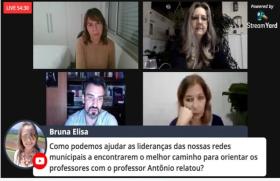
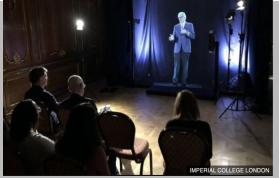
According to Schlemmer (2009), the term telepresence was first used by Marvin Minsky in a teleoperation system that involved the manipulation of objects remotely. Telepresence is the “feeling of you being really ‘there’ on the remote operation site”, while virtual digital presence is “feeling like you are present in the computer-generated environment” (MINSKY, 1980, p. 120). Minsky already made a differentiation between telepresence and virtual digital presence. The emergence of different DTs and the evolution of communication networks, also digital, especially the Internet, enhanced not only the experience of being telepresent, but created new ways of being present digitally and virtually. We say that telepresence, in the context of networked DT, occurs when it is the human image itself (biological body), its own voice and its text that, through a scanning process, is transported to a remote place, an example is what occurs in webconferences conversations with audio, video and text (fig. 1). Another example of telepresence is the hologram (fig. 2).
3.2 Virtual Digital Presence
The virtual digital presence implies the transubstantiation of the type of presence, which can occur by a profile, in social media such as Facebook, Instagram, Whatsapp; by prop in a graphical webchat; by avatar in Metavertso, or 3D Virtual Digital World (3DDVW); by character in Massive Multiplayer Online Role Play Game (MMORPG); among others.
In an MMORPG the virtual digital presence is done by choosing a graphic character who represents/interprets the human in a simulated world on the computer. This character can come ready or have a level of graphic customization and, through algorithms, a pre- programmed “personality” that implies classes, more or less powers, health, attack, magic and others linked to the type of the game. Thus, the human when making a choice of a character, begins to represent/interpret “roles” predefined in these worlds. In Metaverse or 3DDVW the virtual digital presence is also possible by choosing a graphic representation/interpretation, however, this can be totally modified/(re)created and does not have a pre-programmed “personality”, rather represents/interprets the human’s own “identity” in a computer simulated world.
In both technologies it is not the very image of the human who is telepresent as in web conferences, but a graphic representation/interpretation by character or avatar created/modified by humans to represent/interpret them in this world. In this context, what we call “virtual digital presence” is the presence linked to a graphic representation/interpretation through a character or an avatar, which can be customized by humans, allowing a “face to face”, an “eye to eye”, as well as the gesture between characters or avatars. They refer, therefore, to different presences of nature, consisting of bits.
In addition to virtual digital presences, technologies such as metaverses and MMORPG, also allow telepresence, since the human’s own voice and own text are transported to a synthetic space created on the computer. Thus, when the human speaks it is its own voice that, by a process of digitalization, is transmitted digitally and allows a “being there” in conversations with other avatars or character, respectively. This digital virtual graphic and gestural presence, along with telepresence through textual and oral language, enhances communication, interaction and causes differentiated sensations when compared to other technologies that allow only telepresence by voice or text. What is at stake is a social presence, which is manifested by “technologized bodies” that interact in an 3DDVW. Bodies that can move, talk, run, jump, fly, know places that only exist in the virtual digital context and / or that could never be experienced in the physical face-to-face world. Technological bodies that can demonstrate feelings, affections, generating a world of diverse sensations.
In addition to the metaverses and MMORPG that allow this combination of virtual digital presence and telepresence, there is also social media, which currently allows both a telepresence by voice, text and image (photo or video), as well as the virtual digital presence by creating a profile and also avatars, even with a significant limitation as to customization. Increasingly the different technologies are hybridizing, thus potentiating new combinations and various ways of making themselves present.
The different types of telepresence can take place in different geographical, and digital spaces, by remote presence; while the different types of virtual digital presences can take place in a simulated space on the computer, made of bit, which can be a representation/interpretation of a geographical space existing in the physical world, or a completely differentiated space, resulting from imagination and which has an existence only as a virtual digital. Thus, being telepresent and present in a virtual digital form means that humans can take their body with them to another space and time, non-physical body (matter consisting of atoms) but rather, a technologized body (consisting of bits), which has an existence in that space, enabling the “sensation” or “feeling” of being or belonging to somewhere, independent of the biological body, physical space, matter. This telepresence and virtual digital presence can be observed in the technologies presented in the following figures (table 1 and table 2):
Table 1 Types of telepresence and virtual digital presence
|
|
| Figure 1- Webconference telepresence (vídeo/voice text) - Source: GPe-dU files |
Figure 2 - Hologram Telepresence – Source: htps://www.bbc.com/portuguese/geral-4609493 |
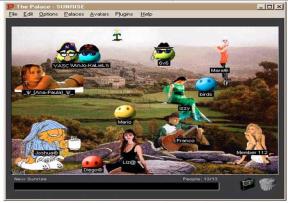
Figure 3 - Virtual digital presence by text/prop/telepresence Source: GPe-dU files |
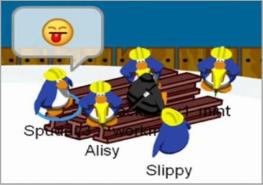
Figure 4 - Presencie by avatar in 2D environment Source: GPe-dU files |
Source: adapted from Schlemmer (2009); Schlemmer and Backes (2015)
Table 2 Types of telepresence and virtual digital presence
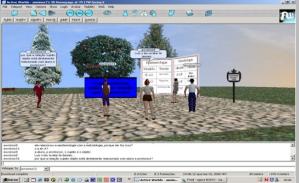
Figure 5 - Virtual digital presence by avatar and gesture, and voice and text telepresence - Source: GPe-dU files |
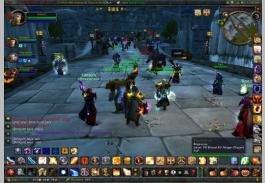
Figure 6 Figura 6 - Virtual digital presence by character (World of Warcraft) and voice/text/telepresence - Source: GPe-dU files |
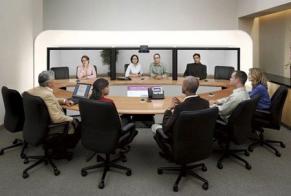
Figura 1 - Physical presence and video and voice telepresence - Source: http://www.guanabara.info/?p=141 |
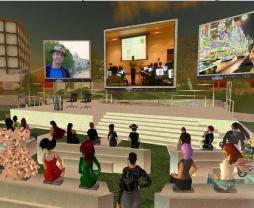
Figura 2 - Virtual digital presence by avatar and gesture (Second Life) and voice telepresence text and vídeo Source: GPe-dU files |
Source: adapted from Schlemmer (2009); Schlemmer and Backes (2015)
Both telepresence and virtual digital presence have variability as far as connectivity potential, and vividness1. In a given DT/environment/platform, the connectivity potential is translated by the degree of mutual influence between human and non-human entities that enables. On the other hand, the vivacity provided by them is translated by the ability to produce a sensory human experience. The interconnection of both is what contributes to the feeling of belonging and may vary in types of telepresence and virtual digital presence, according to technology. These enable different forms of communication that allow human expression with different languages.
These forms of communication are transported by the various DT and digital communication networks, whether web conferencing systems, Social Media, AVA, 2DDVW and 3DDVW, MMORPG, VR, or hybrid systems that integrate different DT (SCHLEMMER, 2009). Higher levels of telepresence and virtual digital presence are found in network DT that use a set of characteristics that behave simultaneously: different languages to enable interaction, multidirectional communication that mainly provide three-dimensional environments, where humans can have a virtual digital presence through an avatar or character, thus maximizing, the feeling of immersion in the computer-generated environment.
For Moretti (2012), the telepresence, the one that occurs through text, voice or image, is a secondary presence. The secondary presence is made possible in the AVA and also in Web 2.0 technologies and does not replace the physical presence, nor does it allow access to the same communication possibilities offered by face-to-face encounters. Telepresence “infests” all our actions at every moment of the day: the phone, the computer, all electronic artifacts, despite being “old”, allow us to increase our presence in places physically or geographically distant, through the transmission of text or voice (MORETTI, 2012, p. 144).
The virtual digital presence represents the expression of primary virtuality, or virtuality in presence, and allows a high level of development of interactions with other subjects through immersion and personalization, that is, the continuous creation of our own virtual digital self. The “virtual digital life” and “self-virtual digital “ means using the two dimensions: of virtuality, as power and digitality. These two combined dimensions are specific to the 3DDVW and allow a distinct and more complex type of presence, which is not telepresence (MORETTI, 2012). The dimension of virtuality is understood as the possibility of creating environments, worlds and relationships, as an alternative to geographically located environments; digitality talks about the computerized and technological aspect of the construction of 3DDVW and the avatars that e-inhabit them.
It is important to note that as DT and digital networks evolve, the concept of presence, and the possible types of presence also change. It is precisely the evolution of these network technologies, which have given the opportunity to humans to be simultaneously present in two or more spaces of different natures (geographical and digital). This possibility has populated the imagination and human desire for a long time and refers to bilocation in space, that is, a human entity, can occupy two spaces simultaneously, having a corporeal presence in a space that is geographically located (home, school, parks) and, a virtual digital presence through profiles in social media, virtual digital bodies (avatars, characters of a game, props), in digitally constructed synthetic spaces.
Being present, even though it is geographically distant, allows humans to connect, establish networks with other humans and with different entities, whether biological or physical, which by the process of digitization are transformed into information. This provokes the feeling of presence linked to “being there”, “there being here” and still “being together”. The main issue, then, is not related to where you are telepresent and/or present in a virtual digital way, but to the types and qualities of possible agencies and enhanced by transorganic connective acts between intelligent ecologies, which in a co-production process, connect intelligences enhancing transubstantiation (DI FELICE, 2017). This allows us different types and intensity of relational, cognitive and social presence
3.3 Relational presence, cognitive presence and social presence
When the context is educational, more than a presence, telepresence, virtual digital presence, or both, what interests us is the relational presence. The relational presence is that which takes place in the relationship, in the connection, in the connective act established between two or more entities. It implies a cognitive presence, when performing operations (operating in the action, being this mental action), and also in a socio-cognitive presence, when co-operation (operating in action with others), a process that only occurs, according to Piaget (1973) when the three following conditions are met: existence of a common scale of values, the conservation of this scale of values, and the existence of a reciprocity in interaction in order to enable a unity in diversity. Therefore, the relational presence is that presence “between”, what necessarily implies the connective act among humans and non-humans.
The same way that in an educational context, which develops in the physical face-to- face modality, having a physical, corporeal presence is not enough for the teaching and learning processes to develop, also educational processes in the online modality, telepresence or digital presence, is not enough, too. It is the connective act between, meaning what is established in the relationship, the connection between human entities (teachers and students) and non-human entities (different entities, including digital technologies, in network) that configure the type of presence that interests us in education is the relational presence.
This is how, the relational presence implies a presence beyond physical, corporeal, or telepresence, or even the digital presence, because it deals fundamentally with the relational aspect, the result of the connective act, which can occur from these presences that can be experienced through face-to-face. This relational presence can happen through text, oral, gestural and graphic language, individually or combined. This way, the relational aspect of presence involves more than being in contact, involves connectivity, coupling as agency, with other human and non-human entities. A “being with the world and with others.” We are a “being” in relation with the world and with other entities that are part of it.
By affirming that we are a “being” in relation with the world and with other entities that are in the world, we emphasize the social aspect of this relationship. We understand the social, from Serres, Latour and Di Felice, as being composed of different biological, physical and digital entities, therefore human and non-human, which by connecting acts weave this network that forms the social. So, returning to the question of presence, we can talk about a social presence, but what exactly does that mean?
Let’s return to the situation of the physical classroom. When we are physically present, in a classroom context, we have a social presence that manifests itself by the physical body, that is, other individuals can see us, greet us, talk to us about various subjects, not necessarily linked to the objective of the class, so this promotes a feeling of closeness, of “being together with”, in this case, linked to the corporeal presence.
Let’s reflect now on what happens when we use, for example, virtual digital classrooms, such as those that can be created in Virtual Learning Environments. In these spaces, the presence is identified the moment when a human logs into the environment and enters the virtual digital classroom. This presence can be manifested only by login in, or still be accompanied by a 2D image. While it is possible for everyone to visualize who is online, this is not enough for humans to have a sense of closeness, of “being together with”. There will hardly be synchronous interaction between those who are present, unless this is a programmed activity to happen, meaning, there is no “encounter”, it lacks a social presence.
Let us return to the previous examples, the physical classroom and the virtual digital classroom, now moving towards the “corridors”, the “school entrance”, the teachers’ room, the streets, the city, that is, other open social spaces and, in this context, we talk about the presence on different social platforms, such as Facebook, Instagram, Whatsapp, Discord, among many others. How does social and relational presence take place? How do we make ourselves present and how do we feel this social and relational presence? We are not physically present with a body, may this be made of atoms or bits, but we have a form of virtual digital presence by the profile we build, by the text we write, by the images and videos we post. This is how we make ourselves present so that others can see us and talk to us. However, in order for the relational presence to be established, and with it the feeling of presence, of “being together”, it is necessary for the connective act to happen, either by likes, by comments or by sharing, thus bringing us closer to those who are geographically distant, allowing for that “encounter” to take place.
When we share the same public and geographical space, and we are called by our name, what is the reaction we have? And when this public space is the digital space of social platforms, and we are cited, what changes? They are still people behind screens. And when we use the metaverses, a game, how does the relational presence and social presence occur? Is it possible to have an “encounter”? How?
When we talk about metaverse, in games, especially MMORPG, the presence is identified at the moment the human performs his login. From that moment on, he enters the 3DDVW, and is present with a name and a 3D graphic representation/interpretation – the avatar (in the case of the metaverses) or the character (in the case of MMORPG) – which “materializes” in a virtual digital way in the world, and through which it is possible, in addition to interacting by text, to interact by voice and gestures, depending on the technological options available. This way, all other humans who are online, present in 3DDVW, represented by their respective avatars or characters (in the case of games), can see each other’s avatars or characters. This possibility of “being” in a world, through an avatar or character and being able to visualize other avatars or characters that are in that world with them, according to research results developed by Schlemmer (2009) and Schlemmer and Backes (2015), it maximizes the feeling of proximity, of “being together with”, minimizing the feeling of distance, loneliness and isolation. It is the social presence of the avatar or character that favors synchronous interaction and provides the “encounter” – relational presence – which is fundamental for learning.
Yaser Sheikh, director of research at Facebook Reality Labs in Pittsburgh announced in March 2019 the Codec Avatar project that, from the appropriation of 3D capture technologies and Artificial Intelligence (AI) systems, enables the creation of realistic avatars. This new way of creating presence can enhance the social and relational presence, and with it, the feeling of face-to-face, or even the “real feel” and, therefore, the connection between people, which can become the closest to a natural and common form of “real” world, through technologies that enable the capture of facial expressions and gestures, that is, the nonverbal language present in human communication. The challenge in this technology is to create “sensory” interactions in virtual digital spaces. What is at stake in this context seems to us to be the coupling between creator and creature, that is, between the avatar and human.
Previous research conducted by Schlemmer (2009), Trein (2010), Schlemmer and Backes (2015) show that subjects do not always desire their avatar to be the faithful representation of their corporeal physical existence. For many, 3D and Virtual Reality represent the possibility of “being” different, of being able to represent other nuances of the “I”, of prolonging itself by creating a “virtual digital I” that often complements it in its “incompleteness”, or even of being something completely different from its physical appearance, such as avatars Mecha2 and Furry3. Even in a telepresence situation, it is not uncommon to find people who do not feel comfortable with their own images that are captured by the webcam and played remotely. On the other hand, Schlemmer et. al (2005), Schlemmer, Musse and Garrido (2006), in the context of interaction not through avatar, but with realistic communicative agents, showed that the use of the body as a communication channel (facial expressions, gestures, body posture and animations) constitute elements that maintain the interaction in permanent activity, not allowing a prolonged pause of the system to hinder the relationship. Body communication allows adding a load of emotion in the interaction, making it richer and generating an intuitive relationship that refers to the daily life of social relations face-to-face.
All these forms of being present, in addition to body physical face-to-face, bring us closer and, according to the technology to which we engage and the way we make ourselves present and relate, allows a greater or lesser feeling of presence, of vividness, a sensation that the “encounter” is actually happening. The difference between telepresence and other forms of virtual digital presence, such as profile, and prop, for virtual digital presence, by avatar and character, according to Schlemmer (2009), Trein (2010), Schlemmer and Backes (2015) is in the possibility that they offer an even more intense sensation of presence. Hardly the presence by avatar and character, which allows a greater social presence, is ignored by other avatars and characters. Meaning, it is a type of presence that promotes conversation, an encounter, once it happens as in physical face-to-face environments, you will not fail to greet an avatar or leave it talking alone. What is implicated in the social presence is the greater reciprocity in the interaction, which configures the relational presence, besides experiencing or inhabiting in 3DDVW.
Returning to the Codec Avatar project, Sheikh says that it will be fundamental to social presence, since the promise of virtual reality and augmented reality makes it possible to devote time to those who choose to build meaningful relationships, regardless of time and space, therefore creating a separation between the social aspects of life, from physical dependencies. It is interesting to analyze this perspective, from the way Di Felice understands what is social, as a movement composed not only of human entities, but also by non-human entities, such as platforms, biodiversity, forests, etc. Within the human scope, which will be represented/interpreted by realistic avatars, the physical details, the subtle elements of movement, even the expression when reading a text, need to be captured. For Yu it is at the same time challenging and empowering to work to “let you be you.” Virtual digital interactions that seem like the person is right in front of you are a big step connecting people, who are unique in their own way of being, moving and expressing themselves. A realistic avatar will enable presence in places that would be impossible to be physically present.
“Yaser’s parents arrived and recorded a message for their grandchildren and future great-grandchildren,” Belko says: “They created an interactive time capsule. I never really thought about the impact that telepresence could have on connecting future generations to the past, but can you imagine being able to watch a personalized message from someone who is no longer with you?” (FACEBOOK, 2019, p. 4)
These are the signs, composed by speech, body language, linguistic hints and other elements, that Codec Avatars group into quantifiable data for use in the rendering of realistic virtual humans. The goal is not to replace the physical face-to-face connection, but rather to create virtual interactions indistinguishable from real ones, in order to provide new forms of social and relational presence in a more authentic way, when face-to-face interaction is not possible. The various technological qualities of presence can be appropriated by different modalities, models and/or educational designs, configuring an atopic quality of interactions in networks.
3.4 Neither present nor absent: the atopic quality of interactions in Onlife Education networks
In the field of Education, we have followed the emergence of different educational modalities, which are defined as “face to face”, “distance”, “semi-face-to-face”, among others. But what presence are we talking about? What kind of distance are we talking about? How can a student or teacher be “semi” present? Terms such as these seem to ignore the different ways of making themselves present provided by digitality and connectivity and, with them, the new meanings of the concept of face-to-face, as well as the feeling of proximity experienced in digital and hybrid spaces, which create a new technological social situation. This leads us to the question: What kind of presence and closeness do we want in an educational context?
As for the presence, widely discussed throughout the text, it implies besides a physical presence in geographically delimited spaces, in telepresence and different types of virtual, relational, cognitive and social digital presence, which are linked to the power of spaces constituted by digitality and connectivity, which allows us to refer to an ecology of presence.
So what we have are different ways of being present, which in addition to relating to the nature of geographic spaces, digital or hybrid, relate to the atopic quality of network interactions. The Greek word “a-topos” is formed by the prefix a (private alpha) and the word topos (luogo). Its etymology refers not to a “no place”, that is, to an absence of location, but to the meaning of a “strange location”, “not familiar”, an “indefinable place”, a place “out of place” (DI FELICE, 2009). The experience of online presence and online interactions is close to that of an atopic dwelling in which proximity and distance are no longer only physical categories and subjects, but also achieve informative qualities.
As for “distance” the same problem is repeated. Are we referring to a geographical distance? It is not uncommon to find distance in the face-to-face modality, understood as conventional education, that is, that which occurs in the same geographical space having the physical presence of teachers and students at the same synchronous time. Like this, distance is not related to space, whether geographical or digital, but rather to a distance called transactional, a concept brought by Moore (1993), but originally attributed to Dewey and Bentley who, in 1949, presented the concept of transaction, to refer to the interaction between the environment, individuals and patterns of behavior in a given situation. Moore (1993) in Distance Education field, brings back the concept of transaction, referring to it as occurring between teachers and students in an environment that is characterized by the spatial separation between them, resulting in specific patterns of behaviors for both.
According to Moore (1993) it is the separation of students and teachers that profoundly affects the teaching and learning processes, and this is not related to the nature of space, but rather to a psychological and communication space that needs to be built. It is this psychological and communication space between teachers and students that is understood as a transactional distance, and these are in continuous motion, therefore, continuously changing. This means that in any educational context, regardless of the modality, there is some transactional distance, as mentioned by Rumble (1986), which is minimized by methodologies and practices created from the specificities of that modality, including the limits and potentialities of its nature. Pedagogical methodologies and practices that are engaging in the context of physical face-to-face education are not necessarily engaging in the context of distance education, online education... Each of these possibilities may present a different degree of transactional distance.
The extension of this distance in an educational program, according to the author, is due to a set of three variables: dialogue, structure and autonomy of the student. These are not technological or communication variables, but variables in teaching and learning and in the interaction of teaching and learning. At this point we disagree with Moore, understanding that digital technologies are not tools, means, resources, support, but intelligence technologies, environmental forces, non-human entities that in a connective act with humans enhance the creation/invention of different strategies, methodologies and pedagogical practices. These creations/inventions are intrinsically related to the limits and potentialities of a given set of technologies, whether analog, digital or even a combination of both, and geographic spaces, digital, or hybrid. In this context we refer to the atopic quality of interactions in networks. So, what about the different digital, connective and hybrid spaces that create a particular technological social situation, conducive to the ecology of presence and that favors the feeling of proximity?
Hybrid and multimodal education designs, for example, emerge from the hybridization of different technologies, languages, forms of communication, types and levels of interaction/interactivity, types of telepresence and virtual digital presence, even resulting in simultaneous presence in different spaces - when a human is present, physically, in a geographically located educational environment (library, classroom, auditorium), acting and interacting with other human, and also non-human entities that are also present in this space, and simultaneously is present in a virtual digital form through an avatar, in a virtual digital world in 3D, or through a character in an online game, acting and interacting with other entities also human and non-human that, like them, are present in a virtual digital way.
OnLIFE Education, according to Schlemmer (2020), in addition to operating from the perspective of hybridism and multimodality, refers to a transubstantiated and cibricized education, connected (On) in life (LIFE), from problematizations that emerge from the present world, in a hyperconnected reality, which promotes inventiveness. It implies, therefore, a complex and connective ecological perspective, in which the very substance of the materialities of spaces, contents, practices and subjects is transformed into data. In this context, digital network technologies are understood as environmental forces (FLORIDI, 2015), which promote changes in the field of education, not only linked to the physical structure, temporal-space, but to educational architecture itself, the curricula, methodologies, practices, contents, pedagogies. This way, it is understood that the process of digitalization and connectivity has the power to qualitatively change the status of nature and the habitative condition of teaching and learning processes, meaning that education would then undergo a process of transubstantiation (DI FELICE, 2017) and not of transposition (transfer, change of place) as perceived during the pandemic period.
It is important to point out that when we say that digitality and connectivity have the power to qualitatively change education, we are talking primarily about the quality of the proper nature of matter, which from an atom becomes a bit, which modifies spaces and the dwelling condition itself of teaching and learning, which instead of taking place in physical, geographically delimited spaces, expand into countless digital platforms, where teaching and learning come to inhabit a strange, unspeakable, and therefore atopic, place. This change in the quality of the nature of the matter present new challenges for educational institutions, both related to offers, curriculum, management and, especially, teaching, which requires new methodologies and pedagogical practices capable of operating in a new type of “materiality”. Thus, it is not about transposition, which is the way institutions have operated until then, due to the reductionist understanding of digital technologies as tools to be used in education, but about transubstantiation and invention, which requires a new cognitive policy in Education. As a result, far from a dualist discussion in the context of presence-absence, OnLIFE Education deals with the atopic quality of interactions in networks, potentiating an ecology of face-to- face and the feeling of proximity.
