




 Inglês (pdf)
 Artigo em XML
 Tradução automática
 Enviar este artigo por email
 Permalink

Introduction
In the context of democratic societies, educating young people to become active, responsible, and informed citizens is a fundamental goal of modern education systems. Democratic citizenship is not merely about acquiring factual knowledge from textbooks or learning about political institutions; it is a dynamic process that involves the development of skills, attitudes, and values necessary for active participation in democratic life. As Gollob et al. (2010) argue, students may forget what they are told, but they remember how they act and feel in real classroom experiences - highlighting the importance of experiential learning in civic education.
Education for democratic citizenship is not confined to a single subject but is integrated across the curriculum, including in subjects such as Civic Education, Language, History, and even Mathematics. The most effective way to foster democratic citizenship is through active engagement - learning by doing rather than through passive instruction (Gollob & Weidinger, 2010). Problem-based learning methods, experiential learning, the design of learning activities around real-life situations, along with collaboration and interaction, contribute to educating students in the field of Education for Democratic Citizenship (Gollob et al., 2007). According to Duerr et al. (2000), democratic skills are cultivated through interactive practices such as cooperation, debate, negotiation, and critical reflection, all of which help students build essential civic virtues like empathy, tolerance, and commitment to the common good (Patrick, 2003).
To explore democratic citizenship more deeply and to address it effectively within educational frameworks, a robust theoretical foundation is necessary. This paper draws on the liberal model of citizenship, which emphasizes individual rights, representative participation, and the rule of law. As Kymlicka and Norman (2000) suggest, democratic citizenship comprises three interconnected dimensions: legal status (rights), political agency (participation), and collective identity (belonging). These dimensions position citizenship not merely as a legal category but as an active and relational engagement with democratic communities.
A stable democratic state, as Fukuyama (2014) notes, rests on institutional capacity, the rule of law, and democratic accountability - elements that are inseparable from the realization of democratic citizenship. Historically, the concept of citizenship has evolved significantly, from direct participation in ancient Greece to legal recognition in Rome, and to the emergence of national identity with the rise of the nation-state. Marshall’s (1950) influential framework traces this progression through the development of civil, political, and social rights.
Building upon this historical and theoretical background, the present paper adopts the liberal-democratic model, further supported by Bobbio’s (1984) assertion that liberalism and democracy are mutually reinforcing rather than contradictory. While democracy establishes the procedures for power-sharing, liberalism introduces necessary constraints to prevent its abuse. Within this framework, democratic citizenship is understood as critical, conscious, and values-based participation in public life.
Ultimately, the aim of education for democratic citizenship must go beyond the mere transmission of democratic principles. It should empower students to become engaged participants in their communities through the integration of knowledge, practical skills, and civic dispositions. Effective democratic education demands a systematic linkage between cognitive understanding, participatory practice, and ethical orientation. Creating classroom environments that foster open dialogue, mutual respect, and critical inquiry significantly enhances students’ democratic competencies (Patrick, 2003). Only through such holistic and sustained educational efforts can schools contribute meaningfully to the cultivation of active and responsible democratic citizens.
Literature review
Education for Democratic Citizenship (EDC) and Human Rights Education (HRE) aim to develop civic competences that promote active, conscious, and responsible participation in social life. Through these forms of education, students are not only equipped with theoretical knowledge but also with practical skills and democratic attitudes such as tolerance, a sense of responsibility, cooperation, and respect for others (Gollob et al., 2010). Education as a tool for building democratic virtues relies on learning methods that involve experience, reflection, interaction, and critical analysis (Reardon, 1997; Duerr et al., 2000). Effective teaching for democratic citizenship includes the use of techniques such as:
Inductive learning, where students are confronted with concrete situations before conceptualizing the theory;
Active learning, where learning occurs through action;
Cooperative and interactive learning, which encourages knowledge construction through exchange and reflection;
Critical and participatory learning, which develops independent thinking and argumentation (Gollob &Weidinger, 2010; Ferguson Patrick, 2022).
Recent studies have confirmed that these techniques enhance sensitivity to diversity and increase students’ active participation in the classroom as a democratic environment (Teegelbeckers, Nieuwelink, & Oostdam, 2023).
Through experiencing the process of democratic discussion in class, students learn that open and fair debates require adherence to certain fundamental principles, such as: active involvement of all students, respectful listening to others’ opinions, evaluation of opposing arguments, and a willingness to revise or change one's own views (Gollob et al., 2009). This approach demonstrates that education for democratic citizenship is best learned through the experience of questioning and answering in real situations, rather than simply presenting predetermined facts.
According to Reardon (1997), teaching strategies play a significant role in supporting student development by contributing to the creation of a positive learning environment. These strategies help students feel important, valued, and unique; provide them with opportunities to function autonomously; help them feel safe, calm, and trusted; promote empathy, friendship, and respect for others; and offer structured opportunities for cooperative work. - By offering students the opportunity to understand themselves and to communicate their ideas and feelings about themselves and others.
Empathy is an essential skill for civic participation and social interaction. Through techniques such as “Hot Chair” or “Meetings with People”, students take on the roles of others in order to understand their feelings and perspectives (Zwiers, 2005; Maryam et al., 2021). Magerøy (2023) indicates that involving students in decision-making on the topics being addressed helps develop emotional sensitivity and civic engagement.
The literature suggests that the development of empathy is facilitated through:
Modeling behavior by teachers;
Discussions about characters and events from literature;
Group projects and reflections on personal experiences (Phillips, 2023).
Cooperative learning is not just a pedagogical strategy, but also a powerful tool for developing empathy and democratic attitudes. In the context of group work, students experience positive interdependence, relying on support, explanations, and guidance from peers. While they collaborate and help one another, they are also expected to demonstrate the ability to learn independently.
Collaborative skills are essential for the effective functioning of the group, achieving consensus, making constructive decisions, and developing critical thinking (Woolfolk, 2011). Cooperative learning techniques engage students as active participants throughout the learning process. The benefits are multifaceted - not only academic, but also social. This method promotes higher-order thinking, as it requires interpretation and creative problem-solving. Additionally, it fosters mutual understanding and the ability to collaborate constructively with others.
According to Johnson & Johnson (1999), cooperative learning consists of five essential elements: positive interdependence, face-to-face interaction, individual accountability, collaborative skills, andgroup reflection. Meanwhile, Ferguson Patrick (2022) emphasizes that collaboration contributes to the creation of a “democratic attitude” in the classroom by encouraging inclusion and equal voice for every student.
Techniques such as “Roles in Collaborative Groups”, “Pencils in the Middle”, or “Academic Opposition” enable students to build independent thinking, engage in respectful discussion, and develop empathy for others (Temple et al., 2006).
Self-regulation is a civic skill that develops through rules and reflection on behavior. Techniques that combine play and education, such as “Red Light-Green Light” or “Say Simon”, help students focus and self-manage their behavior (Keri, 2019; Kristina, 2019). During play, students naturally practice social rules, reinforcing the skills needed for democratic coexistence.
Classroom debate fosters critical thinking, argument construction, and respect for differing viewpoints. Leuser (n.d.) notes that debates help students develop self-reflection and learn from their peers. More recent studies confirm that debate as a deliberative method enhances civic awareness and improves communication skills and independent thinking (Markaj et al., 2021; Wahlström, 2022).
Aim of the Study
The purpose of this study is to investigate how students demonstrate democratic citizenship behaviors during the application of various teaching techniques across different subjects in the classroom. The study further aims to explore students’ perceptions of their own actions, the role of peer interaction in shaping democratic values, and their overall experiences with teaching methods that promote participation and critical thinking within the context of democratic education.
Research Questions
The objectives of the study were addressed through the following research questions:
What democratic citizenship behaviors are exhibited by students during the implementation of various teaching techniques across different subjects in the classroom?
How do students describe their own behaviors and actions when different teaching techniques are used by the teacher during the teaching and learning process?
In what ways does peer interaction during the learning process contribute to shaping democratic values?
What are students’ experiences with various teaching techniques aimed at promoting participation and critical thinking within the context of democratic citizenship?
Research Design
This study adopts an inductive approach, drawing general conclusions from classroom observations and student interviews. A qualitative research design was chosen to explore students’ thoughts, behaviors, and experiences in relation to democratic citizenship education.
In this context, qualitative observation involves the researcher recording notes on students’ behaviors and interactions within the classroom setting. These observations were conducted using either unstructured or semi-structured formats, aligned with the research questions guiding the study. As Creswell and Creswell (2018) explain, qualitative observation can be carried out by researchers as either participants or non-participants in the observed activities.
This study primarily relies on data collected through two methods:
The observations focused on identifying students’ civic behaviors and democratic habits as they engaged in various teaching techniques. To ensure authentic and natural behavior, observations were conducted by the classroom teachers themselves, and students were unaware they were being observed. This approach minimized the likelihood of altered behavior due to the observer’s presence.
The interview questions were open-ended and limited in number, designed to encourage participants to express their personal experiences and perspectives (Creswell & Creswell, 2018). The use of semi-structured interviews ensured that the data collected was both reliable and rich in detail, allowing for a deeper understanding of students’ views on democratic citizenship as shaped by classroom practices.
Participants
This study is based on observational data collected during the implementation of 32 teaching techniques by classroom teachers across different subjects, complemented by semi-structured interviews with students in Grades IV and V. Purposive sampling was used to select both the teachers for observation and the students for interviews (Creswell, 2013).
The observation process involved eight lower primary school teachers (grades I-V), four from “Elena Gjika” School and four from “Ismail Qemali” School, who applied a range of teaching techniques during regular classroom instruction. The observations were conducted over a period of 10 working days, covering a total of 40 hours of teaching. Specifically, the teaching techniques were observed in the following subjects:
Mother Language: 12 techniques
Mathematics: 7 techniques
Man and Nature: 4 techniques
Society and Environment: 4 techniques
In total, 32 structured observation checklists were completed to document student behaviors and teaching methods.
The interview portion of the study included eight students, selected from the same schools as the observed teachers. Four students were from Grade IV, and four were from Grade V. The aim was to capture students’ perspectives on their classroom experiences and their roles in activities involving various teaching techniques.
Table 1 Sturucture of the interviewees
| Participants | Gender | Grade | School | Code |
|---|---|---|---|---|
| 1 | Male | IV | Elena Gjika | S1 |
| 2 | Male | IV | Elena Gjika | S2 |
| 3 | Male | V | Elena Gjika | S3 |
| 4 | Female | IV | Elena Gjika | S4 |
| 5 | Female | V | Elena Gjika | S5 |
| 6 | Female | V | Elena Gjika | S6 |
| 7 | Female | V | Elena Gjika | S7 |
| 8 | Male | IV | Elena Gjika | S8 |
| Total 8 |
Note. Data collected by the researcher through interviews conducted in grades IV and V at “Elena Gjika” School, March 2018.
The table contains information about 8 participants from a school named Elena Gjika. It includes details on their gender, grade, and a unique identifying code for each participant. Each participant has a unique code (S1 to S8) for identification.
Instruments and Data Collection Procedures
Semi-Structured Interviews and Observation Protocol
This study employed semi-structured interviews and an observation protocol as the primary instruments for data collection. The semi-structured interview format provided flexibility in questioning, allowing the interviewer to pose follow-up questions as needed to clarify or deepen participants' (students') responses. This interactive approach enhanced the richness and accuracy of the data collected.
The interview questions were designed to explore students’ attitudes and perceptions regarding the influence of various teaching techniques on their development of democratic citizenship. The questions aimed to elicit students’ reflections on their own behaviors and experiences when teachers implemented specific instructional strategies during classroom activities. Interviews were conducted in an open and spontaneous manner, encouraging students to express their thoughts and feelings freely in relation to the learning process.
Group interviews were chosen to enable participants to build upon one another’s responses, fostering discussion and producing more nuanced insights. Each group interview lasted approximately 45 minutes and was audio-recorded, then transcribed verbatim for analysis. Participation was voluntary, and informed consent was obtained from both the students and their teachers. Teachers were briefed in advance about the purpose of the interviews and were responsible for selecting and notifying the student participants.
The interview instrument consisted of seven main questions, each supported by sub-questions to help students better understand the prompts and provide comprehensive responses. For confidentiality, all interviewees were assigned anonymized codes (S1 to S8). Sample interview questions included:
Do you participate in the lessons?
Do you feel equal to your classmates?
Do you respect the opinions of your group members?
Do you collaborate with your classmates during learning?
Do you feel responsible for your contributions to the group?
Do you assist classmates who are less able to contribute?
Are you tolerant of classmates who do not contribute appropriately?
Group interviews were considered appropriate due to their efficiency and their capacity to generate rich, detailed qualitative data. This method is especially effective for exploring a range of perspectives on a single issue and is recommended for use in qualitative research (Kumar, 2014).
Observation Protocol
The observation instrument was a structured protocol containing coded items designed to systematically record classroom data. Each entry included details such as the time of observation, subject area, lesson topic, the teaching technique used, and a yes/no checklist for identifying whether specific student behaviors were exhibited.
In qualitative observation, researchers immerse themselves in the setting to systematically document participants’ actions, interactions, and social dynamics (Creswell, 2013). In this study, observations were conducted by the classroom teachers, who completed the protocol for each teaching technique used during the 10-day data collection period.
The checklist focused on student behaviors that reflect values and skills associated with democratic citizenship, including:Freedom of expression; Self-control; Empathy; Tolerance; Politeness; Understanding; Dignity; Cooperation; Responsibility; Mutual respect; Participation in discussion; Use of arguments (Adapted from Patrick, 2003).
These behaviors were observed and documented as they naturally occurred during the application of each teaching technique. The collected data provided insight into how specific classroom strategies contribute to the cultivation of democratic habits among students.
Validity and Reliability
To ensure validity in this qualitative research, both the observation protocol and the interview questions were carefully designed in alignment with the findings and frameworks identified in the literature review. In qualitative research, validity - according to Lincoln and Guba (1985) and Ary et al. (2002) - is evaluated using criteria such as credibility (truth value), transferability, dependability (stability), and confirm ability (neutrality). Lincoln and Guba (1985) emphasize that research rigor in qualitative studies can be achieved through strategies such as member checking, particularly during the coding and categorization of results, to enhance credibility and ensure accurate interpretation of participants’ perspectives. To strengthen both the credibility and consistency of the study:
Students (interview participants) were informed in advance about the interview procedures to ensure transparency and reduce bias in their responses.
Teachers were provided with clear instructions and detailed guidance on how to conduct classroom observations, including how to complete the observation protocol systematically.
The research process was thoroughly planned to support consistent and rigorous data collection.
Interview data were transcribed verbatim, preserving the authenticity of participants’ responses.
Observation data were recorded systematically and uniformly throughout the 10-day implementation period.
These procedures were implemented to enhance the dependability and confirmability of the findings, contributing to the overall trustworthiness of the study.
Ethical Considerations
Formal consent was obtained from the schools where the research was conducted, permitting the study to take place within their classrooms. To protect participant privacy, anonymity was ensured through the use of pseudonyms, and all participants were informed of the study’s aims and procedures (Creswell, 2013). It was clearly communicated that participation was voluntary, and individuals were under no obligation to participate or continue if they chose not to. Participating teachers provided informed consent to carry out the observation process during their regular teaching hours. They also assisted in selecting student participants for the interview phase of the study. During interviews, sub-questions were used to guide and support students in articulating their opinions clearly and comfortably, ensuring their voices were accurately represented in the research findings.
Data Analysis
The data analysis process began with a descriptive account of students’ behaviors during classroom activities involving various teaching techniques. The analysis was guided by thematic and content analysis approaches, drawing on the framework outlined by Bogdan and Biklen (1998). This involved identifying recurring patterns and themes by systematically breaking the data into manageable segments and synthesizing commonalities across participant responses. All student interviews were audio recorded and subsequently transcribed verbatim to ensure the accuracy and authenticity of participants’ perspectives. Each transcript was then coded, with individual codes categorized into broader themes to capture key concepts and underlying meanings within the data. This thematic approach enabled the extraction of meaningful insights related to students’ experiences and perceptions of democratic citizenship behaviors in the context of diverse teaching strategies.
Results
Findings from the Observation Process
The results of the classroom observations are summarized in Tables 2 and 3, which present the various teaching techniques implemented across different subjects and grade levels. In some instances, the same teaching technique was observed multiple times, either across different subjects or with different teachers. This allowed for the comparison of student behavior in similar instructional contexts delivered by different educators.
Table 2 Provides an overview of the teaching techniques observed, the subjects in which they were applied, the grade levels, and the frequency of each observation
| Types of Technique | Subject(s) | Grade/Class | Number of Observation |
|---|---|---|---|
| Generating Questions | Mother Tongue | 2nd Grade | 1 |
| Darts | Mathematics | 1st Grade | 1 |
| Know/Want to Know/Learned | Man and Nature, Society and Environment, Mathematics | 2nd, 3rd, 4th Grades | 3 |
| Graphic Organizer | Man and Nature | 2nd Grade | 1 |
| Game: Mirror | Mother Tongue | 3rd Grade | 1 |
| Mind Mapping | Mother Tongue | 2nd Grade | 1 |
| Discussion of Ideas | Mother Tongue | 2nd Grade | 1 |
| Research in Action | Mathematics | 3rd Grade | 1 |
| Visualization | Mother Tongue | 1st Grade | 1 |
| Hand of Questions | Man and Nature | 4th Grade | 1 |
| Story Frame | Mother Tongue | 3rd Grade | 1 |
| Directed Reading | Mother Tongue, Man and Nature | 3rd, 5th, 4th Grades | 3 |
| Academic Opposition | Man and Nature | 2nd Grade | 1 |
| Dramatization | Mother Tongue | 3rd Grade | 1 |
| Round Table | Society and Environment | 3rd Grade | 1 |
| Forecasting with Previous Terms | Man and Nature | 4th Grade | 1 |
| Think/Pair/Share | Mathematics, Man and Nature | 4th, 5th Grades | 2 |
| Move/Freeze/Form the Pair | History | 5th Grade | 1 |
| Free Writing | Mathematics | 3rd Grade | 1 |
| Brainstorming | History, Mathematics | 5th, 4th Grades | 2 |
| Joint Review | Mathematics | 3rd, 4th Grades | 2 |
| Reciprocal Teaching | Mother Tongue, Society and Environment, Mathematics | 4th, 3rd, 4th Grades | 3 |
| Learning in Cooperation | Mathematics | 4th Grade | 1 |
Note. Data collected from classroom observations in grades 1-5 at the schools “Elena Gjika,” and “Ismail Qemali,” March 2018.
The table presents data on 32 teaching techniques observed during classroom instruction across various subjects and grade levels. These techniques were applied in a range of subjects, including Mother Tongue, Mathematics, Man and Nature, Society and Environment, and History, primarily within grades one through five. It also highlights cases where the same technique was implemented by different teachers in different subjects, offering insights into how instructional strategies function across varied classroom environments.
The Mother Tongue subject demonstrated the highest variety of applied techniques, with at least 10 distinct strategies, such as Generating Questions, Game: Mirror, Mind Mapping, Discussion of Ideas, Visualization, and Story Frame. This reflects a strong emphasis on interactiveand reflective methods in language instruction.
Mathematics was the second most frequently associated subject, featuring techniques like Darts, Research in Action, Free Writing, Brainstorming, and Joint Review. These approaches suggest a combination of cognitive engagement and collaborative learning in numeracy education.
Man and Nature and Society and Environment also featured prominently, often supporting interdisciplinary approaches to democratic citizenship and environmental education.
Although History involved fewer techniques, they remained interactive, including methods such as Move/Freeze/Form the Pair and Brainstorming.
Most techniques were observed only once, which may indicate either a limited application during the study period or a deliberate emphasis on variety over repetition. However, a few techniques were observed multiple times - for example, Know/Want to Know/Learned and Directed Reading were each observed three times, while Think/Pair/Share, Brainstorming, and Joint Review were observed twice. This may suggest their perceived effectiveness or relevance across multiple subjects.
The data reveal a high level of integration of teaching techniques across different subjects. Techniques such as Reciprocal Teaching and Think/Pair/Share appeared in various contexts, highlighting their adaptability and value in supporting cross-disciplinary learning objectives.
While techniques were implemented across all grade levels, they were most commonly observed in grades two, three, and four. Certain methods - such as Know/Want to Know/Learned and Directed Reading - were applied across multiple grades and subjects, underscoring their flexibility and suitability for various educational settings and student developmental stages.
Table 3 Frequency of Observed Democratic Citizenship Behaviors by Students During the Application of Selected teaching techniques
| Items: Freedom of Expression (1); Self-control (2); Empathy (3); Tolerance towards others (4); Politeness with others (5); Understanding with each other (6); Dignity (7); Cooperation with others (8); Responsibility to the duty (9); Mutual Respect (10); Discussion among students (11); Debate among students (12). | |||||||||||||
|---|---|---|---|---|---|---|---|---|---|---|---|---|---|
| Types of Technique | Behavior of Democratic Citizenship | ||||||||||||
| Items | (1) | (2) | (3) | (4) | (5) | (6) | (7) | (8) | (9) | (10) | (11) | (12) | Total |
| Generating Questions | ✓ | ✓ | - | ✓ | ✓ | ✓ | ✓ | ✓ | ✓ | ✓ | ✓ | - | 10 |
| Darts | ✓ | ✓ | ✓ | ✓ | ✓ | ✓ | ✓ | ✓ | ✓ | ✓ | ✓ | ✓ | 12 |
| Know/Want to Know/Learned (3) | ✓ | ✓ | - | ✓ | ✓ | ✓ | ✓ | - | ✓ | ✓ | ✓ | - | 9 |
| Graphic Organizer | ✓ | ✓ | - | - | ✓ | ✓ | ✓ | - | ✓ | ✓ | - | - | 7 |
| Game: Mirror | ✓ | ✓ | ✓ | ✓ | ✓ | ✓ | ✓ | ✓ | ✓ | ✓ | - | ✓ | 11 |
| Mind Mapping | ✓ | ✓ | - | ✓ | ✓ | ✓ | ✓ | - | ✓ | ✓ | - | - | 8 |
| Discussion of Ideas | ✓ | ✓ | - | ✓ | ✓ | ✓ | ✓ | - | ✓ | ✓ | ✓ | ✓ | 10 |
| Research in Action | ✓ | ✓ | ✓ | ✓ | ✓ | ✓ | ✓ | ✓ | ✓ | ✓ | ✓ | ✓ | 12 |
| Visualization | ✓ | ✓ | - | - | ✓ | ✓ | ✓ | - | ✓ | ✓ | - | ✓ | 8 |
| Hand of Questions | ✓ | ✓ | - | - | ✓ | ✓ | ✓ | - | ✓ | ✓ | - | - | 7 |
| Story Frame | ✓ | ✓ | ✓ | ✓ | ✓ | ✓ | ✓ | - | ✓ | ✓ | ✓ | - | 10 |
| Directed Reading (3) | ✓ | ✓ | - | ✓ | ✓ | ✓ | ✓ | - | ✓ | ✓ | - | ✓ | 9 |
| Academic Opposition | ✓ | ✓ | - | ✓ | ✓ | ✓ | ✓ | - | ✓ | ✓ | ✓ | ✓ | 10 |
| Dramatization | ✓ | ✓ | ✓ | ✓ | ✓ | ✓ | ✓ | ✓ | ✓ | ✓ | ✓ | ✓ | 12 |
| Round Table | ✓ | ✓ | - | ✓ | ✓ | ✓ | ✓ | ✓ | ✓ | ✓ | ✓ | ✓ | 11 |
| Forecasting with Previous Terms | ✓ | ✓ | - | ✓ | ✓ | ✓ | ✓ | - | ✓ | ✓ | - | - | 8 |
| Think/Pair/Share (2) | ✓ | ✓ | - | ✓ | ✓ | ✓ | ✓ | ✓ | ✓ | ✓ | ✓ | - | 10 |
| Move/Freeze/ Pair | ✓ | ✓ | - | ✓ | ✓ | ✓ | ✓ | ✓ | ✓ | ✓ | ✓ | - | 10 |
| Free Writing | ✓ | ✓ | - | ✓ | - | ✓ | - | ✓ | - | ✓ | - | - | 6 |
| Brainstorming (2) | ✓ | ✓ | ✓ | ✓ | ✓ | ✓ | ✓ | - | ✓ | ✓ | - | - | 9 |
| Joint Review (2) | ✓ | ✓ | ✓ | ✓ | ✓ | ✓ | ✓ | ✓ | ✓ | ✓ | ✓ | ✓ | 12 |
| Reciprocal Teaching (3) | ✓ | ✓ | ✓ | ✓ | ✓ | ✓ | ✓ | ✓ | ✓ | ✓ | ✓ | ✓ | 12 |
| Learning in Cooperation | ✓ | ✓ | ✓ | ✓ | ✓ | ✓ | ✓ | ✓ | ✓ | ✓ | ✓ | ✓ | 12 |
| Total(times) | 32 | 32 | 13 | 29 | 31 | 32 | 31 | 16 | 31 | 32 | 20 | 17 | |
Note. Data collected from classroom observations in grades 1-5 at the schools “Elena Gjika,” and “Ismail Qemali,” March 2018.
The findings from Table 3 illustrate the extent to which various teaching techniques foster democratic citizenship behaviors among students. The data reveal that Freedom of Expression (1), Self-Control (2), Understanding with Each Other (6), and Mutual Respect (10) were the most frequently observed behaviors, each appearing in 32 of the analyzed techniques. Close behind were Politeness with Others (5), Dignity (7), and Responsibility to the Duty (9) each appearing 31 times. These results suggest that most teaching techniques effectively promote foundational aspects of democratic interaction and ethical conduct.
In contrast, Empathy (3) and Debate among Students (12) were significantly less observed, with frequencies of only 13 and 17 respectively. Cooperation with Others (8) was also notably low at 16 occurrences. These findings indicate a potential gap in fostering interpersonal sensitivity and critical dialogue, suggesting that these behaviors may require more deliberate pedagogical support or targeted instructional strategies.
Among the techniques analyzed, Darts, Research in Action, Joint Review, Reciprocal Teaching, and Learning in Cooperation were the most effective, each supporting all 12 democratic behaviors. These methods tend to be interactive and student-centered, encouraging active participation, collaboration, and critical thinking. On the other hand, techniques such as Free Writing, Visualization, and Hand of Questions were less effective, promoting only 6-7 behaviors, likely due to their more individualistic or passive structure.
Overall, the findings emphasize the importance of selecting and implementing pedagogical techniques that actively engage students in meaningful dialogue and collaboration to cultivate democratic citizenship. Future instructional designs should consider enhancing opportunities for empathy, structured debate, and cooperative learning to ensure a more holistic development of democratic values in educational settings.
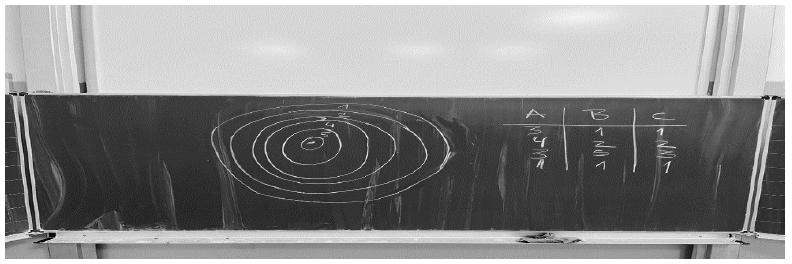
Note. Photo taken by the researcher during classroom observation, grade 1, “Elena Gjika” School, March 2018.
Figure 1 The Dart Technique During the Student Learning Process
This figure presents the application of the Dart teaching technique during a first-grade mathematics lesson. The technique was implemented to help students learn basic addition. Pupils were divided into three groups - A, B, and C - and engaged in collaborative activities designed to reinforce their understanding of number addition through guided instruction and group work.
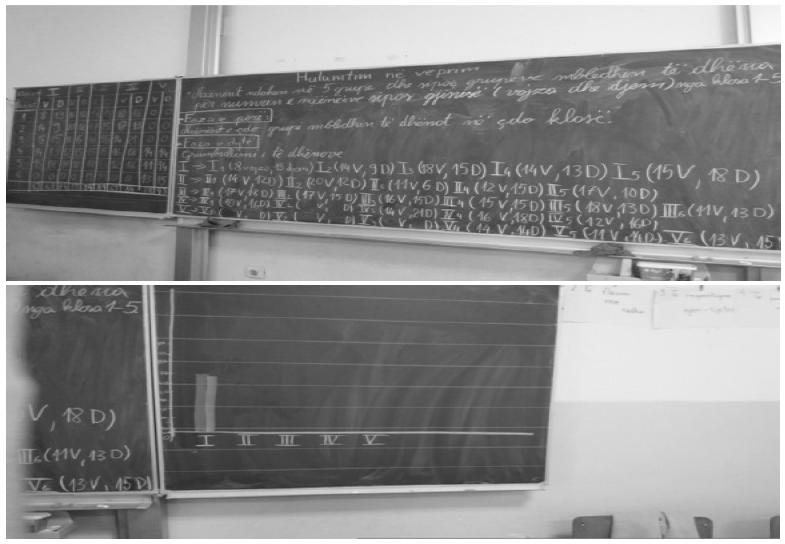
Note. Photo taken by the researcher during classroom observation, grade 3, “Elena Gjika” School, March 2018.
Figure 2 Application of the “Action Research” Teaching Technique During the Learning Process
This figure illustrates the use of the “Action Research” teaching method in a third-grade mathematics class. Students were tasked with collecting data on the gender distribution of students in other classes - specifically, how many were girls and how many were boys. Divided into groups, the students collaborated and worked together to gather the data and later reported their findings to the class. The figure presents the number of girls and boys in each grade, from first to fifth grade.
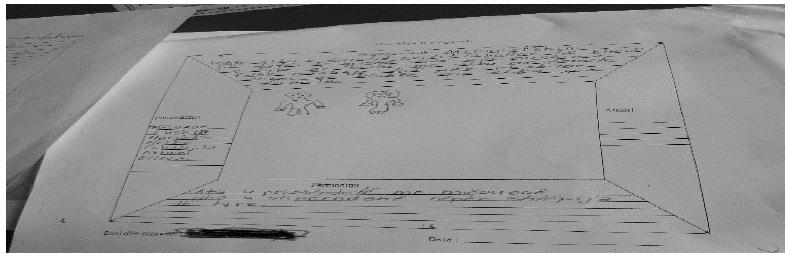
Note. Photo taken by the researcher during classroom observation, grade 3, “Elena Gjika” School, March 2018.
Figure 3 Teaching Technique: “Story Frame” as a Model of the Learning Process
This figure shows individual student work, where each student was given a worksheet to complete. Their task was to describe the characters, their actions, and the events that took place in the story they had previously read. The activity was designed to support reading comprehension and narrative structure through guided reflection and written expression.
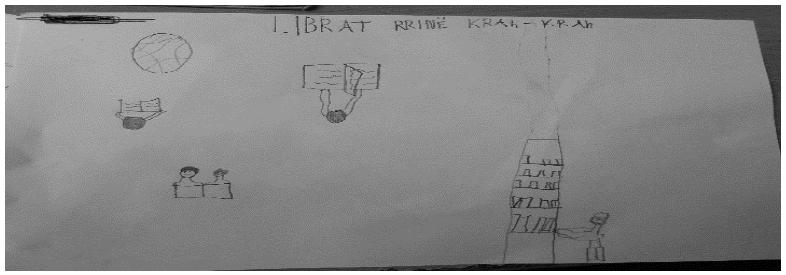
Note. Photo taken by the researcher during classroom observation, grade 1, “Elena Gjika” School, March 2018.
Figure 4 Teaching Technique: “Visualization” - A Model of the Learning Process
This technique was implemented with first-grade students during a native language lesson. Through the visualization technique, students were asked to represent themselves in the library and illustrate how they behave while being there. The figure shows the work of one student who drew himself reading, placing a book in the drawer, and his classmates also reading.
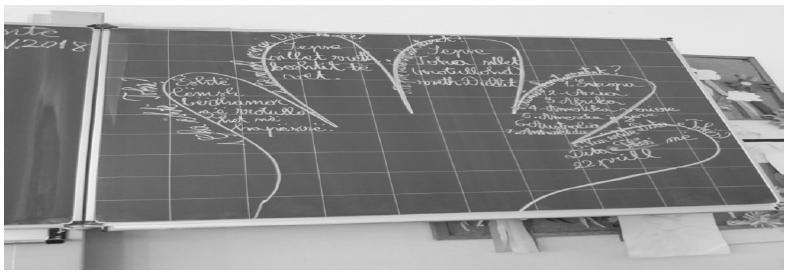
Note. Photo taken by the researcher during classroom observation, grade 4, “Elena Gjika” School, March 2018.
Figure 5 Teaching Technique: “The Hand of Questions” During the Learning Process
This instructional technique was observed during a Man and Nature lesson with fourth-grade students. Learners engaged with the content by responding to the key inquiry questions: Who? What? When? Where? and Why? These questions aimed to promote critical thinking and deepen understanding of the subject matter.
Interview Results: Student Opinions on the Impact of Teaching Techniques in Shaping Habits for Democratic Citizenship
This interview explores students’ views on how specific teaching techniques influence the development of democratic citizenship habits. Techniques discussed include: Think/Pair/Share, Academic Opposition, Darts, Gallery Tour, Project-Based Learning, Pencils in the Middle, Cubing, Learning with Classmates, Reciprocal Teaching, Research in Action, Question Hand, Walk Around/Talk About, and Character Analysis, among others.
Student Participation in the Learning Process
There is unanimous agreement among the interviewed students that all classmates participate actively in various learning groups. Their statements reflect this consensus:
“Yes, we are all participants in groups. The teacher divides us by numbers.” (S5)
“I feel better when we learn in groups with classmates.” (S2)
“Yes, we all contribute within the group.” (S4)
“I learn more easily when we work in groups.” (S3)
“When we learn in groups with friends, I feel equal.” (S2)
“I feel equal with others and prefer group learning.” (S1)
These statements suggest that group-based teaching techniques foster inclusion, cooperation, and a sense of equality among students. Many students associate group learning with feeling more secure, valued, and supported in the classroom.
Collaboration and Responsibility in Learning
Students expressed a preference for collaborative techniques because they promote responsibility and shared learning experiences:
“We feel responsible to contribute in the group, especially when we use the technique Think/Pair/Share.” (S1)
“I feel obliged to give my answer.” (S6)
“I always help my friend who cannot contribute during group work.” (S2)
“I always help my classmate who has a hand injury.” (S3)
“We always help our friends who have various health problems during group work.” (Interviewer 04)
These reflections highlight how collaborative methods build empathy and mutual support - key components of democratic citizenship. Working together helps reduce individualism and encourages inclusiveness in the classroom.
Respect for Opinions
When asked about respecting peers' opinions during the learning process, students responded positively:
“Yes, I always respect a friend’s opinion.” (S5)
“Each of us has the right to express our opinion freely, whether we are right or not.” (S7)
“I have learned about respect during various activities, for example through the Walk Around/Talk About technique.” (S2)
Such statements show that interactive teaching techniques help students practice freedom of expression and respect for differing viewpoints.
Expression and Argumentation Skills
Students noted that certain techniques help them develop the ability to express and defend their opinions:
“When the teacher used Academic Opposition, we learned to give our opinions and support them with facts. The Argumentative Essay also helped us defend our opinions when writing about a topic.” (S6)
“Yes, through Academic Opposition, we learned to defend our opinions with facts.” (S8)
“The Argumentative Essay taught me to support my opinion using arguments I know.” (S4)
These techniques clearly help students practice critical thinking and articulate their thoughts - an essential democratic skill.
Experiencing Equality Through Structured Techniques
Students reported that teaching strategies helped instill a sense of fairness and equality in the classroom:
“We learned about equality during group activities. For example, with Pencils in the Middle, whoever’s pencil the teacher picks gets to answer.” (S1)
“In class, we take turns speaking or completing tasks. For example, with Darts, we all throw in the order we’re assigned.” (S5)
These methods encourage equal participation, showing students that fairness and structured opportunity are central to classroom life and democratic behavior.
Discussion
The findings from classroom observations of students' behavior during the application of 32 teaching techniques reveal frequent instances of freedom of expression, politeness, mutual understanding, respect, and responsibility in the learning process. These findings align with previous research. For example, Haslip (2020) found that the implementation of the "Courtesy Script" technique with first-grade students improved self-control, respect, politeness, and cooperation. Interview data further support these observations. Students consistently reported that they respect their classmates' opinions and believe that everyone has the right to express their views freely. According to the interviews, students have learned to value and respect one another’s input during classroom discussions and activities.
In addition, students indicated that they have learned to be responsible for their assigned tasks and to behave equitably, taking turns and following rules for participation. This is consistent with the findings of Ayish and Deveci (2019), who noted that students develop responsibility through project-based group work. Orazbayeva et al. (2022) also highlighted the importance of play-based techniques in developing creative thinking and the ability to express thoughts both orally and in writing. Similarly, Wirkus (2020) emphasized that schools provide students with opportunities to exercise their right to free expression - an essential element of democratic education.
Observations also revealed that empathy and cooperation were consistently displayed across different techniques. These traits were evident in the students' remarks, such as: "We help our classmates if needed during the learning process, whenever we are given the opportunity to do so." Research by Meyers et al. (2019) confirms that empathy can be taught through classroom behavior rules and teacher guidance. Likewise, Nurhasanah, Zulela, and Solihatin (2020) found that techniques such as role play, graphic organizers, discussions, group work, and games can foster empathy in students. This aligns with Sykas and Peonidis (2022), who argue that a socially supportive school climate promotes the development of democratic skills like responsibility, empathy, and respect.
Students also expressed a strong preference for collaborative learning, which they associate with feeling equal, supported, and more comfortable. According to Şimsek (2012), collaborative learning contributes positively to the development of citizenship competencies. Moreover, students reported that they have learned to express and defend their opinions with facts, particularly through techniques such as the argumentative essay. This supports findings by Meral, Kayaalp, and Namli (2022), who emphasized the value of argumentative essays in teaching controversial issues, fostering critical thinking, and developing respect for differing viewpoints.Observation data also show that the use of various techniques promotes self-control, tolerance, and mutual assistance among students. Interview responses confirm that students frequently help each other during the learning process. Schuitema, Dam, and Veugelers (2003) also noted that techniques such as dramatization and service learning enhance students’ moral development by encouraging cooperation and ethical behavior.
However, the value of debate, as a key democratic skill, appeared less frequently in the observed teaching techniques compared to other democratic values. This indicates that each teaching technique may serve a distinct purpose in the educational process. Pezhman and Moomala (2013) emphasize that debate-focused techniques keep students engaged while developing critical thinking, content mastery, and oral communication skills. Similarly, Zúñiga et al. (2020) highlight the role of varied learning activities in cultivating civic attitudes - such as respect, empathy, cooperation, and effective communication - while promoting active, evidence-based learning. Finally, observations revealed that when different teachers applied the same technique across various subjects, student behavior remained consistent. This suggests that the impact of a teaching technique is independent of subject matter, reinforcing the idea that each method carries its own distinct educational function or "action mission."
Conclusion
The analysis of 32 teaching techniques across 12 democratic indicators reveals that values such as freedom of expression, responsibility, mutual respect, and politeness are consistently fostered in the classroom environment. Notably, behaviors such as freedom of expression, politeness, mutual respect, and responsibility were observed in nearly all or all techniques, highlighting their central role in democratic learning. While high levels of self-control and tolerance were also evident in the majority of teaching strategies, values such as empathy, cooperation, and debate appeared less frequently - though still meaningfully - within a more limited range of techniques. This suggests that while some democratic values are inherently supported across most teaching practices, others may require more intentional integration into the learning process.
The interview findings provide clear evidence that the implementation of diverse teaching techniques significantly contributes to the cultivation of democratic citizenship habits among students. Techniques such as “Think/Work in Pairs/Share,” “Academic Opposition,” “Pencils in the Middle,” “Walk Around/Talk About,” and “Argumentative Essay” promote not only academic engagement but also key democratic values, including equality, collaboration, empathy, respect for diverse opinions, and responsibility. Students reported feeling more comfortable, confident, and involved when engaged in group-based and participatory learning. They expressed that these techniques enabled them to take ownership of their learning, share responsibility within groups, and contribute meaningfully to class discussions. Notably, their reflections revealed that empathy and mutual support emerged naturally through collaborative work, particularly in situations where they assisted peers facing challenges. Moreover, the ability to express and defend personal viewpoints using evidence - as fostered by techniques like “Academic Opposition” and “Argumentative Essay” - demonstrates how critical thinking and open dialogue are integral to the democratic learning process. The emphasis on equal participation, observed in activities such as “Pencils in the Middle” and “Darts,” reinforces fairness and the recognition of each student’s voice.
In summary, students' statements highlight that when thoughtfully applied, teaching techniques do more than facilitate learning - they shape a classroom culture grounded in democratic principles, empowering students to become active, empathetic, and responsible participants in both school and society.
Limitations and Future Research
This study offers important insights into how teaching techniques support democratic citizenship education but is limited by its specific context, short-term scope, and focus on younger students. It does not account for differences in how teachers implement the same techniques or assess long-term impacts on students' democratic development. Future research should include diverse age groups, use mixed-method approaches (qualitative and quantitative), and conduct longitudinal studies. Cross-cultural comparisons could also help identify how different educational contexts influence the effectiveness of democratic teaching methods.

