




 Inglês (pdf)
 Artigo em XML
 Tradução automática
 Enviar este artigo por email
 Permalink

1 Introduction
Teaching an additional language is a challenging and demanding task, as educators need to be aware of the importance of creating a safe and productive environment in which students feel comfortable to express themselves, building a good rapport (Hughey, 2011). The main purpose of an additional language class is to encourage students to think critically by means of engaging themselves in multimodal genres, so that they comprehend language as “constitutive of situated social practices” (Motta-Roth; Heberle, 2015, p. 2).
To ensure the comprehension of English as an Additional Language (EAL) among sighted students, teachers typically use visual aids such as pictures, photos, videos, flashcards, maps, and posters. While these materials serve as valuable realia and aid learners in grasping the language, adaptations for non-sighted students are needed. These learners require tangible or audible exemplars of the didactic material, which can be explored through alternative senses (Resources For Teaching English As A Second Language To Learners With Blindness Or Visual Impairment, 2022).
Despite the provision of Braille textbooks through the National Textbook Program (Programa Nacional do Livro Didático - PNLD1) by the Brazilian Education Ministry, it is important for teachers to be familiar with other adapted materials. This familiarity allows them to select the most suitable approach based on the unique abilities and learning styles of their students. These adaptations hold significant value, not only for visually impaired students who gain access to activities previously inaccessible to them but also for teachers who can explore diverse materials that benefit the entire group which include both sighted and non-sighted learners.
By conducting searches on journal platforms for works related to the EAL learning-teaching process of visually impaired students, we observed a lack of discussion on this theme within the field of Applied Linguistics with regard to papers. This indicates that the knowledge production on the theme seems to be publicized through other media such as printed books, e-books, and book chapters. Books exemplars include “Deficiência visual e ensino de línguas estrangeiras: políticas, formação e ações inclusivas” (Medrado, 2014) and “Diálogos sobre inclusão: das políticas às práticas na formação de professores de línguas estrangeiras” (Celani, 2017). The search results further highlight the need to broaden the dissemination and discussion of research findings on adapted didactic materials for visually impaired students across various media platforms including journals, facilitating easier access for educators.
The aim of this study is to suggest adaptations for didactic activities in the most used textbook in Santa Maria, RS, in 2021, to be used by sixth grade visually impaired students. To achieve this purpose, a Review of Literature was conducted, focusing on papers about the teaching and learning process of those students. Based on the findings from this research, tailored adaptations for selected didactic activities are suggested. Before discussing these adaptations, the subsequent sections provide an exploration of the national inclusion of visually impaired individuals in social and educational contexts. This discussion encompasses historical perspectives on national legislation and milestones, as well as key perspectives on the teaching of visually impaired students.
2 Historical landmarks: Legislation and Discourses on Disability
Various types of physical, mental, and sensory impairments were once addressed using pejorative and discriminatory terms in Brazil. Throughout much of the 20th century, individuals with disabilities in Brazil faced systemic segregation and denial of basic rights, including access to proper education. However, a gradual shift began to take shape in the 1960s and 1970s, marking the start of a long-term process towards inclusion and rights recognition. This period saw the introduction of the first Law of Guidelines and Bases of National Education and the establishment of the National Center for Special Education (CENESP2), “normalizing”3 disability and beginning to ensure the right to education for individuals with disabilities (Alves, 2017, p. 15). The momentum for change continued over the following decades, with the enactment of three additional laws on national education guidelines. Each of these laws represented further progress in the ongoing journey towards inclusive education: 1) Law 4.024/61 (1961) laid the groundwork by ensuring the basic right to schooling, 2) Law 5.692 (1971) extended protections to high school education, and 3) Law 9.394/96 (1994) marked a significant step forward by clearly outlining the responsibilities of different levels of government (municipal, state, and federal) for all educational stages in Brazil. This series of legislative changes reflects a sustained effort over more than three decades to address the educational needs and rights of individuals with disabilities in Brazil, showcasing the gradual nature of this historical process.
The 1990s marked significant milestones worldwide in support of people with disabilities. The World Declaration on Education for All, proclaimed by The United Nations Educational, Scientific and Cultural Organization (UNESCO), emphasized that every individual has the right to education and should have access to fundamental learning opportunities (UNESCO, 1990). Additionally, in 1994, the Salamanca Statement was introduced by the United Nations, advocating for social and educational inclusion. The statement emphasized that individuals with special needs should receive equitable education, irrespective of any limitations (Figueiredo; Kato, 2015).
As of 2000, Brazil witnessed the proclamation of several laws and decrees that have significantly impacted the education landscape. Among the most relevant ones are the National Guidelines for Special Education in Basic Education (Diretrizes Nacionais para Educação Especial na Educação Básica) and the National Special Education Policy from the Perspective of Inclusive Education (Política Nacional de Educação Especial da Perspectiva da Educação Inclusiva). The latter policy guarantees the right of students with any disability to attend public schools, while the former is dedicated to putting this democratization into practical implementation, ensuring accessibility and inclusion for all (Alves, 2017).
The Brazilian Inclusion Law (2015), also known as the Statute on Persons with Disabilities (Lei Brasileira de Inclusão da Pessoa com Deficiência - Estatuto da Pessoa com Deficiência), has significantly impacted school inclusion. Article 27 grants individuals with disabilities the right to inclusive education at all levels and throughout their lives. The aim is to maximize their physical, sensory, intellectual, and social potential, tailored to their unique characteristics, interests, and learning needs. Education rights include a) implementing personalized and collective measures in supportive academic and social environments, ensuring access, retention, engagement, and learning in educational institutions; and b) promoting research to advance pedagogical methods, materials, equipment, and assistive technology (Brasil, 2015).
Despite legislative advancements both nationally and internationally, persistent societal segregation stems from factors like poor accessibility, stereotypes, limited opportunities, and legislative shortcomings (García, 2014). To foster more inclusive communities that embrace tolerance and equality, we understand that it is essential to adopt inclusive perspectives and make concerted efforts to provide equal opportunities to all citizens.
According to World Health Organization (WHO) in 2019, there were nearly 39 million visually impaired individuals worldwide, with over 1.5 million of them residing in Brazil (Cegueira Afeta 39 Milhões de Pessoas no Mundo, 2019), based on data from the last census conducted by the Brazilian Institute of Geography and Statistics (IBGE). Moreover, a survey published by IBGE in 2015 (Villela, 2015) reported that the South region of Brazil had the highest proportion of people with some level of visual impairment, accounting for 5.4% of its population.
Though the majority of individuals with visual impairment or blindness are over the age of 50 (Blindness and Vision Impairment, 2021), we must not overlook the younger population in similar situations, especially visually impaired children in school. Thus, we concentrate our didactic adaptation proposal on students with blindness, the most severe form of visual impairment, with the aim of potentially benefiting students at all educational levels.
2.1 Perspectives on teaching visually impaired students
Upon analyzing recent didactic materials and textbooks, it becomes evident that a significant portion of them heavily relies on visual elements and multimodal texts, including images, drawings, maps, and posters. While these elements undoubtedly play a vital role in education, it is essential to recognize that language teaching materials do not have to be exclusively visual (Teaching Languages to Blind and Visually Impaired Students, 2022), as there are alternative teaching methods that can effectively accommodate non-sighted students as well.
EAL teachers may encounter various challenges when they have visually impaired students in their classes. Some of these challenges include student demotivation or discouragement, the unfamiliarity of both the student and the teacher with Braille and other accessible materials, and the potential sense of exclusion felt by visually impaired students among their classmates (Benwell, 2022 4). Therefore, it is crucial for teachers to exercise patience and strive to create a comfortable environment where students feel encouraged to participate and are not afraid of making mistakes. As educators, we bear in mind that a visually impaired student is first and foremost a student, and their condition should be a secondary consideration. In other words, visually impaired students should receive equal treatment as their sighted classmates, even though their learning methods may differ.
Teaching an additional language to a non-sighted student may indeed present challenges, but it can also be an incredibly rewarding experience as both student and teacher engage in the collaborative construction of knowledge. Through this mutual journey, students can gain confidence and make steady progress in learning a new language, while the EAL teacher will continuously explore different materials and develop strategies to effectively support visually impaired students in the classroom.
Based on such considerations, our research aims to address the following questions: How can visually impaired students learn an additional language when traditional printed materials and adapted resources may not be readily accessible in regular classrooms? Is it possible to adapt visual and printed activities using everyday materials? What options do teachers have to make EAL printed activities accessible to those students? To answer these questions, we propose adaptations for didactic activities based on a Review of Literature concerning the teaching and learning process of visually impaired students, which will be presented following the Methodology section.
3 Methodology
The present work follows a qualitative research approach grounded in an interpretivist philosophical stance, emphasizing the comprehension of how the social world is interpreted, experienced, and constructed. The employed research methods prioritize flexibility and sensitivity to the social context where data is generated (Mason, 2002, p. 3). This perspective recognizes that researchers cannot remain neutral, objective, or detached from the knowledge and evidence they produce; instead, their perspective and involvement significantly shape research outcomes (Mason, 2002, p. 7).
While investigating social issues where language plays a defining role, our aim is not only to discuss but also to actively address the challenges at hand (Schlatter, 2009), aligning with the principles of Applied Linguistics. As emphasized by Mason (2002, p. 8), “qualitative research should be approached as a moral practice” taking into account its political context (p. 8). In this study, we are dedicated to contributing to the field and to teachers by providing suggestions and insights into the adaptations of materials for visually impaired students in the 6th grade learning EAL. Therefore, this research can be regarded as propositional since we propose an adaptation for EAL activities that cater to the learning needs of those students.
In the following sections, we present related works from different fields concerning adapted materials for visually impaired students.
3.1 Related works: searching for adaptations
The field of Applied Linguistics has seen numerous studies on student inclusion published in various formats, including printed books, book chapters, and e-books. These studies span across the domains of Education, Teaching, and Linguistics, reflecting the interdisciplinary nature of inclusive education research. While it is beyond the scope of this work to provide an exhaustive list, we can highlight a few representative examples that illustrate the breadth of scholarship in this area. "Curricular adaptations in the 'inclusion' of deaf students: collaborative interventions" (Pinheiro; Fidalgo, 2019), and "Inclusive practices and policies in language teacher education courses" (Medrado; Mello; Tonelli, 2019) are part of a larger body of work exploring inclusive initiatives, programs, and research in Brazilian universities. It's important to note that these publications, along with others in the field, have a broader focus on inclusive language teaching and learning and do not exclusively address adaptations of textbooks for visually impaired students, which is the specific focus of the present work. Additionally, there are specialized resources emerging in this field, such as the e-book "Materiais didáticos acessíveis de língua inglesa para alunos com deficiência visual" (Medrado; Dantas, 2019), which resulted from a project developing and adapting various pedagogical tools to enhance the English language learning experience for visually impaired students. This e-book, while more closely aligned with our current focus, is part of the growing literature addressing the diverse needs of learners in inclusive educational settings.
The increasing attention given to this topic is a positive development for the fields dedicated to researching and promoting inclusion. By shedding light on the needs and challenges faced by learners and teachers, these studies contribute to the enhancement of language education practices and provide valuable insights for educators and policymakers alike.
In December 2020, we employed research strategies on the Scientific Electronic Library Online (SciELO) platform to select texts containing the terms 'blind,' 'teaching,' and 'school' in their title, abstract, or keywords. We applied research filters requiring that the publication journal be related to teaching and education, texts be accessible through open access, and texts fall under the genre categories of articles or review articles. This search resulted in nine papers.
Considering the objective of this study, the following inclusion criteria were adopted: a) the paper should be published on SciElo; b) it should pertain to adaptation or didactic materials for visually impaired students; c) it must be available online and accessible for free; d) it should be relevant to visually impaired students in the school context, even if the topics covered are diverse and not specifically associated with the field of languages. Applying these criteria and reviewing the nine papers, we found that five met all the inclusion criteria and are included in the Review of Literature, as presented in Table 1. The other four texts did not meet all the criteria and were excluded from the analysis.
Table 1 Selected works for the Review of Literature.
| N. | Title. Author. Year | Keywords | Abstract with highlights |
|---|---|---|---|
| 1 | Experimental activities in the Early Years of Elementary School: Analysis on a backdrop with blind students. (Biagini; Gonçalves, 2017). | Experimentation; Blind and sighted; Science teaching. | The research’s purpose is to investigate limits and potentialities of an experimental activities methodology for teaching and learning in Natural Science in a class of 3rd-year elementary school attended by seers and one blind student. […] |
| 2 | Oral History: a Method for Investigating Physics Education of Blind Students. (Ferreira; Dickman, 2015). | Special Education; Physics Education; Oral History; Blind Student. | In this paper, we discuss the role of oral history in qualitative research, as an essential tool for collecting data from blind students or their teachers, [...]. The analysis of the blind students’ narratives provides data that indicate the best choices the researcher should make when elaborating strategies and didactic materials appropriate to blind students […]. |
| 3 | Inclusion of Blind Students in Mathematics Classes: development of a teaching kit. (Uliana, 2013). |
Teaching Material Kit; Blind Student; Mathematics. |
This article presents the development and testing of an educational kit [...]. The kit enables blind people, using the sense of touch, to carry out various mathematical activities involving plane geometric figures and graphs of polynomial functions. [...] The material was tested by one 6th grade blind student in a public school in the state of Rondonia […]. |
| 4 | The planning of Mechanics and Modern Physics teaching activities for blind students: difficulties and alternatives. (Camargo; Nardi, 2006). | Education; Special Education; Educational Media. |
We report here partial outcomes of a study aimed to verify future High School teachers' performance when [...] were asked to plan Mechanics and Modern Physics topics to a students class which included visually handicapped pupils. [...] as alternatives, future teachers showed creativity in order to surpass passive aptitudes related to this educational problem and working out methodological strategies deprived of the relation knowing/seeing. |
| 5 | Reports by Blind Musicians: Supporting the Teaching of Music for Students with Visual Impairments. (Oliveira; Reily, 2014). | Special Education; Music Education; Visual impairment; Inclusion. | This qualitative study aimed to understand significant issues regarding access to music learning faced by blind musicians. [...] The article intends to reveal music learning characteristics and needs of students with visual impairments, so as to improve music teachers’ professional practice within the regular school context, as well as to discuss implications for teacher certification in university courses for future teachers of students with visual impairments. |
Source: The authors, based on Biagini; Gonçalves (2017), Ferreira; Dickman (2015), Uliana (2013), Camargo; Nardi (2006), Oliveira; Reily (2014).
The data from those five papers reveal a complementary set of teaching pedagogies that are essential for effectively instructing and including visually impaired students in the classroom. Those pedagogies are related to:
Unpreparedness of teachers to deal with students’ needs (including visually impaired students) due to the lack of related contents in teacher education;
Student’s autonomy/independence;
Lack of adapted materials aimed at visually impaired students;
Problems with inclusion of visually impaired students in the regular classroom; and
Ideas for the adaptation proposal.
According to our research, fields such as Physics (Ferreira; Dickman, 2015) and Music (Oliveira; Reily, 2014) indicated the need for more proposals on the theme of inclusion of visually impaired students. Additional challenges are linked to the insufficient preparation provided in teacher education undergraduate programs (Camargo; Nardi, 2006; Oliveira; Reily, 2014; Ferreira; Dickman, 2015), where future educators only receive limited exposure to special education topics. This issue was brought to light in Oliveira and Reily's study (2014) through interviews with five visually impaired music students, aiming to uncover the obstacles they faced in accessing and learning music (Oliveira; Reily, 2014, p. 407). One significant finding indicated a potential lack of coursework dedicated to addressing the specific needs of students with disabilities during their undergraduate studies (Oliveira; Reily, 2014, p. 417).
Similarly, within the teacher education undergraduate programs at Universidade Federal de Santa Maria, including the English Major5, there is only one course in the curriculum covering the diverse aspects of special education. Moreover, Ferreira and Dickman (2015, p. 245) cite daily challenges experienced by in-service teachers, such as "violence, low pay, indiscipline, and institutional assessments", which may hinder their pursuit of specialized continued education focused on adaptations for students with impairments.
English teachers who participated in Silva (2014)’s investigation and work with visually impaired students highlighted several key points regarding their practice. They expressed concerns about the lack of teacher training in inclusive education and in visual impairment. Additionally, they emphasized the importance of student engagement and responsibility in their own learning process. Moreover, the need for an ongoing reconfiguration of teaching practices as a continuing process were recognized.
In the study conducted by Biagini and Golçalves (2017), the researchers presented the outcomes of a group activity designed for a third-year elementary school class comprising both sighted and one visually impaired student (João). The activity involved dividing the class into groups, with each student assigned a specific role (reader, writer, communicator, and coordinator) to analyze a selected text. It was observed that the visually impaired student faced challenges in achieving independence and often required assistance from the teacher or peers, even for simpler tasks. The authors found that João's classmates' solidarity, while well-intentioned, hindered his autonomy despite the activities being designed with his impairment in mind.
We understand it is crucial to avoid placing the entire responsibility on in-service teachers, as they often face overwhelming workloads and are not provided with adequate working conditions and time to adapt materials for students with disabilities. In many public schools, there is a shortage of tactile resources that can be used as didactic materials across various subjects, which further exacerbates the issue (Uliana, 2013). Uliana's research (2013) was motivated by this concern, and the study aimed to develop and test a pedagogical kit specifically designed for teaching Math to visually impaired students. The interviews conducted with teachers and students emphasized the necessity of having readily available and adapted materials designed specifically for those students at school, among other factors highlighted in Table 2.
Table 2 Summary of elements highlighted by Uliana (2013).
| Students | Teachers |
|---|---|
| • There is a Resource Room available for students. • There are no books printed in Braille available. • They present an age/grade discrepancy of seven years on average. • They complained about the lack of teachers’ qualification to address their educational difficulties, especially in Math. • They manifested the necessity of having pedagogical materials that enable the access to curricular contents in full. • They consider learning Math difficult. |
• Both teach other students with disabilities. • They complained about the lack of professional qualification. • They mentioned that inclusion in the schools they work in is only in theory. • They highlighted the necessity of having pedagogical materials specifically headed for visually impaired students. • They already improvised some pedagogical materials to address the demands of their students with disabilities. • Both do not know how to operate the Soroban and do not master the reading and writing in Braille. |
Source:Uliana (2013, p. 607).
It is important to acknowledge that, despite the presence of a resource room6 for special educational services, there were no pedagogical materials available to facilitate the access of visually impaired students to the entire curriculum, resulting in significant gaps in their learning process. Consequently, the teacher had to create improvised materials, often without financial support, to meet the needs for adapted resources that were lacking in the school (Uliana, 2013).
Furthermore, issues related to the inclusion of visually impaired students in the classroom (Camargo; Nardi, 2006; Uliana, 2013; Oliveira; Reily, 2014; Ferreira; Dickman, 2015) also warrant our attention. According to Ferreira and Dickman (2015), while inclusion of visually impaired individuals is advocated in theory, it still presents significant challenges when applied in the classroom environment. In their study, the authors sought to demonstrate how the oral history methodology contributes to the understanding of non-sighted students' experiences in learning Physics. The oral history method involves giving voice to a marginalized minority, aiming to delve into their personal past experiences and overcome further difficulties. By using this method, visually impaired students have the freedom to describe their encounters with various materials and teaching approaches, allowing them to offer valuable insights and strategies to teachers that may aid or hinder their learning process. The application of the oral history method in Ferreira and Dickman's research (2015, p. 256) yielded positive results, providing a potential solution to address the lack of effective inclusion of visually impaired students in the classroom as “the researchers got closer to the narratives of both teachers and students in the strategy of reformulating and building materials or didactic resources that enable greater inclusion of visually impaired students […]”.
Other approaches can also be explored to address the issue of segregation in the classroom. Camargo and Nardi (2006) conducted research on the lack of inclusion of visually impaired students in Physics classes, seeking to raise awareness among undergraduate teachers and identify potential solutions to the problem. Their investigation encompassed two key phases: a preparatory stage and a practical implementation phase. During the preparatory stage, future Physics teachers were tasked with devising a course that would cater to both 35 sighted students and two non-sighted students. The undergraduate students encountered challenges in finding methods that did not heavily rely on visual resources, as many Physics teachers predominantly used the blackboard and visual experiments in their teaching. In an effort to enhance the inclusion of visually impaired students in the class and to find solutions to this issue, the undergraduates devised Physics activities that embraced complementary and collaborative roles involving oral exposition, group reading and discussions, and even theatrical performances (Camargo; Nardi, 2006). By adopting such alternative approaches, teachers can foster a more inclusive learning environment, enabling all students, regardless of visual ability, to actively participate in the learning process.
The teaching methods proposed to include visually impaired students in class are not limited to the Physics area; they have broader relevance across all educational fields as they can be adapted and applied in various disciplines. For instance, in the context of our current research, even though the articles from the Review of Literature may vary in terms of pedagogical objectives, actions, and educational areas, they still provide valuable insights and contributions to the development of our adaptation of EAL activities for non-sighted students. By drawing from these diverse sources, we can enrich our approach and tailor it to suit the specific needs and learning styles of those students. These ideas promote inclusivity and create an environment where all students can engage actively and meaningfully in the learning process, regardless of their visual abilities or disabilities. The flexibility and adaptability of these teaching methods create new possibilities for fostering a more inclusive and accessible education for visually impaired students in various academic settings.
According to Biagini and Gonçalves (2017, p. 8), “cooperation, solidarity, and respect for differences” among students are essential aspects to be considered, and these can be fostered through group activities. In their study, the authors proposed a reading activity in groups of four, assigning distinct roles to each student (reader, writer, communicator, and coordinator). The activity was organized into three stages: 1) individual responses to the teacher's questions followed by group discussions to formulate a collective answer; 2) presentation of the answers to the entire class, leading to further discussions and new answers; and 3) communication of the conclusions and findings from each group to the entire class.
Although the researchers chose a text from the Natural Sciences field for their discussion, this activity can be adapted for other subjects, including the English language field. Biagini and Gonçalves (2017) also conducted an experiment focusing on the importance of water for plants, as well as water potability and treatment. During this experiment, they recognized the significance of employing multisensory resources (tactile, olfactory, and auditory observations), which proved beneficial for visually impaired students in comprehending the explanations. The utilization of group activities and multisensory resources in the teaching process can promote active participation and engagement among students, leading to a more inclusive and enriching learning experience, regardless of their visual abilities.
Ferreira and Dickman (2015) shed light on various important considerations through their interviews with visually impaired students, emphasizing crucial aspects for successful inclusion in the classroom. One of the participating students stressed the significance of providing equal opportunities and necessary adaptations to achieve the same level of understanding as their sighted peers. Additionally, the student highlighted the importance of practical activities and open dialogues between teachers and students, which can contribute to creating a conducive learning environment where visually impaired students do not feel overwhelmed and discouraged to the point of giving up. As part of their proposed solutions, Ferreira and Dickman (2015) present ideas for adaptations suggested by the participants (both teachers and students) which include the necessity (and recommendation) to provide descriptions for images and graphs when they are presented in printed format. Furthermore, the teacher shared their experience with a mockup, which can be interpreted by the non-sighted student through their tactile sense. Such adaptations are essential in facilitating the learning process and ensuring a more inclusive and accessible education for visually impaired students in Physics or any other discipline.
Uliana's research (2013) offers valuable contributions with the proposal of a pedagogical kit specifically designed for visually impaired students. The author emphasizes several essential characteristics that must be considered when creating adapted materials: they should be cost-effective, utilizing affordable resources such as magnets, metal plates, EVE (expanded vinyl ester), paper, glue, and polystyrene. The materials should also be portable, neither too heavy nor too large, to ensure ease of handling for the students. Furthermore, they should be designed in a way that allows for easy assembly and disassembly of the pieces, enabling the formation of various figures and graphical representations.
As highlighted in other studies, Uliana (2013, p. 598) explains that when they have access to tangible tactile materials, “visually impaired students are able to abstract much information [...] at the same level as a sighted student is”. The use of concrete tactile resources can significantly enhance their understanding and learning experience. Importantly, the author also stresses that implementing drastic changes in teaching methods is not necessary. Instead, a few adaptations to accommodate the needs of visually impaired students can go a long way in fostering inclusivity and providing them with equal learning opportunities in the classroom.
While Uliana (2013) focused on tactile resources, Oliveira and Reily (2014) delved into the realm of audible materials, specifically in the context of teaching music to visually impaired students. Drawing from Pring and Ockelford (2005), Oliveira and Reily (2014) elucidate the strong correlation between language, cognitive, and motor skills development when individuals are exposed to a musically enriched environment. This finding applies not only to sighted students but also holds significant value for the education of visually impaired students. In their research, Oliveira and Reily (2014) propose engaging and playful activities that pique the interest of visually impaired students in the subject matter. Moreover, they highlight the significance of incorporating various accessible technologies, such as embossed materials, Braille, voice synthesizers, and screen readers, to facilitate the learning process for visually impaired students. These technological tools play a crucial role in enhancing their educational experience and fostering independent learning. Furthermore, the study underscores the vital role played by students' families, teachers, and communities in providing the necessary support and encouragement for visually impaired students' education. This nurturing environment further motivates and empowers visually impaired students to excel academically and overcome potential challenges they may face in their learning journey.
Finally, Camargo and Nardi (2006) make valuable contributions by offering alternative teaching methods proposed by undergraduate Physics teachers to foster the inclusion of visually impaired students in the classroom. To adapt printed materials, such as written evaluations, the future teachers suggested oral activities and recorded audios, providing visually impaired students with accessible means of engaging with the content. For practical experiments, the idea was to utilize everyday materials that stimulate the tactile and audible senses, enabling those students to actively participate in hands-on learning experiences. Additionally, group activities were proposed to encourage interaction and collaboration between sighted and visually impaired students. These inclusive activities included debates, reading and discussion sessions (involving orality and the assumption of complementary roles), and even theatrical plays. Such collaborative initiatives help foster a sense of unity and shared learning experience among all students.
Camargo and Nardi (2006, p. 56) emphasize the importance of adopting “active, inclusive, dialogic, and participative educational approaches”. These approaches encourage students to engage in critical thinking, reflection, and decision-making, while teachers gain a deeper understanding of their students' ideas and perspectives throughout the educational process. By implementing these pedagogical strategies, teachers can create a supportive and enriching learning environment that caters to the diverse needs of all students, including those with visual impairments.
These methodological strategies exemplify effective approaches to address the needs of visually impaired students in the classroom. They play a significant role in mitigating potential issues related to exclusion, lack of autonomy, or unprepared teachers, all of which can hinder a visually impaired student's complete learning experience. However, open communication with the student remains crucial in determining their preferred learning methods and understanding the content most effectively (Uliana, 2013; Ferreira; Dickman, 2015).
The papers included in this review not only offer ideas for creating adapted didactic materials but also provide valuable insights into teaching perspectives and strategies to overcome barriers in the development of visually impaired students. As Uliana (2013, p. 610) asserts, "the absence of sight is not an insurmountable obstacle to a student's mathematical development." The same holds true in other academic fields, including English language teaching, where achieving teaching objectives for visually impaired students is possible through accessible materials and inclusive methods. By incorporating these approaches, educators can create an inclusive learning environment that empowers and supports the educational journey of visually impaired students.
4 Selecting the textbook and the unit
Following the theoretical framework, this section outlines the methods for selecting the appropriate textbook and unit, and subsequently, the proposed adaptations for selected activities. The textbook selection was guided by two criteria, inspired by Cargnin, Rossi, and Ticks (2018, p. 562): 1) it had to be approved by PNLD in 2021; and 2) it should be the most widely adopted book for teaching English in the sixth grade of public schools in Santa Maria, RS. To identify the most commonly used textbook in Santa Maria, we accessed the SIMAD7 website and completed the provided form following the parameters in Image 1.
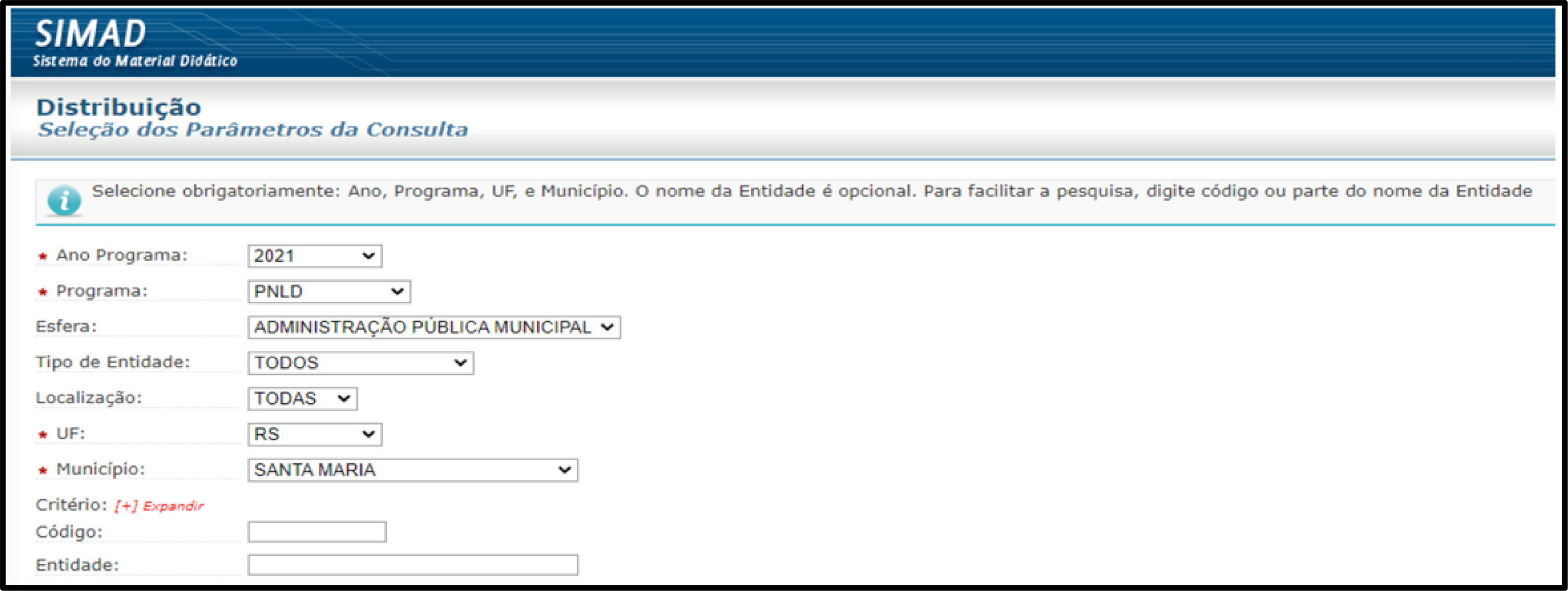
The selected parameters encompassed the year 2021, participation in the PNLD program, all types of schools (urban and rural) under municipal administration in Santa Maria. Applying these criteria, the website produced 74 results, including three CEIs (Child Education Centers), 54 EMEFs (Municipal Elementary Schools), and 17 EMEIs (Municipal Nursery Schools). Since English instruction becomes mandatory starting from the sixth grade in elementary schools, the analysis focused solely on EMEFs to identify the most commonly chosen English language textbook for this grade.
The data obtained from the website data are summarized in Graph 1, presenting the percentage and number of times each textbook was mentioned. It is important to note that the category "Not informed" represents only the initial years of the elementary level (first to fifth grade) and did not include a specific selection of an English language textbook.
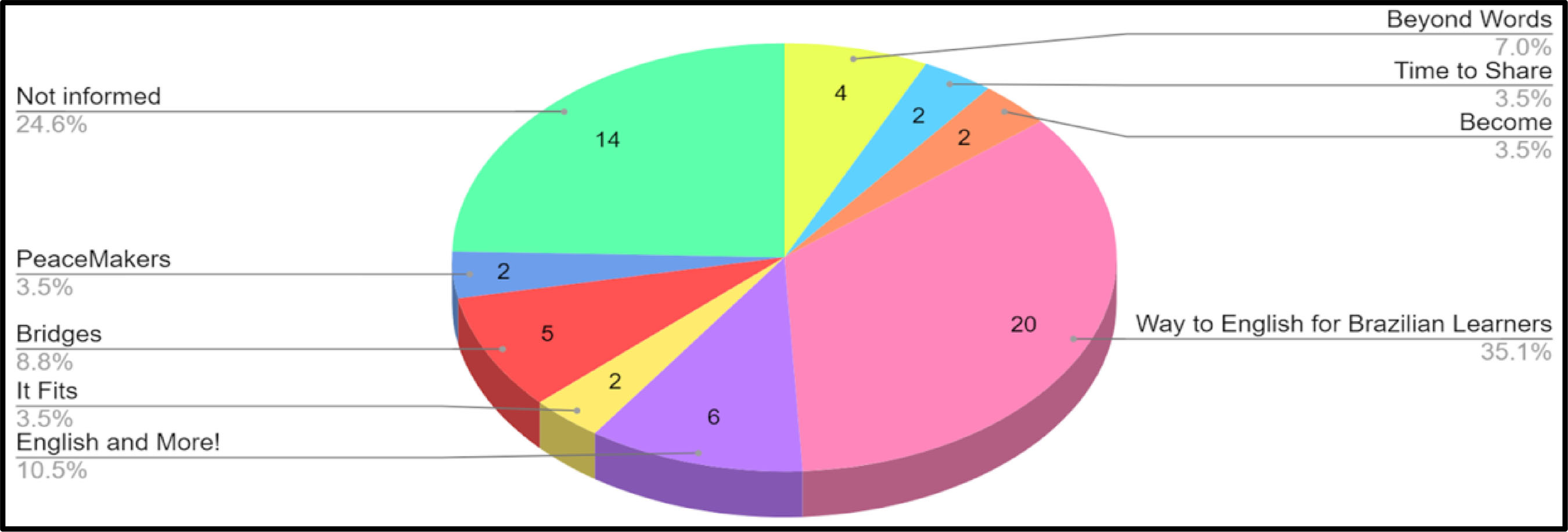
Based on the criteria set by Cargnin, Rossi, and Ticks (2018) and considering the data presented in Graph 1, it can be concluded that the English language textbook "Way to English for Brazilian Learners - 6"8 was the most widely chosen among public schools in Santa Maria for the year 2021. We selected the textbook headed to sixth-grade students to construe adaptations starting from the first level and, in the future, develop adaptations for other levels as well. Consequently, it is expected to be used in most of these schools during the triennium 2021-2023.
4.1 The textbook
The English textbook series 'Way to English for Brazilian Learners' by Claudio Franco and Kátia Tavares, initially published in 2015, is divided into four levels for grades six to nine. Additional resources for English teachers, such as flashcards, worksheets, tests, educational videos, and songs, are available on the 'Way to English/Way to Go!' website9, designed for use with specific textbooks, units, and content. Notably, there were no materials found on the website specifically tailored to the needs of visually impaired students.
Given the focus of this paper on proposing adaptations for sixth grade visually impaired students, we will concentrate on the first level of the series, which is the textbook "Way to English for Brazilian Learners – 6”.
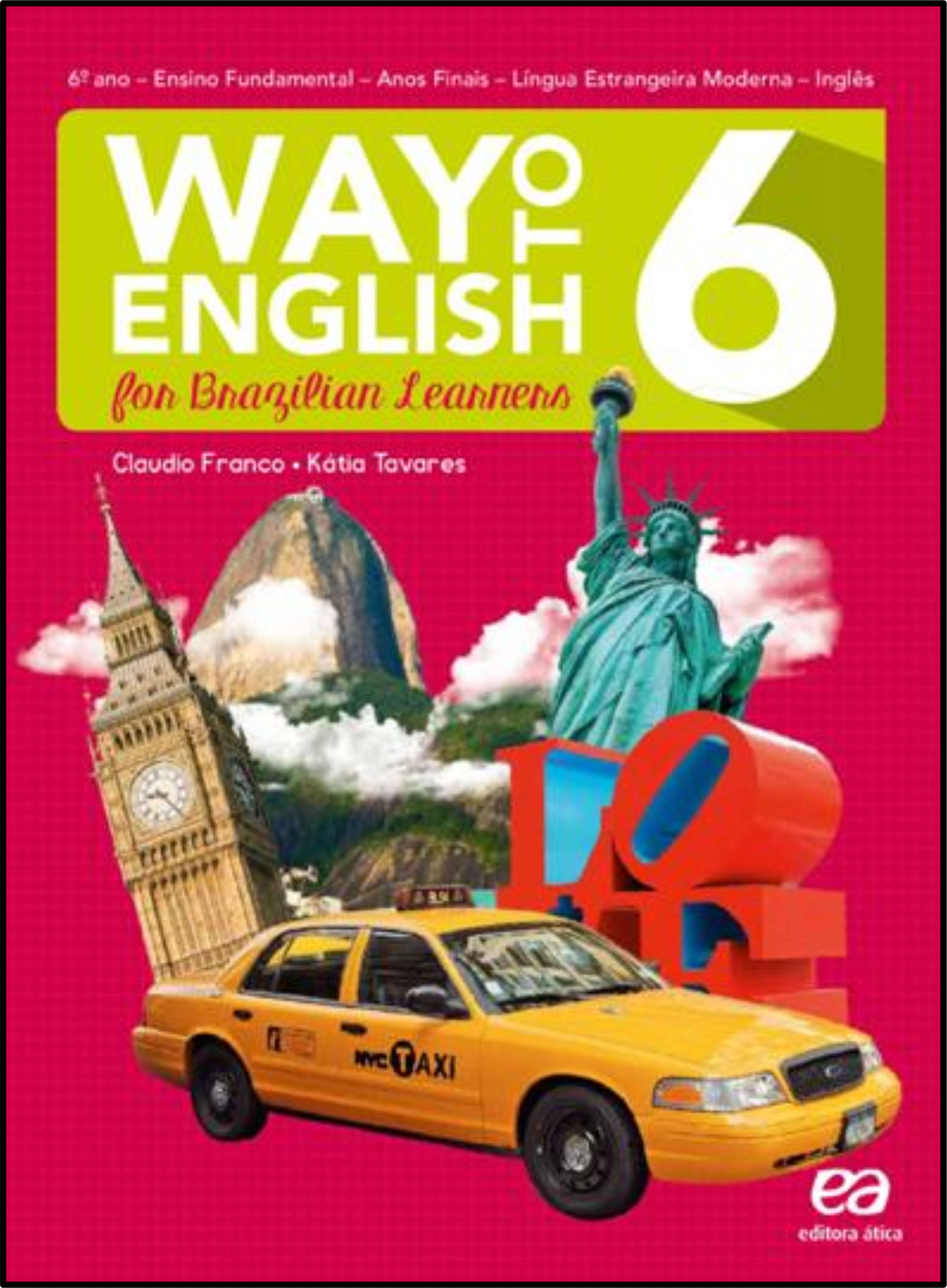
It's important to mention that we used the student's volume of the textbook in this paper, as we couldn't access the teacher's version on the 'Way to English/Way to Go!' website. The first level of the 'Way to English' collection covers fundamental aspects of the English language, with activities in English and Portuguese. They are organized by complexity, with less complex tasks presented in English and more complex exercises in Portuguese.
The textbook starts with a brief introduction, stressing the significance of the English language in daily life and providing an overview of the collection's purpose. The subsequent section titled 'Tips into Practice' offers reading and learning strategies to boost student confidence. Additionally, there are two pages of English sentences for classroom use. The core of the textbook comprises eight units, each addressing crucial sixth-grade topics. Table 3 summarizes the unit titles, contents, and discourse genres, derived from the textbook's introductory section.
Table 3 Title, contents, and discourse genres of the eight units
| Unit | Contents - Lexicogrammar | Discourse genres |
|---|---|---|
| 1 - Hello | Greetings - Subject pronouns, verb to be (affirmative form) | Comic strips, motivational posters |
| 2 – My life | Hobbies (personal interests), numbers - Possessive adjectives | Short bios, map, book cover, magazine covers |
| 3 – Around the Globe | Occupations, months of the year, countries/nationalities - Verb to be (negative and interrogative forms) | Profiles, magazine cover, headlines, comic strip |
| 4 – Let’s Go to School! | Vocabulary related to school, days of the week - Review on verb to be, question words | Timetable (schedule/planner), comic strip, campaign posters |
| 5 – What is a family? | Vocabulary about family, plurals - Genitive case | Poems, family tree, anagrams, short bio, definitions |
| 6 – Houses Around the World | Parts of the house, furniture - There is/ there are, prepositions of place | Description, website, short bio |
| 7 – Save the animals! | Animals - Imperative form | Campaign posters, word search, fragment of report, signs, comic strips |
| 8 – Exploring Different Art Forms | Vocabulary/verbs about forms of art, colors - Verb can | Comic strips, fragment of report |
Source: The authors, based on Franco and Tavares (2015).
After every two units, the textbook includes content review sections covering vocabulary and grammar from the previous units. It also features a 'Vocabulary Corner' with activities centered on key vocabulary from all eight units. The following section, 'Language Reference in Context', presents activities based on authentic texts integrating the studied grammar concepts across different discourse genres, such as comic strips, posters, and signs. The textbook's concluding pages contain dedicated sections for the Glossary, Index, and Bibliography.
4.1.1 The unit
Upon analyzing the "Way to English for Brazilian Learners - 6" textbook, we initially aimed to select one of the eight main units for presentation and adaptation in this paper. However, during the examination, we discovered that the section titled "Vocabulary Corner" holds greater significance for adaptation purposes for visually impaired students.
The "Vocabulary Corner" (pages 154 to 165) comprises 13 activities related to the vocabulary covered in all eight units of the textbook. As a result, the adapted material presented in this paper can be adopted throughout the entire year, offering a diverse range of activities. It is crucial to note that all activities in this section include visual elements such as pictures and drawings, without any provisions for visually impaired students. Image 3 displays two sample activities from units 1 and 2, respectively, illustrating the type of activities found in the Vocabulary Corner section. These activities will serve as a basis for our proposed adaptations to meet the needs of visually impaired students in English language learning.
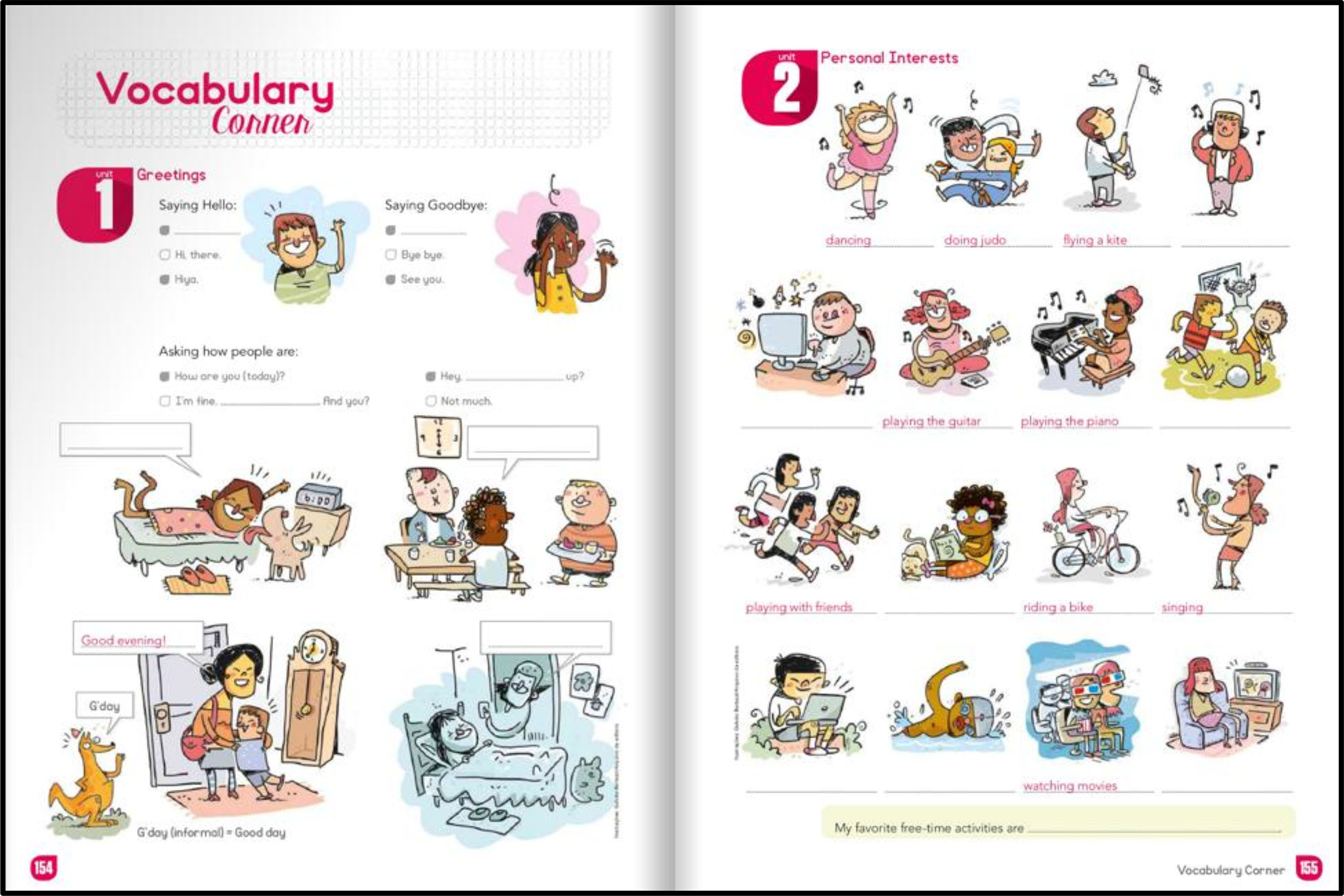
The section begins with activities related to the vocabulary content covered in Unit 1 (Greetings), recovering all the vocabulary explored throughout the textbook’s units (personal interests, numbers, occupations, months, countries and nationalities, school subjects, days of the week, family members, house and furniture, animals) and ending with activities related to Unit 8 (colors and abilities). Following the thorough analysis and explanation of each activity, a significant observation emerges regarding their striking similarities and heavy reliance on visual elements. It becomes evident that the majority of activities involve asking students to write the word corresponding to a given figure, thus creating a potential challenge for visually impaired students, who may find themselves excluded from participating in such exercises in the classroom.
In the subsequent section, we propose adaptations for some of the didactic activities presented, drawing from insights gained through the Review of Literature. These adaptations aim to ensure inclusivity and provide feasible alternatives that cater to the specific learning needs of visually impaired students. By implementing these adaptations, we strive to create a more inclusive and equitable learning environment for all students, regardless of their visual abilities.
5 Adaptation suggestions
The materials and adaptations presented are inspired by the suggestions by the authors mentioned in the Review of Literature, with a specific focus on addressing the needs of visually impaired sixth-grade students and fostering their interest in learning EAL.
In line with the concepts discussed in the previous section, the decision was made to suggest adaptations for activities from the Vocabulary Corner, encompassing vocabulary learned throughout the entire textbook. To ensure the activities are engaging and accessible for visually impaired students, a ludic approach was chosen, promoting interactive and enjoyable learning experiences that can benefit both visually impaired and sighted students alike. The goal is to spark curiosity and active participation among all students.
The adaptations do not solely focus on written vocabulary but also they aim to foster an understanding of the words in the English language and their contextual meanings. By adopting this approach, we aim to create a learning environment where all students can effectively participate and benefit from the activities.
From the original 13 activities in the Vocabulary Corner, we have selected six examples that demonstrate how visual resources can be transformed into inclusive and effective didactic activities for both sighted and non-sighted students. These adaptations offer a glimpse of the numerous possibilities available for modifying visual materials to cater to the diverse needs of students. The chosen activities are detailed in Table 4.
Table 4 Activities selected from the Vocabulary Corner
| Activity | Content | Unit |
|---|---|---|
| A | Occupations | 1 |
| B | Months of the year | 2 |
| C | Numbers | 3 |
| D | Days of the week | 4 |
| E | Animals and Pets | 5 |
| F | Greetings | 6 |
Source: The authors.
As the original purpose of the activities was to review the main vocabulary of the textbook, the same purpose was carried in the adaptations. Therefore, we did not approach activities that encompass writing and reading longer texts (as explored by Medrado and Dantas [2014], for example).
Promoting cooperation and interaction between sighted and non-sighted students is indeed crucial for an inclusive learning environment. Group activities have been shown to be effective in achieving this goal (Camargo; Nardi, 2006; Biagini; Gonçalves, 2017). For instance, let's consider activity A (shown in Image 4), which revolves around learning vocabulary related to different occupations. This activity can be further adapted to foster group interaction, with a specific focus on developing speaking and listening skills.
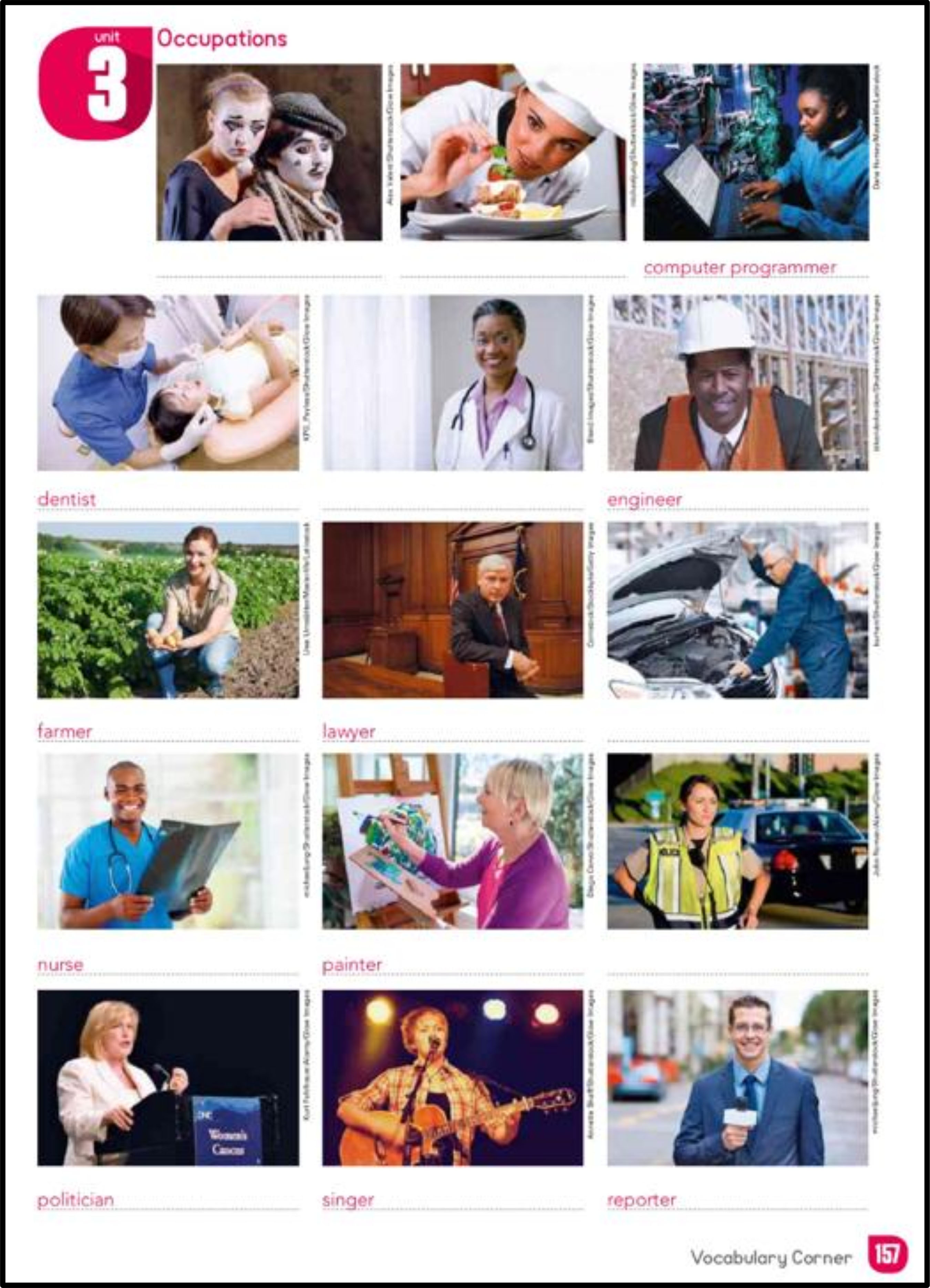
In the adapted version, students can be divided into groups, each consisting of a mix of sighted and non-sighted students. The activity could involve role-playing, where students take on different occupations and engage in conversations with their peers. They can discuss their roles, responsibilities, and tasks, as well as share their thoughts and opinions on the professions they are representing. To ensure inclusivity, teachers can provide tactile elements or Braille labels related to each occupation to enable visually impaired students to participate actively. Additionally, the use of verbal descriptions and audio cues can help bridge the gap and ensure that everyone is equally engaged in the activity.
Through this adapted group activity, students can not only enhance their vocabulary and language skills but also learn to work collaboratively, appreciating each other's perspectives and abilities. Encouraging such inclusive interactions will foster a positive and supportive learning environment for all students involved.
Instead of relying solely on images and traditional "fill in the blanks" exercises, the EAL teacher can introduce another interactive and engaging activity for both sighted and non-sighted students. One such activity involves students exploring potential careers they would like to pursue in the future. The teacher can assign this research task as a home activity, encouraging students to seek assistance from their parents, relatives, or friends to gather information. In the classroom, students can present their chosen careers to their peers in a circle. During the presentation, each student briefly describes the career they have researched, providing clues for their classmates to guess which occupation is being described. To reveal the answer, students can complete the sentence "I want to be a..." at the end of their description. This activity promotes cooperative learning, fosters communication skills, and encourages students to think about their future aspirations.
As for activity E, which involves the months of the year (as shown in Image 5), it can also be adapted to encourage group interaction. Instead of relying on visual elements, students can engage in a collaborative exercise where they explore the significance of each month and share personal anecdotes or experiences associated with them. For example, students can talk about special events, holidays, or memories related to different months. This activity not only reinforces language skills, but also allows students to connect emotionally and culturally, fostering a sense of inclusivity and understanding among all students.
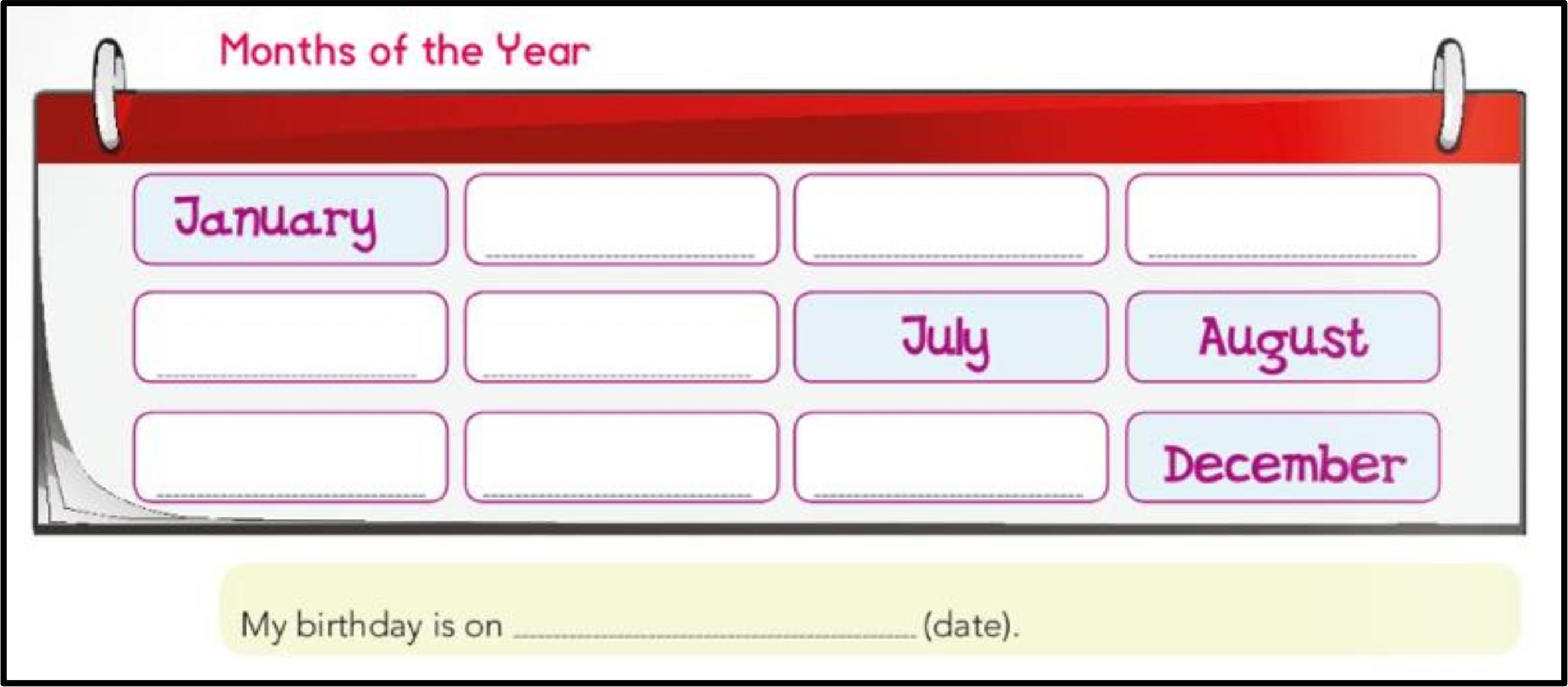
To further promote interaction and engagement among students, the EAL teacher can introduce the following adapted group activity related to the months of the year: to divide the class into groups or pairs and have each group take turns. The EAL teacher can ask a question related to a specific month, such as "Which month starts the summer in Brazil?", "Which month are we in now?", or "Which month is Halloween celebrated?". Students within each group should discuss the question and come up with an appropriate answer collaboratively. Encourage students to take turns responding, ensuring everyone has an opportunity to participate and interact within their groups. In addition, students who do not have visual impairments can describe the images to their visually impaired classmate(s), creating a collaborative learning space (Medrado; Dantas, 2019).
This adapted activity focuses on listening and speaking skills while fostering a playful and enjoyable learning environment. It encourages participation and inclusion by involving all students in meaningful discussions about different months and their significance. Additionally, incorporating tactile resources (such as realia, 3-D or high-relief strategies) can significantly enhance the learning experience for visually impaired students, allowing them to “perceive the world with their hands” (Medrado; Dantas, 2019). As demonstrated by Uliana (2013) in the production of a pedagogical kit, concrete materials play a vital role in the learning process of visually impaired students. For example, when exploring numbers (as shown in Image 6), tactile resources can be utilized to help visually impaired students comprehend numerical concepts effectively.
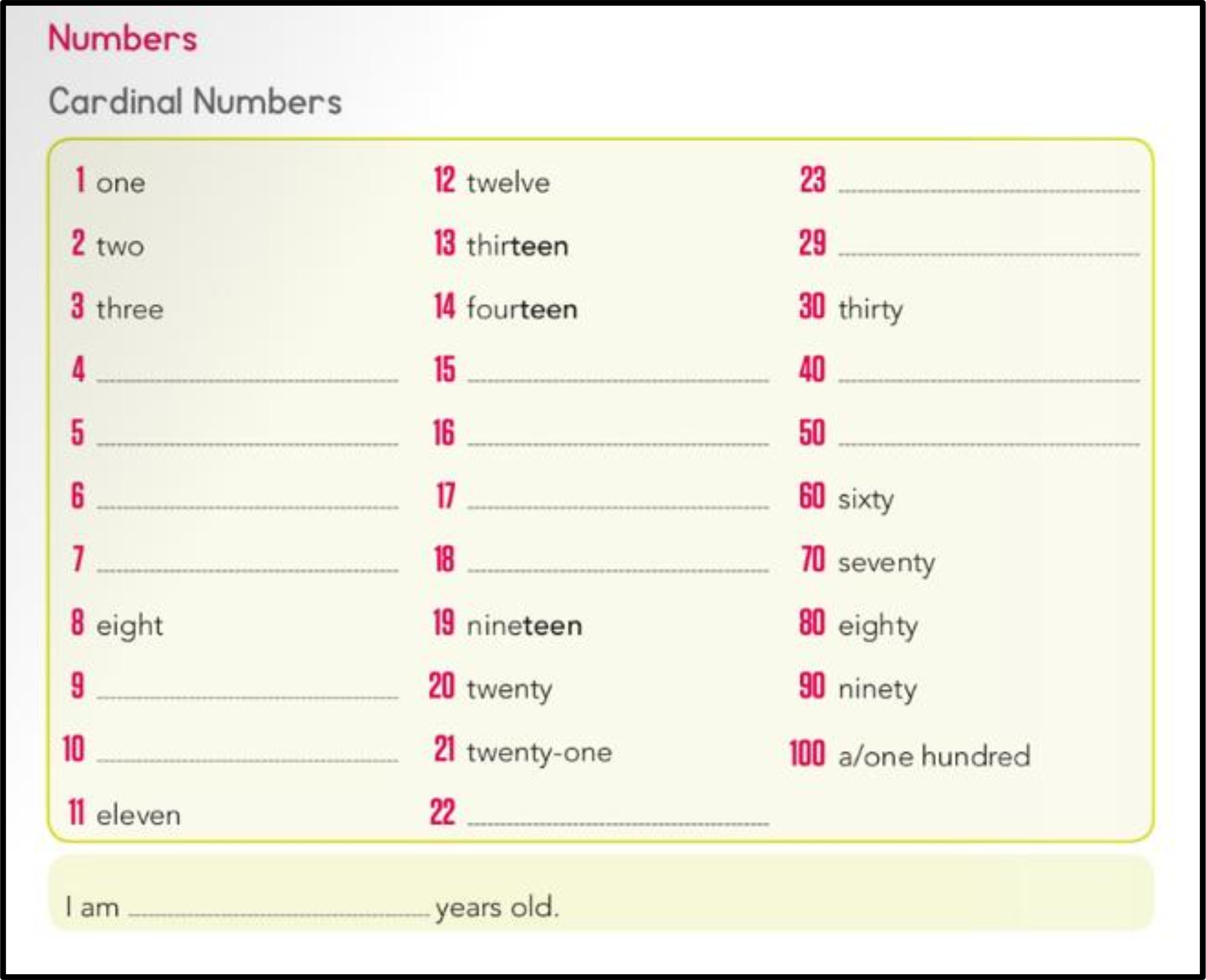
To implement this possibility, the EAL teacher can provide tactile materials representing numbers, such as raised or embossed numbers, which the visually impaired students can touch and feel. The teacher can introduce various exercises involving these tactile numbers, such as matching exercises, sequencing tasks, or even simple arithmetic activities.
To cater to the needs of moderate visually impaired students and make the learning experience more accessible, the EAL teacher can create tactile cards with numbers in high relief. These cards can be made using various materials such as relief glue, popsicle sticks, or bead pieces, providing students with a tangible representation of each numeral. Moreover, for students familiar with Braille, the EAL teacher can also include Braille representations of the numbers on the cards, as shown in Image 7. The combination of both high relief and Braille ensures that visually impaired students can engage with the numerical concepts effectively.
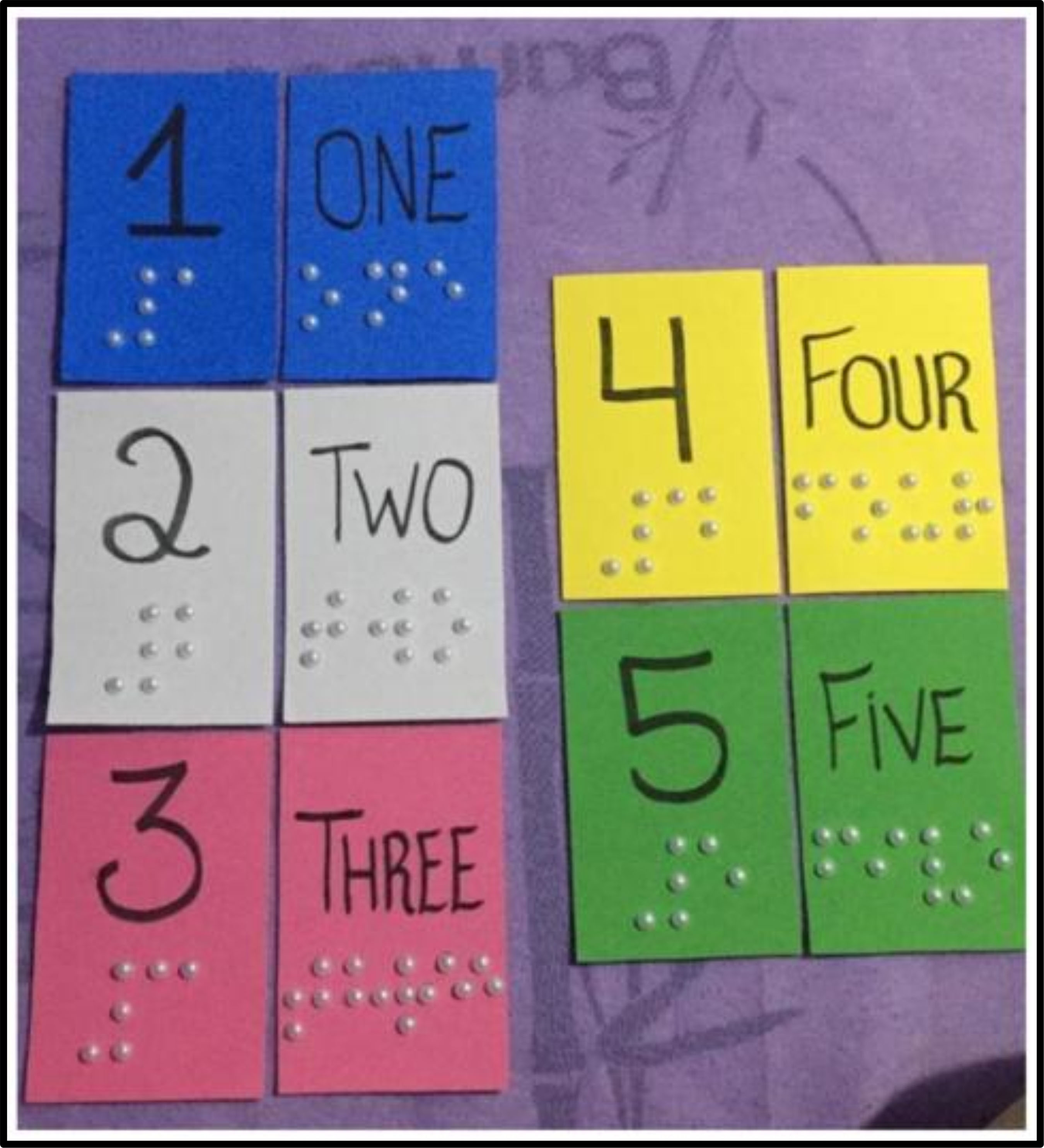
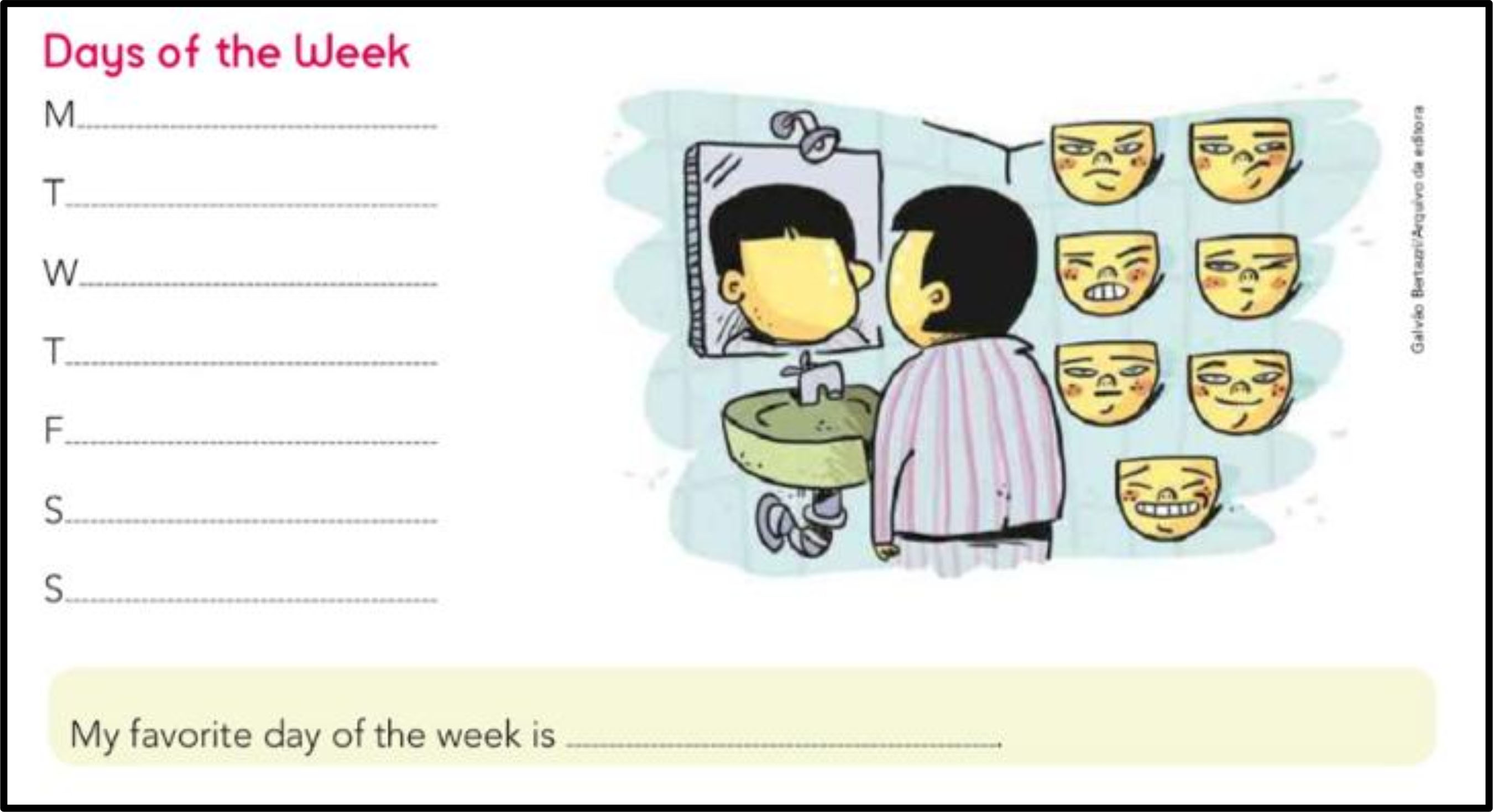
Indeed, the tactile cards can serve as a versatile support material for visually impaired students, facilitating their interaction with language concepts and promoting active learning. In addition to using the cards as a tool for group discussions and speaking exercises, they can also be turned into an engaging game to reinforce Braille. During the game, the teacher can shuffle the cards with words in high relief and Braille, representing the days of the week (Image 8).
It is possible to create a high-relief calendar using Velcro, EVE, cardboard, and glue, which can be assembled and disassembled daily. Such activity can also be arranged together with activity C and/or activity B in order to design a more complete calendar. In this way, there would be three packs of EVE cards (one with seven cards for the days of the week, one with the 31 numbers constituting the months and another one with the 12 months), and also a piece of cardboard in which the day of the week, month and numeral would be glued with Velcro. As the former proposal, the words and numbers can be written in Braille or, like in the model below (created digitally), in the alphabetic/numeric system in high relief (Image 9). It is important to highlight that many students with visual impairments may not have had access to alphabetic writing and may not recognize Arabic numerals. Therefore, it becomes crucial for the teacher to have a deep understanding of their students' individual needs and abilities before creating an activity.
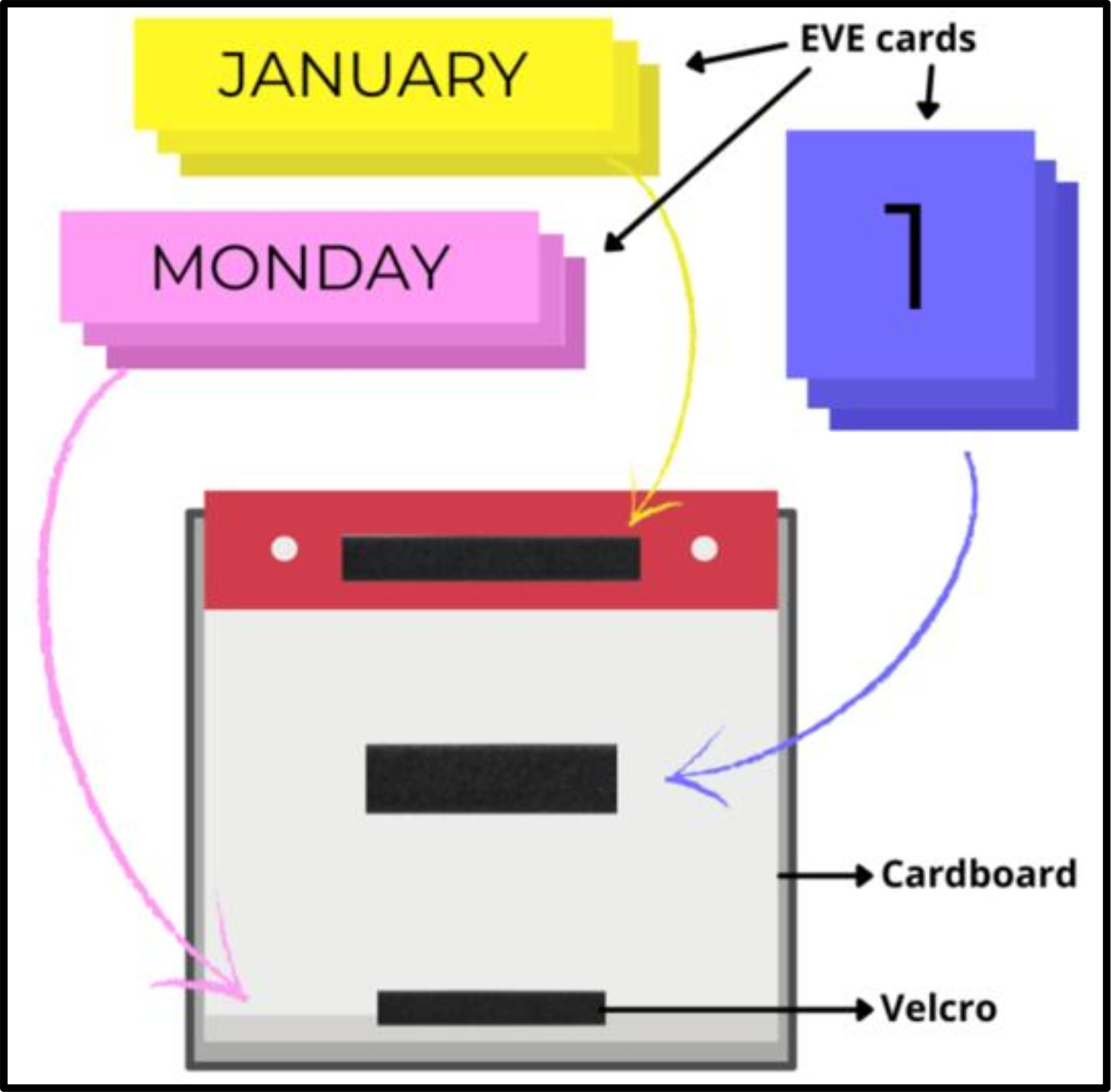
In addition to serving as tangible examples of activities for visually impaired students to explore and learn a new language, these adaptations also align with the characteristics recommended by Uliana (2013) for tactile adaptations: they are affordable, portable, and feature easily assembled and disassembled pieces.
Incorporating sounds or songs can be another effective approach for the EAL teacher to promote orality in the classroom, encouraging practical use of oral genres in various contexts. As hearing is one of the main avenues of access to the world experienced by visually impaired students, sounds can assist presenting new vocabulary and work on the speaking skills as well by listening and repeating (Medrado; Dantas, 2019).
As demonstrated in Camargo and Nardi's research (2006), utilizing orality, such as oral presentations and theatrical plays, can be valuable in overcoming challenges while teaching Physics to visually impaired students. Two examples of didactic activities from the Vocabulary Corner that could be adapted to incorporate sounds and orality are activities E and F (Images 10 and 11).
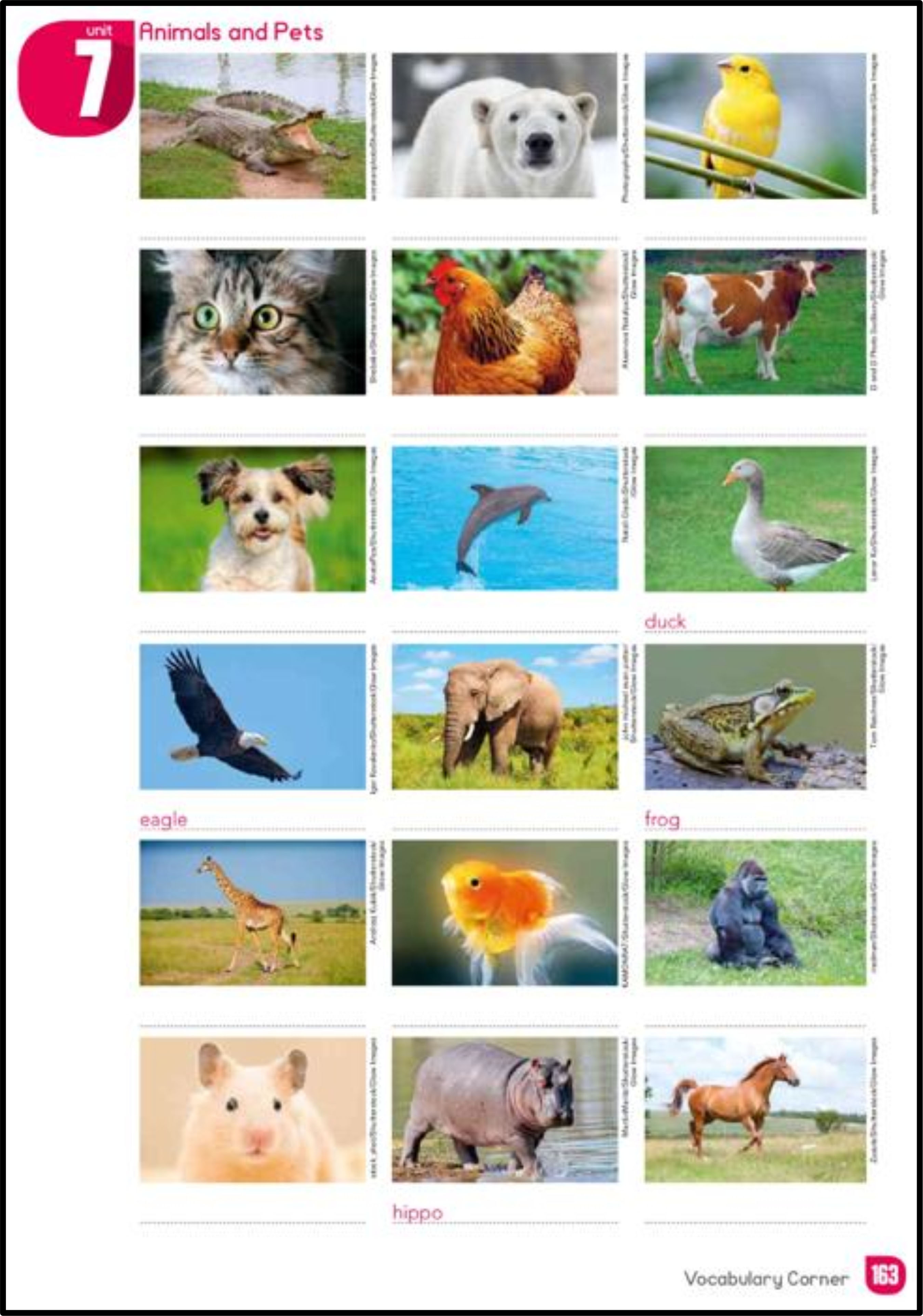
For activity E, the EAL teacher can enhance the learning experience by making or presenting the sounds that different animals make, using digital audio from sources like YouTube. The students can then be asked to identify the animals in the English language. This engaging activity can be conducted in groups, pairs, or even with the whole class, effectively developing their listening and speaking skills. By incorporating sounds and interactive elements, the adapted activity becomes both educational and entertaining, promoting active participation and a deeper understanding of the vocabulary. Additionally, it fosters a sense of collaboration and teamwork among the students, further enhancing the overall learning experience in the English language classroom.
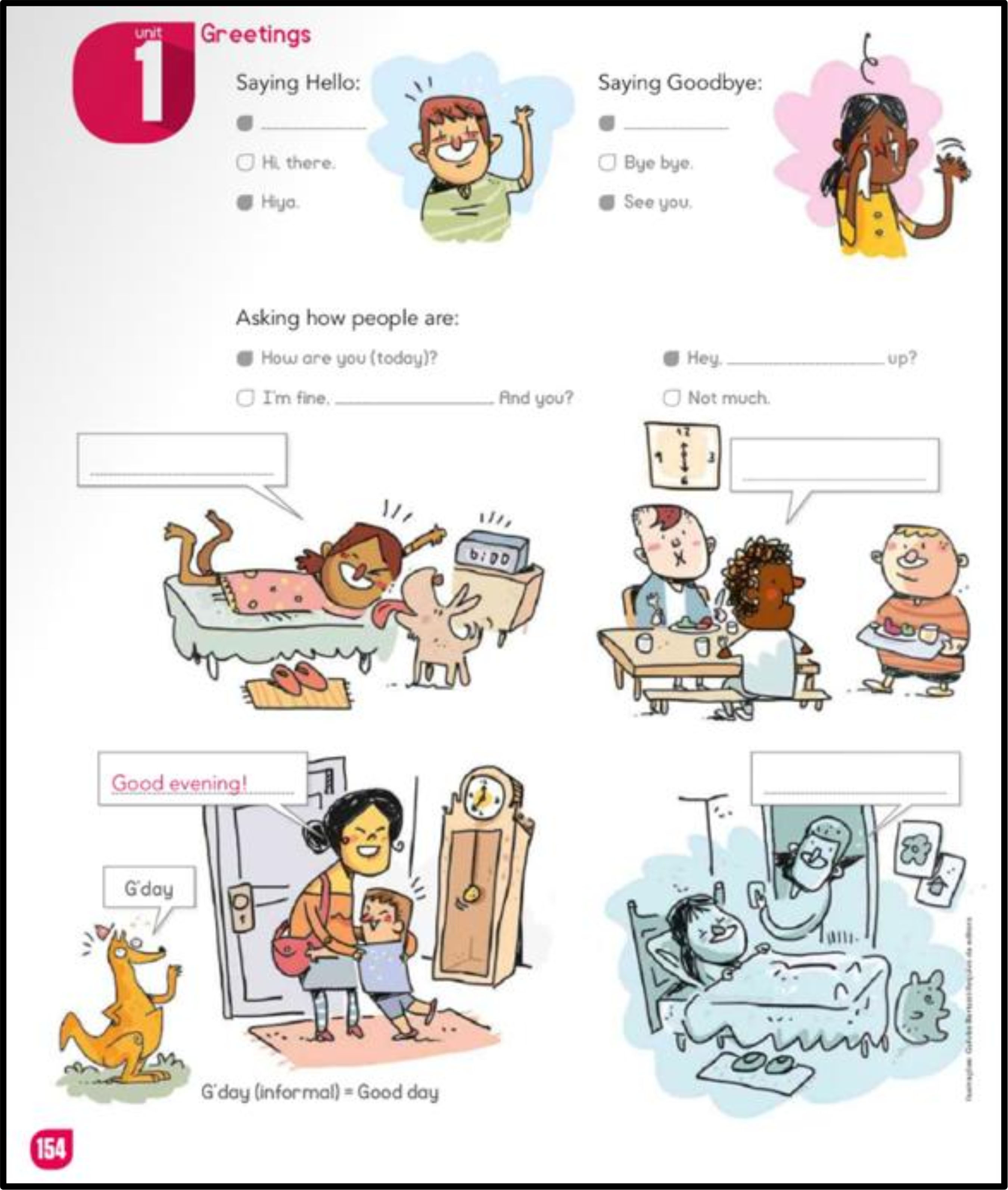
For activity F, teachers can incorporate a fun and engaging song that introduces different forms of greetings. There are numerous options available on the internet, allowing the teacher to choose the one(s) that best fit the class. One recommended option is the video titled "Hello Song for Kids - Greeting Song for Kids - The Singing Walrus," available on The Singing Walrus channel on YouTube. This video is interactive and relevant to students' daily routines, making it a suitable choice for the activity.
To internalize the Greetings content, the teacher can encourage students to communicate with each other using the vocabulary learned in the song. For this, the teacher can set up specific situations, such as saying hello, bidding farewell, and asking people how they are doing, and then let the students interact with one another. This activity not only reinforces inclusion and interaction between the visually impaired student and their classmates but also serves as a playful and contextualized exercise, allowing students to understand the additional language as a social practice rather than just a set of rules.
Medrado and Dantas (2019) provide possibilities of adaptations by suggesting the use of smelling and tasting senses in the activities as well. For instance, when studying the colors, the visually impaired students can associate the smells and tastes to the colors (trying bananas and associating to yellow, smelling washing powder and associating to blue, for example). This practice is applied to other contents too, such as the seasons: the smell of flowers can be associated with spring, sunscreen with summer, and so on.
Overall, these adapted activities demonstrate how small modifications in teaching materials can make a significant difference in promoting inclusion and improving language learning outcomes for all students. Embracing a multi-sensory approach, the EAL teacher can create an enriched learning experience that caters to the diverse needs and abilities of their students, fostering a more supportive and effective language learning environment.
The adaptation suggestions provided in this paper are just a starting point, and there are numerous other adapted didactic materials that can be valuable for researching and implementing in the education of visually impaired students. Texts in Braille (Oliveira; Reily, 2014), recorded audios (Camargo; Nardi, 2006), debates (Camargo; Nardi, 2006), and descriptions of images and graphs (Ferreira; Dickman, 2015) are also helpful and stimulating activities when teaching non-sighted students. Also, as Medrado and Dantas (2019) explain, such adaptations can be idealized and created in collaboration with the Special Educator(s) of the school.
Ultimately, the goal is to ensure that visually impaired students have equal access to education and the opportunity to reach their full potential. By embracing adaptation and inclusivity, educators can make a positive impact on the academic and personal development of all students, fostering a more inclusive and equitable educational experience.
6 Final Remarks
The growing interest in this area reflects a shift towards a more comprehensive understanding of language education, one that considers the diverse needs and abilities of all students. It indicates a willingness to embrace inclusive pedagogies and create learning environments that foster the full participation and engagement of visually impaired students, thus empowering them to thrive in language learning and academic pursuits.
As the journey of designing adaptations continues, there is potential to create material for various activities, textbooks, and grades, serving students with diverse impairments who require adapted resources to learn effectively. Future opportunities and refinement in the adapted activities comprise
consulting with schools’ educational advisor and Special Education professionals about the effectiveness and implementation of such materials in regular classes;
testing and improving the adapted material according to visually impaired students’ necessities and abilities;
promoting the use of the adaptations in school, in order to include visually impaired students in regular classes;
analyzing advantages and disadvantages of the material for sighted students, as well as students with other disabilities; and
continuing to design adaptations for other activities, textbooks and grades, headed to impaired students who need an adapted material for learning properly (Uliana; 2013).
As research continues to expand in this field, educators, increasingly better equipped to address the unique learning needs of visually impaired students, are expected to ensure that language classrooms become spaces of genuine inclusion, where all learners can flourish and reach their full potential. The array of options available for teachers to adapt didactic activities, such as the use of tactile resources, sounds and songs, games, and group activities, offers a valuable opportunity to cater to other senses beyond vision. Implementing these adaptations may have a positive impact on visually impaired students, by fostering greater confidence and participation in class, both essential traits when learning an additional language.

