




 Inglês (pdf)
 Artigo em XML
 Tradução automática
 Enviar este artigo por email
 Permalink

1 Introduction
Bandura (2023) emphasizes the importance of examining the basic assumptions adopted in traditional psychological theories of human nature, learning, and education. These theories distort our understanding by framing nature versus nurture debate as the basis of human action rather than human agency. He states that human beings are agents of their own lives, proactively bringing future goals to the present and modifying their current behavior to achieve the future goal. Nature and nurture function as both resources and constraints in the pursuit of one’s goals and do not explain the mechanism through which individuals achieve their goal.
The concept of human agency can be measured through self-efficacy and exercised through personal, proxy, and collective control. Learning and academic achievement goals are initially set by parents and society, and children gradually internalize these goals, regulate their behavior, and seek social support from significant others. They also receive feedback from school and society to ensure they are proceeding in the intended direction. A series of cross-sectional and longitudinal studies conducted in South Korea (abbreviated as Korea) are reviewed to highlight the importance of human agency and self-efficacy in explaining the scientific mechanism through which students achieve their educational goals.
Traditional psychological theories aim to identify lawful relationships between independent variables (e.g., stimulus, reinforcement, or information) and dependent variables (i.e., response or behavior). (See Figure 1). Aspects that are not directly observable, such as consciousness, agency, intentions, and goals, are considered subjective and eliminated from research design. Psychological constructs, including belief, motivation, and goals, are treated as hypothetical constructs. Within this framework, the mind is viewed as a “black box and brains are merely repositories for past stimuli inputs and conduits for external stimulations, but they can add nothing to their performance” (Bandura, 1999, p. 22).
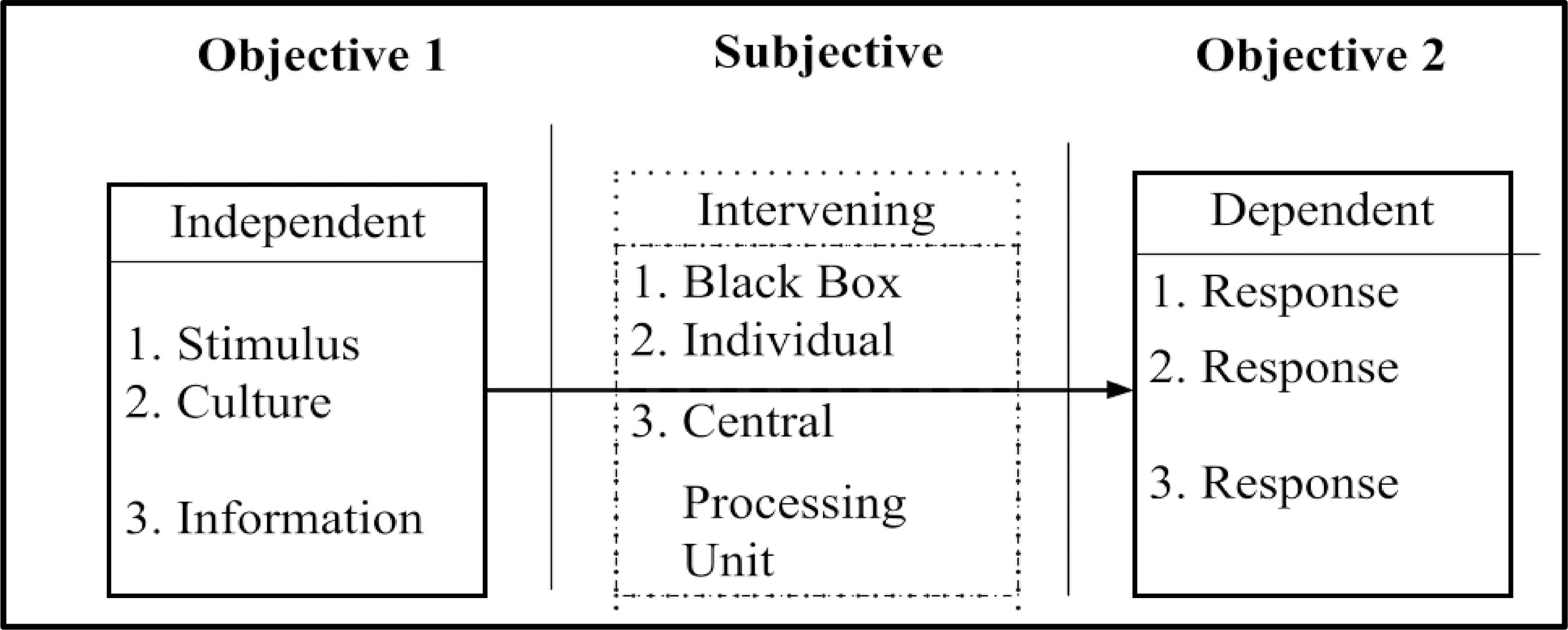
Behaviorists believe that learning is based on a simple contiguity between stimulus and response. The information-processing approach affirms this linear model by assuming that the human brain, similar to the central processor in computers, determines the outcome. The brain and neural networks are viewed as analogous to that of a digital computer, where information is fed through a central mechanism that performs multiple, complex, and dynamic operations using pre-ordained rules (Bandura, 1997). Bandura (2023) points out that mechanical and biological models eliminate the purposeful human agency and replaced it with random genetic mutations, reproductive recombination, and natural selection. He also highlights that Darwinian Theory and traditional psychological theories cannot explain how a purposeless algorithm gave rise to a purposeful and agentic species that has the capability “to communicate using symbols, deliberate upon the physical and social worlds, plan, and intentionally alter the environment in preparation for the future events” (p. 1). Furthermore, “the emergence of language and forethought converted our species into agents; beings who could transcend the dictates of their immediate environment, select and shape the external circumstances they encounter, and thereby guide the course of individual and social development” (Bandura, 2023, p. 1). He goes on to point out that information stored outside the body, along with advancements in information technology (IT), has created augmented virtual realities and artificial intelligence (AI), significantly expanding human agency: “These cognitive capabilities thus became the hallmark of humans” (p. 1).
Bandura (2023) is critical of psychological and scientific theories that define human nature without acknowledging human consciousness, agency, and social context. The traditional psychological theories have eliminated human consciousness and agency to provide a purely mechanistic and biological explanation that “strip human beings of a functional consciousness, a self-identity, and thus an agentic capability” and “overlook the socially embedded interplay between the exercise of personal agency and the nature of the environments that individuals experience. In so doing, they provide a truncated image of experience that makes life not only manageable, but meaningful; a conscious life is a life worth living. Without the capacity for deliberative and reflective conscious activity, human beings would be mindless automatons. With it, they are mindful agents” (Bandura, 2023, p. 3-4). Bandura points out that “through cognitive self-regulation, human beings can envision the future and act on it in the present. They can evaluate and modify ongoing current behaviors to best serve not only present needs, but also long-term aims” (p. 1-2).
Based on the traditional theories, the current education system in which the standardized goal and method set by society ignore the learning possibilities and experience of the students. Children who cannot adapt to the rigid classroom environment and strict evaluation criteria (e.g., I.Q., Scholastic Aptitude Test) are labelled as failures and some engage in delinquent behavior and school violence. These children learn to morally disengage from existing social institutions to justify their immoral behavior and feel good about themselves (Bandura, 2016).
Human beings can choose to be an agent to achieve the desired goal and contribute to society or disengage and participate in immoral and destructive behavior. This process is influenced but not determined by nature or nurture. Human beings can envision a nonexistent future state and modify their present behavior to reach a future goal; the same way a hunter throws a spear where a deer will be, or the football player kicks the ball where the teammate will be. Without human consciousness and agency, philosophy, art, humanities, culture, and science would not exist (Kim; Kim, 2023). It is thus important to examine the limitations of the traditional psychological theories that dominate research around the world. These theories are tied to biological, mechanical, and individualistic assumptions that provide a false narrative, and they provide at best simple correlations of observed phenomena. They fail to measure the psychological mechanism and the process to explain human behavior and educational achievement.
2 Social Cognitive Theory
Bandura (2023) outlines the concept of human agency to explain human cognition, emotion, and behavior. Human agency refers to a broad capability. To be an agent, one has to intentionally influence one’s actions, outcome, and life trajectory. With forethought and cognitive self-regulation, people can visualize their future state, and how their actions in the present can guide the current actions to reach the desired goal. They can evaluate and modify their strategy and behavior along the way to pursue their long-term goal (e.g., running a 42.195 km marathon or climbing to the top of Mount Everest). Human agency becomes magnified with the emergence of language which allows people to transcend their immediate reality, to select and shape their environment, and to guide their personal and social development.
Bandura (2023) outlines the four core agentic capabilities which operate in a hierarchically organized manner: intentionality, forethought, self-reaction, and self-reflection. Since a future state does not affect the present circumstance, it cannot be the cause of the current behavior. With cognitive representations, people can visualize the future, and it can be brought into the present to serve as a guide and motivator of current behavior. First, people formulate their intentions through their personal goals, plans, and strategies, and visualize the likely outcome. This anticipatory self-guidance shapes one’s behavior through visualized goals and anticipated outcomes. Second, forethought enables people to transcend the demands of their immediate environment and biology to shape and regulate their present behavior to realize their desired futures. Reachable milestones provide direction, coherence, and meaning to one’s life that direct them towards their long-term goals.
The third agentic capability is self-reactiveness. Agents are not only planners and thinkers, but self-regulators capable of managing their own behavior. They manage their behavior through self-sanctions within a self-developed governing system. They develop an internal behavioral standard against which they evaluate their performances. Through evaluative self-reactions, they can assess how well their behavior and performance measure against their internal standards.
The fourth agentic capability that is central to understanding goal-based motivation is self-reflection. A long-term distal goal may not be a motivating force to spur people into action (e.g., exercising to be healthy), but proximal goals with enough specific milestones and challenges can motivate people to action (e.g., buying running shoes and setting the alarm clock to run for 30 minutes each morning). People can contemplate the past and anticipate future activities to plan, motivate, strategize, and reflect on reaching their goal.
The method by which people can exert control over the environment can be direct or indirect, and it can be exercised by an individual or in collaboration with others (Bandura, 2023; Kim; Park, 2006). Two types of direct control are identified: primary control and collective control. If a person exerts direct control over one’s environment to achieve a desired outcome, this is an example of primary control. If people work together in managing their environment, this represents collective control (e.g., sports team, company, and democracy). Two types of indirect control are identified: secondary control and proxy control. If a person obtains assistance from another person (e.g., parents, friends, and teachers) in managing one’s environment, this is an example of proxy control (Bandura, 1997). If a person accepts a given environment and regulates oneself to adapt to the environment, such as through meditation, this is an example of secondary control. Research on mindfulness shows a positive effect of secondary control on health and brain functioning (Fox et al., 2014; Kim, 2024). The effectiveness of each type of control depends on the context, individual, organization, and culture. When all four types of control can be coordinated and integrated, it results in better outcomes.
Bandura (2023) points out that “through cognitive self-regulation, human beings can envision the future and act on it in the present. They can evaluate and modify ongoing current behaviors to best serve not only present needs, but also long-term aims” (p. 1-2). By integrating the triadic reciprocal causation and dual causal linkage model of Bandura (1997), Kim (1999) proposed the transactional model of science where human agency becomes an explicit part of the scientific model (see Figure 2). Bandura (1997) empirically documented the importance of examining the dual causal linkage (between input-agent and agent-output) in explaining the mechanism through which behavioral change occurs. People are agents who have access to their inner consciousness, and they can report their intentions, self-efficacy, and goals. Human agency and self-efficacy can link Observable Input 1 with Observable Output 2.
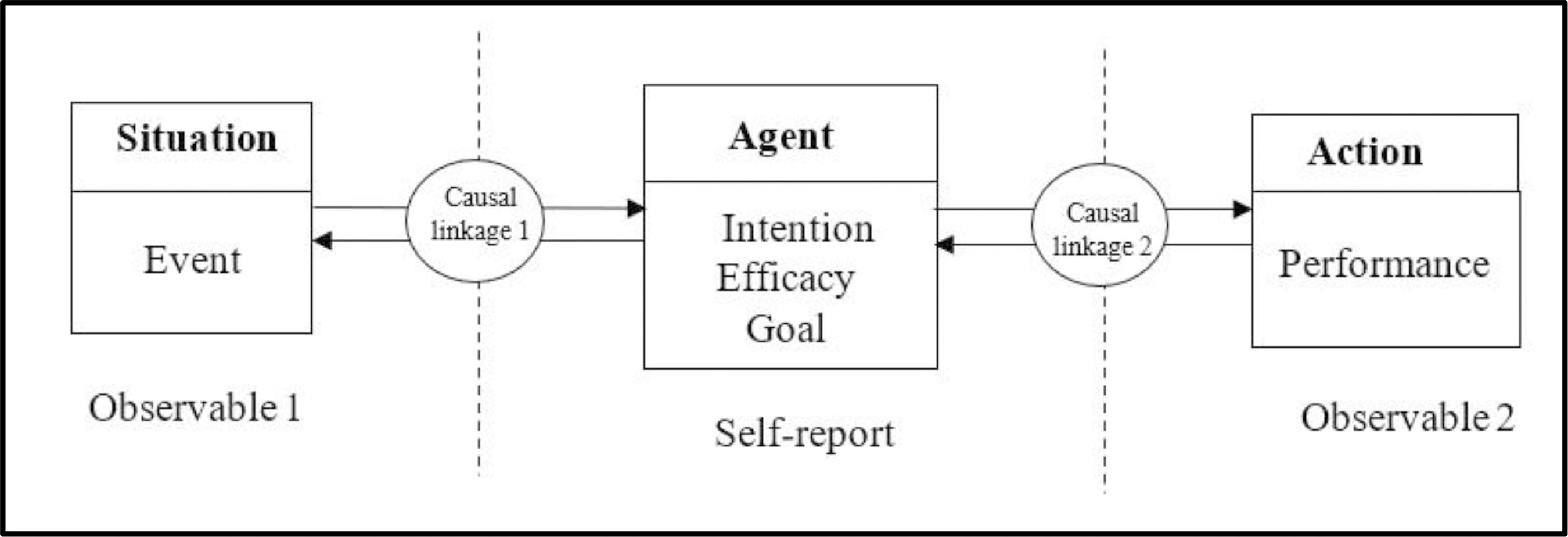
The dual causal linkage has been systematically analyzed and empirically documented by Bandura (1997). First, it is important to examine how an individual perceives and interprets an event (cause d by an external factor or by one’s own action) and their intention to take action. In a study of management effectiveness, Bandura (1997) provided two different groups with preset feedback regardless of their actual performance. In Group 1, he told them that they did much better than the average, and in Group 2, they were informed that they did much worse than the average. He then measured their self-efficacy through self-report. He found that positive feedback increased the self-efficacy of Group 1, and negative feedback decreased the self-efficacy of Group 2 (causal linkage 1). In the second phase, he measured individuals’ actual performance, use of analytical skills, and management effectiveness. Participants in Group 1, who were given positive feedback, had higher self-efficacy (casual linkage 1), and were more likely to use efficient analytical skills, be satisfied with their level of performance, and perform well (causal linkage 2). The opposite was true for participants in Group 2 who were given negative feedback: They had lower self-efficacy, used worse analytical skills, and had worse performance.
The causal pathway can be reversed by increasing or decreasing an individual’s self-efficacy. In the second phase, the worse performing participants in Group 2 were then given positive feedback. He found that when positive feedback is given, their self-efficacy increases, and their performance improves. The opposite was true when the high performing participants in Group 1 were then given negative feedback in Trial 2. They were told that they did not do well, their self-efficacy decreased, and their performance deteriorated. Thus, the mechanism of the rise and fall in performance can be systematically linked to the rise and fall of self-efficacy (Bandura, 1997). The mechanism of the rise and fall of analytical skills and performance can be systematically and empirically verified and linked to self-efficacy, which is not possible in the traditional psychological theories. Furthermore, successful performance can enhance their self-efficacy, which can motivate them to set higher and more challenging goals. The opposite pattern of results is found for failure experiences, which lowered their self-efficacy, their performance, and the subsequent goal that the participants set for themselves.
In within- and between-subject designs, Bandura, Reese and Adams (1982) examined the influence of modelling on self-efficacy among the patients suffering from snake phobia. In the first phase, participants viewed a model handling a snake and obtained their self-efficacy through self-report (causal linkage 1). They found that watching a model cope effectively with the snake increased participants' self-efficacy. The second phase involved having the subjects performing the actual task (causal linkage 2). The results indicated that modelling raised their self-efficacy (causal linkage 1), which increased their level of performance in handling the snake (causal linkage 2). Bandura et al. (1982) subsequently raised the perceived efficacy to a higher level through systematic modelling and found improvements in their performance and cured their snake phobia.
The successful completion of a task can increase self-efficacy, which enables individuals to set a higher goal, or seek a more challenging environment (Bandura, 1997). Success can reverse the flow of causality, in which output can now become input. Similar patterns of results are observed in failure experiences, with the lowered self-efficacy leading to setting lower personal goals (Bandura, 1997). Failure or success can lead to transformative changes in other aspects of a person’s life. Bandura (1997) found that the mastery experience of a snake phobia reduced social timidity, increased venturesomeness, boosted self-expressiveness, and increased desires to overcome other fears. These results cannot be explained by stimulus generalizations or by the single, direct, linear conception of causality. These results can be explained in terms of the transformative change in their personal belief system (Bandura, 1997), an emergent property not reducible to a single cause. Human agency is basic and provides software of the mind that is essential for human survival, self-development, and creativity. Current advances in paleoanthropology, genetics, neuroscience, IT, and generative AI allow us to integrate this specialized knowledge with art, music, philosophy, and spirituality (Kim, 2024). It is the integration and application of knowledge through a symbolic connecting of the dots in a novel way that allows creativity and co-creativity with others.
3 Culture and Socialization
3.1 Western perspective
In the West, the Renaissance and Humanism emphasize human capabilities to understand the world, moving away from the dogma set by the Catholic Church that had the power to define and control people’s lives (Chorover, 1980; Kim, 2024). René Descartes’ discovery of the self, using the method of radical doubt, is an individualistic endeavor (je pense, donc je suis, “I think, therefore I am”). An arbitrary authority cannot proclaim what is right, true, or just, since only individuals can know with certainty what is true. This became the foundation of Western rationalism, liberalism, and the Age of Reason (Kim, 2024). In the Western court of law, people are asked to swear “to tell the truth, the whole truth and nothing but the truth.” However, is what a person knows the truth, the whole truth, and nothing but the truth?
Similar to Plato, Emmanuel Kant (1724–1804) focused on the inner workings of the mind in logic, mathematics, and ethics using rationalism. Paralleling Aristotle, James Stuart Mill (1773-1836) focused on empiricism, stating that all knowledge comes from and is tested through experiences (i.e., tabla rasa). In both approaches, rationality is the pillar upon which Western philosophy, science, and society are constructed, and liberal education provides the basic learning. Based on this belief, Western laws and institutions are created. Only those individuals who are rational are allowed to participate in the democratic decision-making process. Children, the mentally insane, and criminals are not given the basic right to vote. Western democracy assumes that through democratic discussion rational individuals can arrive at the truth and create a just society. With the rise of populism and extremism this fundamental assumption is now being challenged.
Psychology has adopted the individual as the basic unit of analysis and relationship and social harmony are in the periphery. Existing psychological theories largely focus on cognitive or biological perspectives. Azuma (1984) points out that Western psychologists cannot appreciate phenomena found outside of their culture and articulated the necessity of developing indigenous and cultural psychology: “When a psychologist looks at a non-Western culture through Western glasses, he may fail to notice important aspects of the non-Western culture since the schemata for recognizing them are not provided by his science” (p. 49).
When researchers study another culture, they bring their own mindset, bias, and belief system when interpreting other cultures. This has been done when Western psychologists studying East Asian cultures using Western theories that focus on the individualism. Markus and Kitayama (1991) claim that East Asians have an interdependent view of the self and lack a clear and distinct self. Does this mean that Japanese, Korean, and Chinese are confused about their self-identity, and they do not know who they are? This is an example of an absurd and ethnocentric conclusion based on the wrong assumption. They do not provide conclusive scientific mechanisms and results to support their categorizations, but researchers accept the false narrative since it fits their preconception and belief system.
3.2 Confucianism and East Asian cultures
In the West, with the acceptance of the Cartesian mind-body duality proposed by Descartes, there has been a tendency to view the world in polar opposites (e.g., black and white, right and wrong, heaven and hell). In Asia, there is an emphasis on the relatedness of people to others and the importance of perspective taking. Rather than viewing people as right or wrong and the world as black and white, Asians emphasize the relatedness of black and white with the shades of grey that connect the white side of the pole to the black side (Kim, 2024). This is known as the “Middle Path” in Buddhism which teaches people to avoid extremes and to seek a balance in one’s life.
Confucius (551-479 BC) saw the world and all living things as a manifestation of a unifying force known as Dao (道, “Truth, Unity, or the Way”; Kim, 1995; Kim et al., 2006, 2022). The basic difference in cultures starts with an assumption of what it means to be human and how we should relate to each other. In Korea and Japan, the Chinese character for human is ingan (人間, “human between”). The West focuses on what happens within the individual (“I think, therefore I am”), but in East Asia, it is what happens between individuals that makes us human. In Confucianism, it is the benevolence, human-heartedness (仁), and care that infants receive from their parents that make them human.
Although the formal aspects of Confucianism have declined with modernization, researchers agree that the two important features of the relatedness still persist: devotion and indulgence (Azuma, 1986; Ho, 1986; Kim; Choi, 1994; Kim; Kim, 2022). Mothers in modern Confucian cultures view unselfish devotion to their children as a critical feature of their personhood and motherhood. Kim and Park (2013) found that Korean mothers' personal identities are often defined by their role as a mother. They become closely and intrinsically attached to their children and see their children as extensions of themselves. Children’s accomplishments and failures become their own, and children vicariously fulfill their own dreams and goals. Attaining this vicarious gratification is one of the most important aspects of motherhood, and it is the most valued purpose Korean mothers have in raising their children.
In modern Confucian cultures, parents are not discipline-oriented in enforcing weaning, bedtime, or toilet training of infants. They are lenient and indulgent to foster a sense of relatedness. Ho points out that “the reason for leniency toward the younger child is that he or she is considered to be not yet capable of ‘understanding things,’ and therefore should not be held responsible for his or her wrongdoing... It is thought that training cannot be expected to accomplish much for infants or young children; they are viewed as passive dependent creatures who are to be cared for, and whose needs are to be met with little delay or interference” (Ho, 1986, p. 4).
According to Azuma (1986), when a child is born, a Japanese mother remains close to the child to make the child feel secure, to make the boundary between herself and the child minimal, and to meet all of the child’s needs, even if that means a tremendous sacrifice on her own part. This type of socialization creates the bond of amae (甘え, “the act of requesting and receive a special favor in close relationships”) in Japan, jung (情, “affection and attachment”) in Korea, and guanxi (關係, “relation”) in China (Kim et al., 2006). Children’s strong dependency needs are satisfied by their mother’s indulgent devotion. As children mature, they sense that it is through the mother that they obtain gratification, security, and love. As such, children become motivated to maintain a close relationship and they do so by gradually taking a more active role by pleasing their mothers and behaving according to their mothers’ wishes. The feeling of relatedness helps children to adopt their mothers’ values and beliefs as their own and develop their proxy control. Socialization for relatedness has also been documented in Indian and Turkish culture (Kim, 1995).
4 Factors Influencing Academic Achievement
Several factors have been linked to academic achievement, and the most significant being self-efficacy (Pajares; Miller, 1994; Bandura, 1997, 2023). Bandura (1997) defines self-efficacy as an individual’s belief in their capabilities to exercise control over events that may affect their life. It is built from a series of external influences and internal processes that lead individuals to think positively or negatively about their abilities to succeed in a variety of contexts (Schunk, 1991). High self-efficacy does not influence performance independently but works in tandem with skill level and prior knowledge (Schunk, 1989). It influences an individual’s motivation, as they are less likely to put in effort in something that they deem as overly difficult. Self-efficacy has many implications for academic achievement, including goal setting, self-regulation, resilience, and performance outcomes.
Numerous studies have shown how self-efficacy influences educational attainment and occupational success (Lent et al., 1984, 1989). These studies found that individuals with higher self-efficacy not only believe that they would be a strong fit for a wider variety of careers but are also more likely to pursue and put in effort to prepare for them. Self-efficacy predicts one’s level of academic aspirations and how committed they are to them over time (Bandura, 1991; Locke; Latham, 1990). Bandura et al. (2001) found that children’s academic, social, and self-regulatory efficacy influence their academic aspirations, and occupational self-efficacy gives them a sense of direction for which career path they prefer and consider for their life-long work.
Self-regulatory efficacy is an especially important predictor of academic achievement (Caprara et al., 2008; Zimmerman; Schunk, 2004). Students with a high sense of efficacy for self-regulated learning and mastery of academic coursework exhibit higher academic aspirations and scholastic achievement (Bandura et al., 1996; Caprara et al., 1998; Park; Kim, 2013; Zimmerman; Bandura, 1994). Zuffiano and colleagues (2012) examined this relationship by testing the predictability of self-regulated learning on academic achievement in 170 middle school students in Rome. Participants’ intelligence, personality traits, self-esteem, self-regulated learning, and socioeconomic status are measured as well as their academic achievements at the end of 6th and 8th grade. The results suggest that students’ beliefs about their ability to regulate their learning is one of the most important predictors of school success. Bandura (1997) points out that this relationship exists because an individual’s prior academic achievement influences a sense of mastery, which in turn contributes to self-regulated learning, and ultimately predicting future academic success.
In another study, 412 Italian students were administered assessments on self-regulated learning, academic achievement, and socio-economic status at six staggered time points, starting at age 12 and ending at ages 20-22 (Caprara et al., 2008). Their findings showed that self-regulated learning in middle school is related to better grades in middle and high school. While there is a general decrease in self-regulated learning for all students after starting high school, those who experienced less of a decline are more likely to graduate and earn higher grades. These findings suggest that when students believe they can regulate their learning, they feel more effective in achieving academic success. This belief in turn leads to higher academic achievements and aspirations (Zimmerman; Bandura, 1994; Zimmerman et al., 1992).
Another important role that self-efficacy plays in academic success is resilience (Bandura, 1997, 2023). Resilience predicts the likelihood that individuals will be able to maintain their efforts during challenging tasks, a skill that is important for academic success. When controlling for prior academic achievement, scholastic aptitude, and vocational interests, individuals with higher occupational self-efficacy achieve higher levels of mastery in their educational requirements and persistence in technical and scientific pursuits. These individuals are also more likely to set challenging goals for themselves and to regulate their effort when overcoming obstacles (Pastorelli et al., 2001). Supervia et al. (2022) examined the role of resilience and self-efficacy in the academic attainments of 2,652 high school students in Spain. The results showed that self-efficacy mediates the relationship between resilience and academic performance, suggesting that those with stronger resilience have higher self-efficacy, which in turn predicts academic achievement.
Whether self-efficacy serves as a predictor of academic performance or merely reflects the confidence derived from past performance has been widely debated. Bandura (1997) found that self-efficacy has a more significant effect on performance than past performance. Bandura and Adams (1977) demonstrated this relationship in participants with snake phobia who had no past experience with snakes. Throughout the experiment, participants completed a sequence of tasks that progressed in intensity in order to master the phobia. In between tasks, participants rated their self-efficacy to complete the next tasks. Participants who had completed the same number of tasks rated themselves significantly differently on their self-efficacy to complete the next task. In contrast to the view that self-efficacy is merely a reflection of past performance, it had an 84% level of accuracy in predicting participants’ success in future tasks.
Several studies have further demonstrated the direct effect of self-efficacy on performance for academic and athletic activities (McAuley, 1985; Meece et al., 1990; Pajares; Miller, 1994). In an experiment conducted by Meece et al. (1990), 7-9th graders were asked about their perception of their math capabilities, performance expectations, and anxiety towards math before completing a math course. At the end of the class, participants’ self-efficacy, math anxiety, final grades, and intentions of enrolling in a future math course were collected. The results showed that math anxiety was related to students’ perceptions about their abilities and expectations for their performance, but not their grades. Students’ performance expectations predicted their grades, suggesting that self-efficacy directly predicts performance, where anxiety does not. Pajares and Miller (1994) similarly found that math self-efficacy is a stronger predictor of problem solving than prior experience with mathematics, math self-concept, or perceived usefulness of mathematics.
Self-efficacy affects academic achievement indirectly through a variety of factors including prosociality, personality, and well-being. Social self-efficacy is positively correlated to prosociality, which predicts school performance and lessens the risk of problem behaviors (Bandura et al., 1999; Caprara et al., 2000). Caprara et al, (2011) demonstrate this relationship in a sample of 340 young adults at two separate time points. Participants’ levels of agreeableness, self-transcendence, empathic self-efficacy beliefs, and prosociality were measured. The results suggest that empathetic self-efficacy is a proximal predictor of prosociality, and early prosociality is a predictor of agreeableness and empathetic self-efficacy. Given the predictability of prosociality on academic achievement, these results showcase the bidirectional relationship between self-efficacy and academic achievement.
The essential role of self-efficacy in youth’s academic success raises an important question: How does children’s self-efficacy develop? The first source of information children gather about their own efficacy comes from their family (Bandura et al., 1996; Park; Kim, 2013; Pastorelli et al., 2001). When high expectations and goals are set for them, they are more likely to believe they are capable of achieving them (Bandura, 1997). In this way, parents who have higher academic aspirations for their children encourage them to feel competent in their academic pursuits (Bandura et al., 1996). These highly aspirational parents are more likely to support their children’s educational activities and help develop their social and self-management skills which in turn, raises children’s social and self-regulatory efficacy (Bandura et al., 2001; Park; Kim, 2013). As they get older, the relationship between parents and children continues to foster their beliefs in their capabilities. A study by Vittorio et al. (1998) found that parental monitoring of adolescents’ activities outside of the home is associated with high levels of self-regulatory efficacy. Park and Kim (2013) similarly found that adolescents who are pressured by their parents to succeed academically have higher self-efficacy than their peers. Overall, positive parent-child relationships are associated with higher self-efficacy and academic achievement in youth, while conflict with parents is related to lower self- efficacy and grades (Park; Kim, 2013).
In addition to the parents, social influences outside of the home from peers and teachers influence children and adolescent’s self-efficacy and academic success (Bandura, 1997; Park; Kim, 2013). Peers serve as the second source of self-efficacy information, while school is the third (Pastorelli et al., 2001). Bandura (1997) suggests that the development of academic abilities is a collaborative process within a social system. Parents cannot always serve as models for their children, especially when their children are engaging in academic levels beyond what they have achieved (Ellis; Lane, 1963; Krauss, 1964). In these circumstances, teachers become especially important in reinforcing and supporting the child’s ambitions. These studies suggest that self-efficacy and academic achievement are not entirely up to the individual but rather a progressive process that is influenced by culture and socialization (Park; Kim, 2013).
4.1 Educational attainment in Korea
Korea’s economic miracle is closely tied to the emphasis on educational achievements, as well as the investment made by the parents (Kim; Park, 2006, 2008). In 1983, Korea had the highest percentage of adolescents wishing to obtain a university degree and the highest number of parents wanting their children to graduate from a university (Kim; Park, 2003, 2006; Park; Kim, 2004, 2013). Currently, Korea’s literacy rate is 99%, the high school graduation rate is 96%, and the university enrollment rate is 72%.
In international studies of academic achievement, Korean students are ranked at the top in knowledge and performance (Kim; Park, 2006). In international comparisons of math and science achievement, Korean students are the top achievers (National Center for Educational Statistics, 2019). In the 39-nation study of 4th and 8th graders, Korean 4th graders ranked 3rd in mathematics and 2nd in science. For 8th graders, they came in 3rd in mathematics and 4th in science. In the 31-nation OECD study of 9th graders in 2018, Korean students are ranked in the top tier among the OECD member states: 2nd to 7th in reading, 1st to 4th in mathematics, and 3rd to 5th in science.
Although the US government spends more money per student and schools have smaller classes and individualized instruction, US students do not perform as well as East Asian students. They are ranked 19th in mathematics and 18th in science (TIMSS). In PISA, they are ranked 14th in science, 15th in reading, and 19th in mathematics and literacy. Despite significantly greater investments made by the US government, American students lag far behind East Asian students (Kim; Park, 2006).
These results baffle many psychologists and educators since the results are not consistent with existing psychological and educational theories. Traditional theories that emphasize biology (i.e., innate ability, intelligence), individualistic values (e.g., intrinsic motivation, ability attribution and self-esteem) and structural features (e.g., high educational spending, small class size and individualized instruction) have difficulties explaining the relatively poor performance of US students and high performance of East Asian students (Kim; Park, 2006). Although the Korean government spends less than half the amount per student than the US government and the class sizes are almost twice as large, Korean students outperform the US counterparts in mathematics, science, and reading by a significant margin.
Although the US students performed relatively poorly in math and science, they had much higher self-esteem than East Asian students (Kim; Park, 2006): They are ranked 1st in self-concept for science and 4th in math (TIMSS). East Asian students had a low self-esteem in math and science: Korean students ranked 32nd for math and 21st for science, 34th and 16th for Japanese students and 30th and 18th for Taiwanese students. Second, the US and Korean students had different life goals: 27% of the US students “strongly agree” and 37% “agree” that “enjoying life is more important than preparing for life,” while only 8% and 24% of Korean students gave the same answer. For the motivation to do well in math, 41% of US students strongly endorsed personal motivation (“to get the desired job”), while only 10% of Korean students and 12% of Japanese students agreed with the statement. Most Korean students reported relational motivation (62% agreed that it is “to please their parents) and social motivation (85% agreed that it is “to enter a desired university”). Korean students differ from American students in terms of life goals, self-esteem, and motivation, and they have higher level of academic achievement than American students (Kim; Park, 2006; Park; Kim, 2013).
For the effort needed to do well in math (“how much effort do you need to succeed in math”), 8% of US students replied, “a lot of effort,” compared to 36% of Korean students (Kim; Park, 2006). American students who attributed their success to effort had lower math scores, but the reverse was the case for Korean students. Korean students who believe that they had to expend a lot of effort to do well in math had higher test scores.
4.1.1 Collective goals and control
The phenomenal educational attainment of East Asian students has been systematically documented (Hess et al., 1986, 1987; Kim; Park, 2003, 2006; Park; Kim, 2004, 2013; Stevenson; Lee, 1990; Stevenson; Azuma; Hakuta, 1986). The main factor responsible for this high performance is the shared value placed on education and compared to the West, East Asian societies exhibit a greater congruence of educational values. Parents, students, and teachers in East Asia agree on the importance of education, creating a strong compatibility of values across family, school, and society that promotes collective efficacy.
Individualistic values in Western countries are often in conflict with the hierarchical classroom structure, curriculum, and teacher-student relationships (White; LeVine, 1986). Students, parents, teachers, and administrators in the US often hold different views about the meaning of success and the factors that contribute to it (White; LeVine, 1986). The emphasis on developing one’s natural talent, whether it is sports, music, or can come at the expense of academic achievement. While this diversity of viewpoints is a strength in individualistic societies emphasizing freedom of choice, it can lead to conflicts among the students, parents, and teachers when it comes to academic achievement (Kim; Park, 2006).
4.1.2 Relationship and proxy control
Relationships, not individuals, are the basic unit of the self in East Asia. Parental devotion, sacrifice, and support are important features of the traditional socialization practice that still remain (Azuma, 1986; Ho, 1986; Kim; Park, 2008; Park; Kim, 2004, 2013). In East Asia, there is a higher investment made by parents that promotes and maintains a strong relational and emotional bond between parents and children (Kim; Park, 2008). It is the role of the parents to provide a positive family environment, necessary support, and pressure children to succeed (Park; Kim, 2013). With time, children learn to develop proxy control by discipline themselves with their parental guidance, and developing academic skills with the help of their friends and teachers.
4.1.3 Self-regulation and personal control
The important value of self-regulation and the emphasis on persistent effort promotes the development of personal control. Consistent with Confucian philosophy, individual striving is viewed as a necessary component of the self-cultivation process. Excellence in performance provides evidence that a child has developed a moral character through perseverance and persistence. It is a visible demonstration that a child has deeper abilities to be a virtuous person (Kim, 2024).
In Confucian societies, individuals are pressured to contribute to the group through hard work, and success is collectively defined and shared. In East Asia, self-cultivation and effort (an internal and changeable factor), and not innate ability (an internal and determined factor) is believed to be the key to success, especially for educational success (Hess et al., 1987; Lebra, 1976; Kim; Park, 2003; Stevenson et al., 1986, 1990; Yu; Yang, 1994).
4.1.4 Empirical studies: Korean results
An empirical study was conducted to explore Korean students and adults’ perceptions of success and failure and the factors that contribute to their success (Kim; Park, 2003). Using the indigenous psychology approach, an open-ended questionnaire was administered to a sample of 730 students (486 high school students and 244 university students) and 427 adults (167 housewives, 126 salaried employees, and 134 teachers). Participants are asked to list three accomplishments, achievements, or successes in their life. Then, they answered the following questions: 1) List the achievement that you are most proud of and that is very important for you; 2) List the person who was helpful to you and specify your relationship to the person; 3) Specifically, what kind of support did they provide? and 4) Overall, what do you consider to be the most important factor contributing to your success? A similar set of questions was asked about their failures.
For the first question, the most frequent response for the students is educational attainment (e.g. entry to a particular high school or university) followed by friendship (e.g. maintaining a good relationship with friends), self-development (e.g., activities that promote independence, positive outlook, or goal-fulfilment), and hobbies. For the adult sample, occupational success was mentioned most frequently, followed by family life, self- development, and education. For housewives, maintaining a harmonious family life was mentioned most frequently.
As for the person who provided the necessary support, parents were mentioned most frequently both by students (35%) and adults (27%), followed by friends (students=27%, adults=8%), teachers (students=15%, adults=6%), and other family members (students=6%, adults=23%). As for the type of social support received, both students and adults reported emotional support (35%) most frequently, followed by informational support, providing a good environment, and financial support.
As for the factors that contributed to their success, self-regulation (i.e., effort, hard work and persistence) was mentioned most frequently by both samples, followed by a good family environment, social support, personality, and positive thinking. For the adult sample, a good personality was mentioned as a way of maintaining good relationships with colleagues and superiors in the workplace.
A cross-sectional study was conducted to examine the factors that influence academic achievement (Park; Kim, 2013). (See Figure 3). A total of 961 elementary school, 898 middle school, and 1,236 high school students completed a structured questionnaire. An approximately equal number of male and female students participated in the study. The questionnaire included the social support (i.e., emotional and informational support) received from the father, mother, friends, and teachers (developed by the present researcher), the modified version of the life-satisfaction scale (developed by Taft, 1986), the self-efficacy scales developed by Bandura (1995), and relational efficacy and efficacy for promoting social harmony have been included.
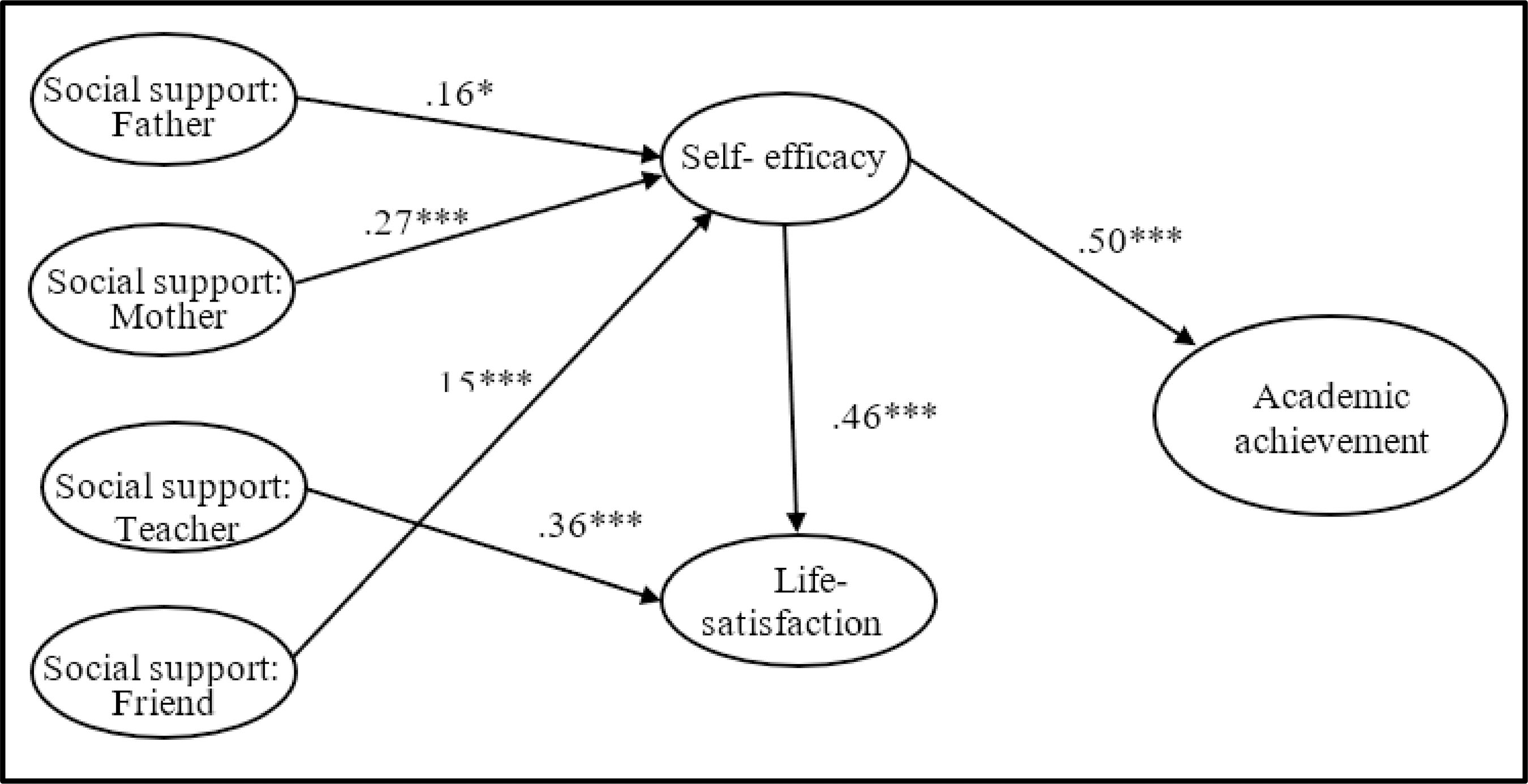
Source: Adapted from Park and Kim (2013).
Figure 3 Factors influencing academic achievement – elementary school students.
The goodness-of-fit for all three models was acceptable, above .90. Self-efficacy had a direct and positive influence on life-satisfaction and academic achievement. Support received from parents, teachers, and friends has a direct and positive influence on students’ self-efficacy. Support received from teachers has a direct positive influence on students’ life-satisfaction.
For middle school students, a similar pattern of results has been obtained (see Figure 4). Self-efficacy has a direct and positive influence on life-satisfaction and academic achievement. Life-satisfaction has a positive influence on academic achievement. Support received from parents and friends has a direct and positive influence on students’ self-efficacy. Support received from the mother and teachers has a direct positive influence on students’ life-satisfaction. For middle school students, the role of parents becomes more important, and the influence of teachers is reduced. Life-satisfaction has a positive influence on academic achievement. Support received from parents and friends has a direct and positive influence on students’ self-efficacy and support received from parents has a direct positive influence on students’ life-satisfaction.
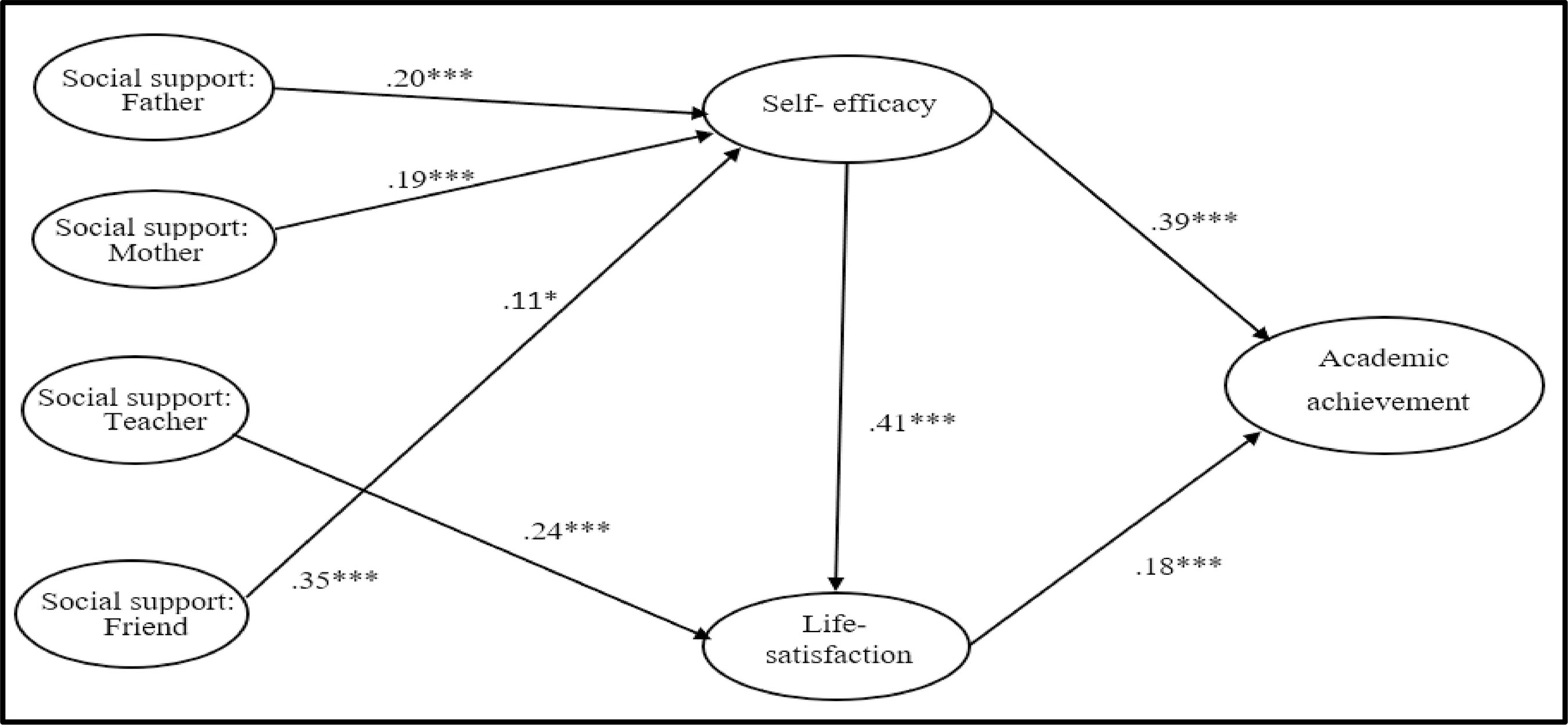
Source: Adapted from Park and Kim (2013).
Figure 4 Factors influencing academic achievement – middle school students.
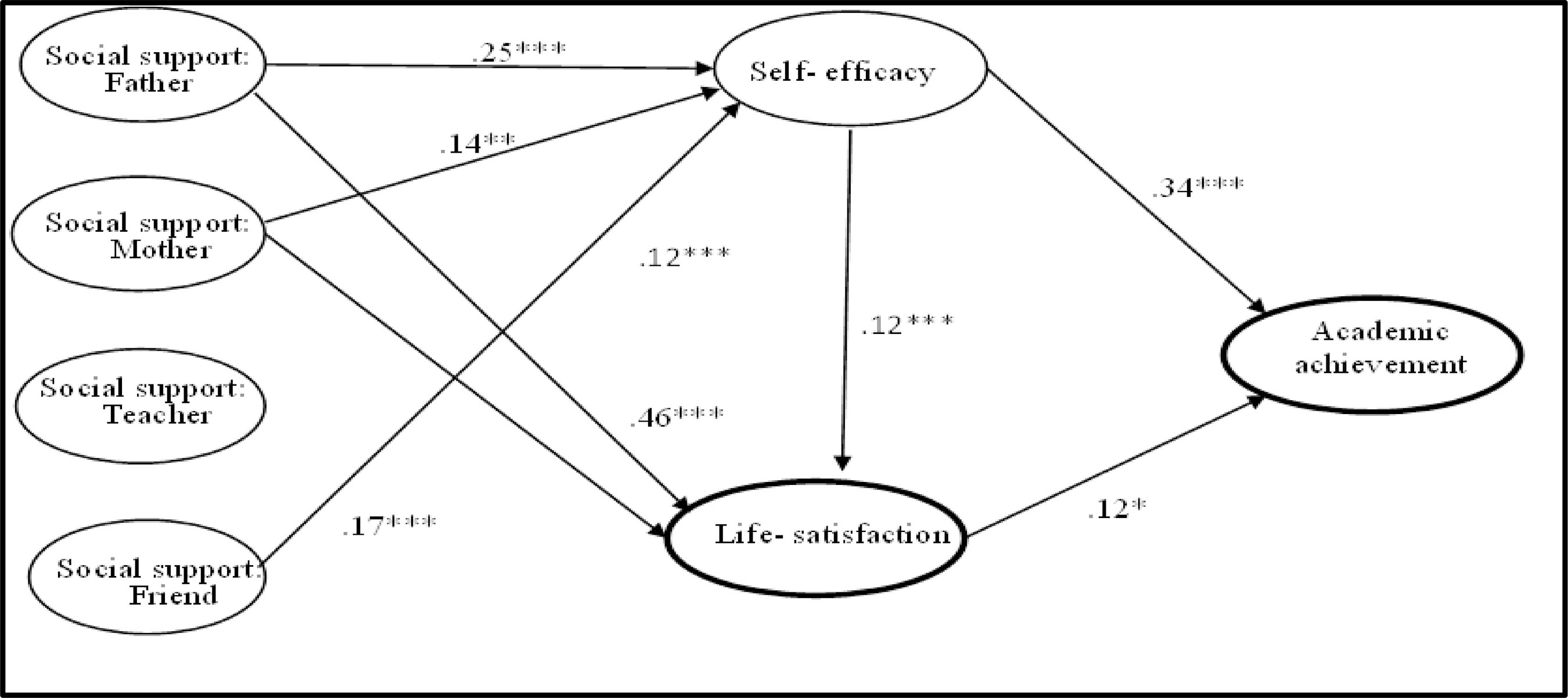
For high school students, a similar pattern of results has been obtained (see Figure 5), except for the role of teachers and fathers. Teachers no longer have a positive influence on self-efficacy and life-satisfaction, while the father has a direct and positive influence on self-efficacy, life-satisfaction, and academic achievement. Support received from mothers and friends has a direct positive influence on students’ self-efficacy. Support received from the mother has a direct positive influence on students’ life-satisfaction. These results show that the role of the father becomes much more important as adolescents mature and the role of the teacher becomes less important.
Source: Adapted from Park and Kim (2013).
Figure 5 Factors influencing academic achievement – high school students.
These results document the important mediating role that self-efficacy plays in positively influencing life-satisfaction and academic achievement. Second, social support received from significant others helps to raise the self-efficacy of adolescents. Parents play a central role in raising children’s self-efficacy in all three samples and raising life-satisfaction in the high school sample. Social support received from friends increases the self-efficacy of adolescents in all three samples. The role of teachers is important for elementary students, but the influence is non-significant for high school students.
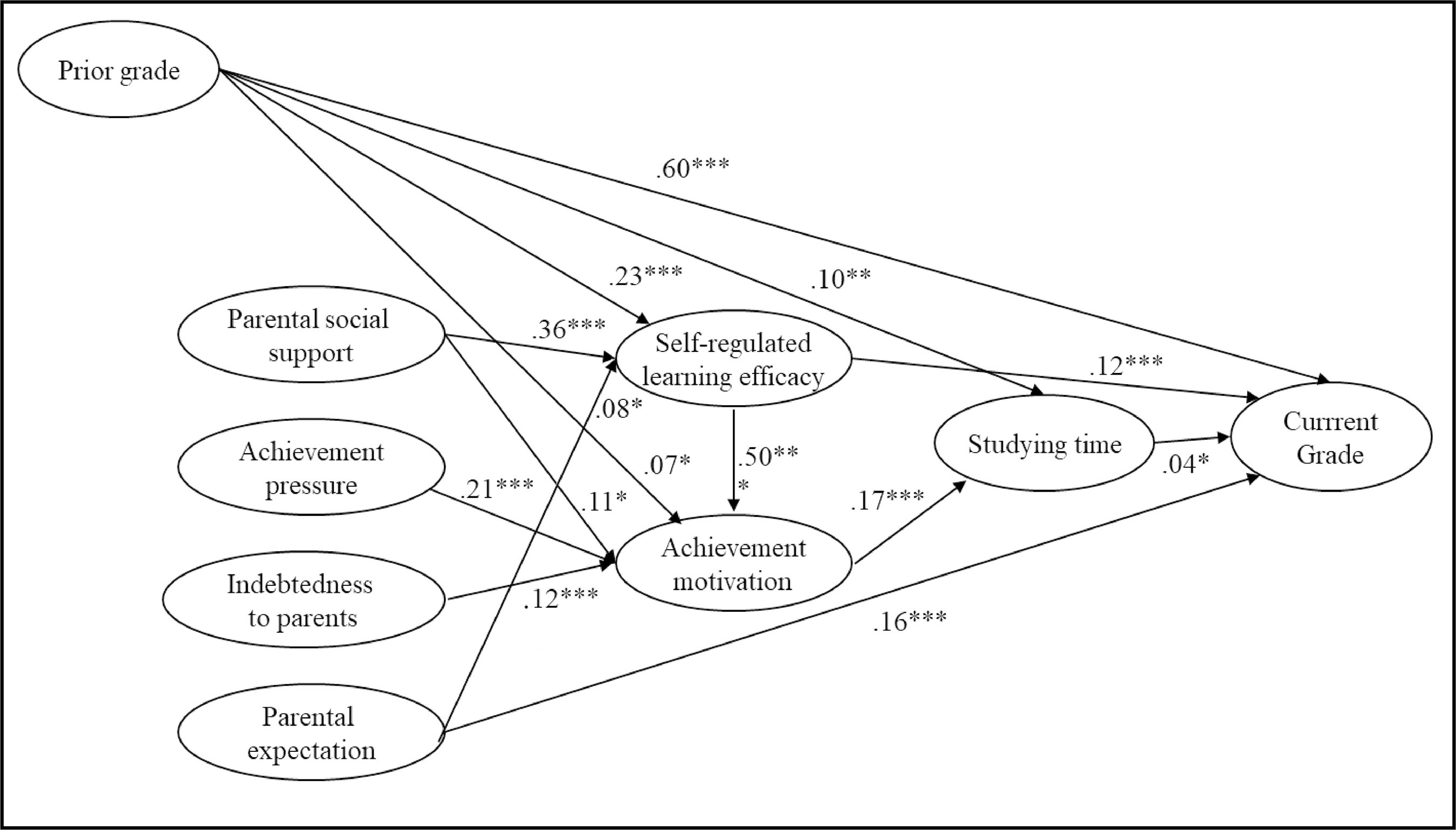
A longitudinal study has been conducted to examine the influence that parents have on their children’s academic achievement and the mediating role of self-efficacy and achievement motivation (Park; Kim, 2013). (See Figure 6). In the first phase of the longitudinal study, a total of 961 6th graders participated in the study. In the 9th grade, 830 students participated in the study. The structured questionnaire has been developed by the second author, except for the self-efficacy scale developed by Bandura (1995) and achievement motivation scale developed by Yu and Yang (1994) have been administered. In terms of parent-child relationships, the following variables as perceived by adolescents are included: Social support received from parents, a sense of indebtedness to parents, and parental pressure for academic achievement. In addition, the following variables are added: Studying time and academic achievement.
Source: Adapted from Park and Kim (2013).
Figure 6 Longitudinal study of parent-child relationship and academic achievement.
The results of the path analysis indicate that Korean students’ past academic grades are the most important predictor of their current academic achievement. (See Figure 6). Efficacy for self-regulated learning, achievement motivation and studying time have a direct and positive influence on academic achievement. Efficacy for self-regulated learning has a direct positive influence on achievement motivation. Parental support and achievement pressure have a direct positive influence on efficacy for self-regulated learning. Parental achievement pressure and a sense of indebtedness to parents have a direct positive influence on achievement motivation.
In summary, the results of the path analysis indicate that parental factors (i.e., pressure and social support) and relational factors (i.e., a sense of indebtedness to parents) increase adolescents’ academic achievement through efficacy for self-regulated learning and achievement motivation. Close parent-child relationships and social support are important factors in elevating adolescents’ self-efficacy and achievement motivation, which in turn increased their academic achievement. Consistent with Confucian values, Koreans view educational attainment as an important goal in life, as a way of obtaining economic and social benefits, and promoting a harmonious family. They believe in persistent effort and discipline as the means to the goal. The emphasis of effort has been found in the studies in which structured questionnaires are used to examine the relationship between attribution style and academic achievement (Park; Kim, 2013). Both students and adults are most likely to attribute their success to effort and their failure to a lack of effort. Second, those students who attributed their success to effort had higher academic achievement than those who are less likely to do so. The sacrifice and support provided by parents are viewed as essential ingredients for success. Emotional support in the form of encouragement, praise, security, and understanding is valued. Koreans believe that ability can be acquired, and personality can be polished through persistent effort and with the support of significant others.
These results point out the limitation in traditional psychological and educational theories. First, very few Korean respondents emphasize innate ability. They believe in self-regulation as being the most important factor that can lead to success or failure. Second, most developmental theories do not examine the influence of parents on child or adolescent development. Third, although attachment theory includes the role of parents, the theory also assumes that separation and individuation is necessary for successful maturation (Rothbaum et al., 2000). However, in Korea, parental support and influence are strong during childhood, adolescence, and continue into adulthood (Park; Kim, 2013). Fourth, close in-group members are highly influential, while professional relationships did not emerge as being important for high school students. Support from teachers is important when children are young, but their influence decreases and disappears when they become older. Fifth, emotional support rather than informational support is reported as the most influential factor. Sixth, self-serving bias has not been found in Korea. Korean students and adults attribute their success to persistent effort and failure to a lack of effort. Finally, Western theories assume guilt to be negative and that it can lead to developmental pathologies. In Korea, it is considered appropriate that children feel indebted toward their parents for all the devotion, sacrifice, support and affection they have received. A sense of indebtedness is accepted as a positive interpersonal emotion that promotes filial piety, academic achievement, and relational harmony (Park; Kim, 2013).
The results from the series of studies conducted in Korea affirm the important mediating role that self- efficacy plays in influencing academic achievement and life-satisfaction. Social support received from parents, achievement pressure, and a sense of indebtedness raise self-efficacy and proxy control, which in turn raises their academic achievement and life-satisfaction. These results are consistent with the results obtained in Europe and US supporting the validity of the social cognitive theory (Bandura, 1997, 2023).
Students in Korea are able to become high achievers since they live in a culture where education is valued and self, proxy, and collective efficacy for academic achievement are high. Children are taught to self-regulate and discipline themselves to become high achievers, with many high school students studying up to 14-16 hours a day. Parents play a key role in providing emotional, informational, and financial support to ensure that their children succeed in school. They set high goals for their children and pressure them to excel in school. They provide a good study environment so that children can focus their attention on academic work. In addition, their peers view educational success as the most important life goal. Schools and teachers complete the picture by providing adolescents with the necessary academic skills and guidance. It is the concerted effort of adolescents, parents, teachers, and Korean society that is responsible for promoting high self, relational, and collective efficacy for academic achievement (Kim; Kim, 2022).
The ingredients necessary for academic success are not limited to East Asian countries. Asian Americans possess the necessary ingredients described above and are often high achievers in the US. Compared with Asian Americans, Euro and African American adolescents and parents have lower expectations and do not invest as much time and effort toward academic achievement (Farkas et al., 1990; Kim; Chun, 1994). High governmental spending, small class sizes, and individualized instruction have a limited impact if adolescents and parents have low expectations and do not invest in education.
4.1.5 Delinquency, school violence, and moral disengagement
Although Korean students are high achievers, there are costs. When students are asked to describe the most stressful aspect of their lives, 28% report pressure to succeed academically, followed by human relationships (20%) and family life (15%) in 1996 (Park; Kim, 2004, 2013). During the economic crisis in 1999, 44% of students reported pressure to succeed academically as being the most stressful, followed by human relationships (16%) and family life (14%). Even with this pressure and stress, when Koreans succeed academically, it brings social, relational, and economic rewards (Kim; Kim, 2022).
Korean society is not prepared to deal with students who cannot adjust to the rigid school structure, cope with the pressure to succeed, and fail to do well academically. Many students engage in delinquent behavior. The rate of students who refuse to attend school and the level of delinquency and school violence have increased rapidly in recent years. Nearly half of the teachers and students report that teachers and school administrators have lost the leadership and authority to teach and regulate students to some extent (Park; Kim, 2013). Additionally, more than half of the elementary, middle, and high school students report experiencing school violence or social exclusion (Park; Kim, 2013). Students, teachers, and parents have low collective efficacy in dealing with school violence and they are unable to stem the rising tide. Korean culture has been able to foster the development of self, proxy, and collective control in promoting high academic achievement, but it has yet to develop the necessary efficacy in stemming the rising dropout rate, delinquency, and school violence.
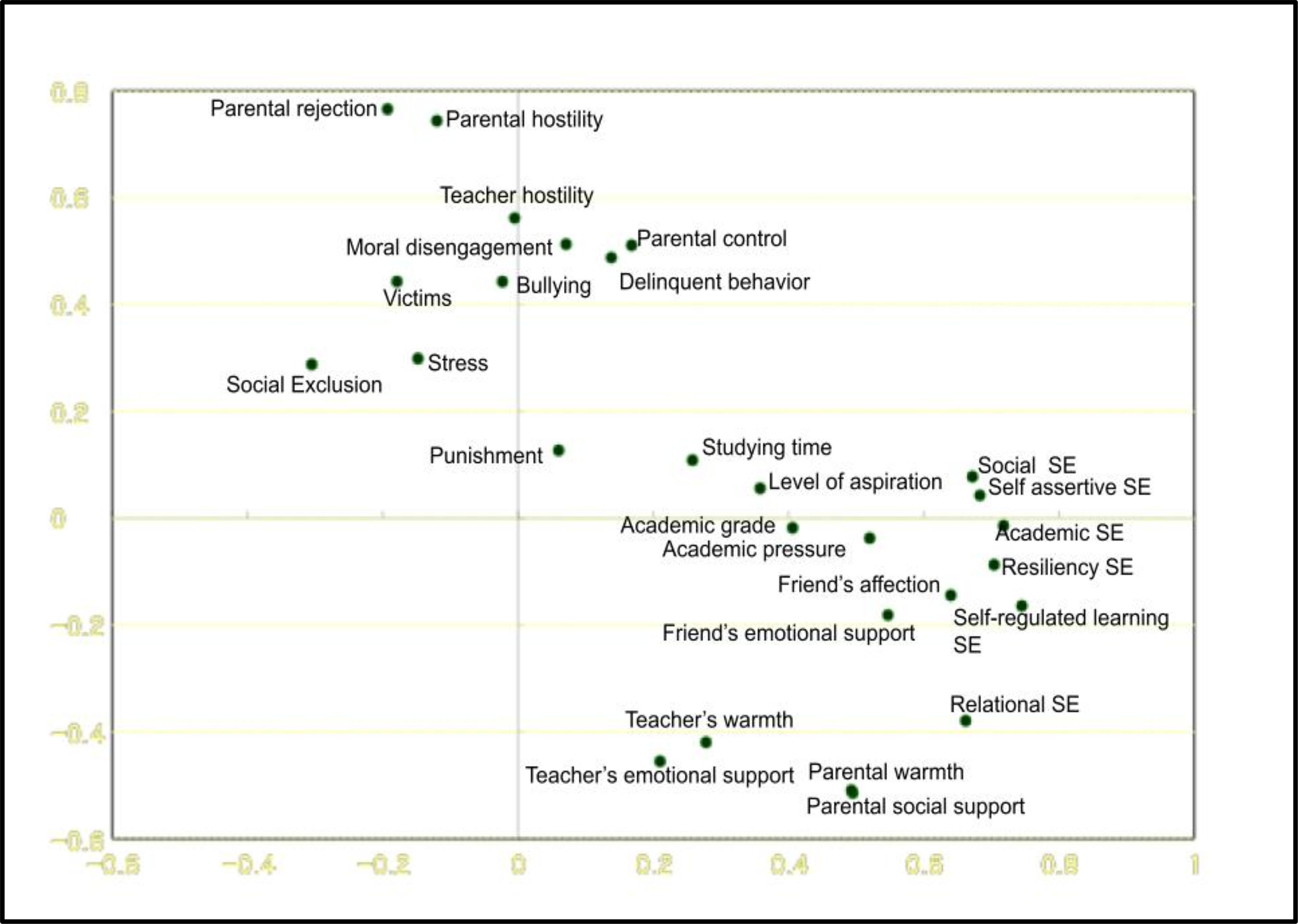
A longitudinal study has been conducted with 961 6th graders and 830 students who completed a similar questionnaire when they reached 7th and 9th grade (Park; Kim, 2013). It examined parent-child relationships (Parental warmth, rejection, neglect, hostility and control; Rohner; Pettengill, 2004), moral disengagement, and self-efficacy (Bandura, 1995). Additionally, measures of relationships and social support received from parents, friends, and teachers, along with experiences of social exclusion, victimization, bullying, delinquency, punishment, stress, and academic outcomes (grades, studying time, academic aspiration), and academic pressure from parents developed the second author. Figure 7 provides the results of a factor plot of two dimensions: The X-axis representing the factors that promote academic achievement and the Y-axis representing factors that influence delinquency, and school violence.
Source: Adapted from Park and Kim (2013).
Figure 7 Factors influencing academic achievement and delinquency.
The results show two distinct patterns. (See Figure 7). On the X-axis, self-efficacy, social support, and positive relationships with parents, friends, and teachers are associated with studying time, academic aspiration, academic pressure from parents, and academic achievement. On the Y-axis, moral disengagement, negative relationships with parents, friends, and teachers, and the experience of social exclusion, victimization, and punishment are associated with bullying, delinquency, and stress.
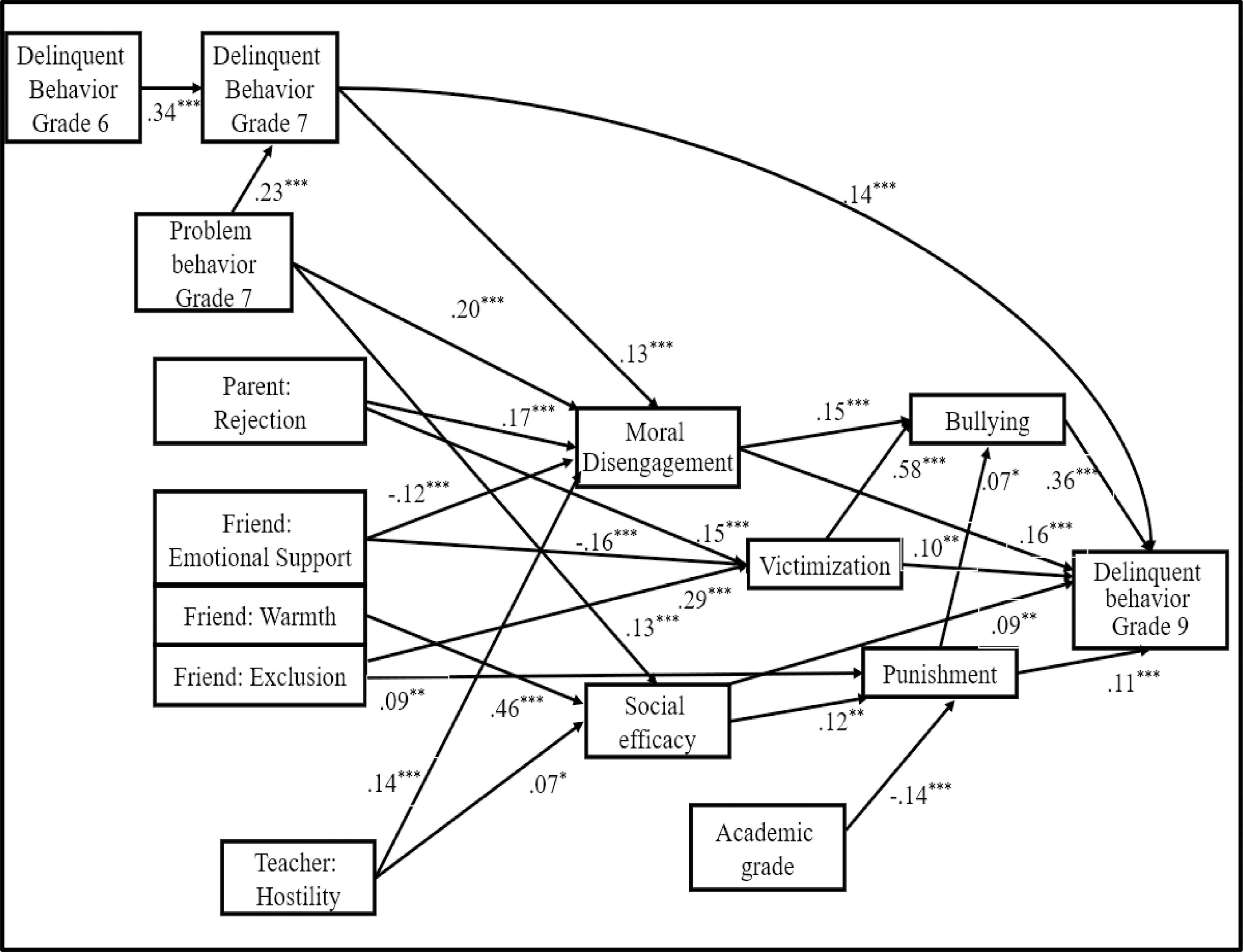
A path analysis was conducted to examine the factors that influence the delinquent behavior of adolescents longitudinally. (See Figure 8). The results indicate that delinquent behavior when they were in 6th grade has a direct positive influence on their delinquent behavior when they were in 7th and 9th grade. Figure 8 shows that moral disengagement and social efficacy play key mediating roles in delinquent behavior. Reading the figure from right to left, those who are punished are more likely to engage in bullying and delinquent behavior. They are also more likely to experience social exclusion from friends, have higher social efficacy, and have lower grades. Those who are victimized are more likely to engage in bullying and delinquent behavior and experience rejection from parents, social exclusion from friends, and receive less social support from friends.
Source: Adapted from Park and Kim (2013).
Figure 8 Path analysis of factors influencing adolescent delinquent behavior.
Those who have higher scores on moral disengagement are more likely to engage in bullying and delinquent behavior. They are more likely to have engaged in delinquent and problem behavior when they were in 7th grade, and experience parental rejection, teacher hostility, and receive less social support from friends. Those who have higher social efficacy are more likely to receive punishment and engage in delinquent behavior. They are more likely to have engaged in problem behavior when they were in 7th grade, and experience hostility from teachers. However, they are more likely to have warm relationships with their friends.
Figure 7 through Figure 8 provides a complementary pattern of results showing two diverging patterns for understanding the factors that promote academic achievement and delinquent behavior. Those students who receive social support from their parents, friends, and teachers have high self-efficacy, which predicts academic achievement and life-satisfaction. For students who engage in delinquent behavior, they are more likely to have negative relationships with their parents, friends, and teachers and are more likely to experience punishment, stress, and to be socially excluded and victimized. Their previous experience in problem and delinquent behavior and negative relationships with their parents, friends, and teachers are likely to influence their moral disengagement which can justify their subsequent bullying and delinquent behavior.
One surprising finding is the role of social efficacy in promoting delinquent behavior and being punished. These adolescents are more likely to turn to their friends who engage in similar behavior and feel warmth from their like-minded friends. This may be because if they experience hostility from teachers and have been engaging in problem behavior since they were in 7th grade, they may turn to like-minded peers for support. These results indicate the dark side of the school system for Korean adolescents who do not fit into the rigid institutional system. They have negative relationships with their parents and teachers and turn to their like-minded friends for their self-identity and to feel good about themselves through moral disengagement.
5 Discussion
The basic misunderstanding and misrepresentation are pervasive among psychologists and academics in the US attempting to explain intelligence, personality, child development, academic achievement, happiness, health, and long life by claiming that their findings are universal even though the results have low reliability, predictive validity, and sampled only around 2% of the people in the world, mainly US university students. The 85-year longitudinal Harvard Study of Adult Development is a clear example of how erroneous assumptions have driven psychological theories, concepts, methods, and data collection in the US. Based on the traditional psychological and psychiatric theories, the US researchers believed that genetics, intelligence, personality, income, education, and personal achievement would be the most important predictors of success, happiness, health, and longevity. However, Valliant (2015) and Waldinger and Schulz (2023) report surprising findings that maintaining close relationships is the best predictor of success, happiness, health, and long life. It is a shocking discovery for Americans and the rest of the world, and it took researchers 85 years to realize that their basic assumptions about human psychology are erroneous (Kim; Kim, 2023).
Throughout human history, human agency has allowed people to understand themselves and work together to solve our subsistence needs through co-creativity, learning, and education. With consciousness, forethought and self-reflectiveness, human beings flourished by overcoming and regulating our basic instincts and learning to be creative and innovative in solving the basic biological needs and communicating with and teaching the next generation. With the development and refinement of tools, control of fire, communication tools, and capability to store information outside the body, human beings could survive harsh environments and populate all parts of the world (Kim; Kim, 2023).
Through human consciousness and agency, the software of the mind developed, and through technology and education, the mind is actively engaged and connected to develop a dynamic neurobiological and social network (Kim, 2024). As we migrated to different parts of the world encountering diverse ecology, new life forms, and people with different knowledge and ways of life, humans’ co-creativity, collective efficacy, and cultural variations accelerated the social and cultural transformations (Bandura, 2023; Kim, 2024).
We have come full circle to the question of the age-old debates in philosophy, religion, and science in defining the nature of the human mind, self, and culture. Bandura (2016, 2023) is critical of theories in psychology, social sciences, economics, business, and management that eliminated the most essential aspect of human beings: Human consciousness, agency, and moral responsibility. Darwinian Theory focuses on ecological press, variations in morphology, natural selection, and survival of the fittest to explain biological evolution. He extended his theory to include human beings as being driven by instincts and the inheritable traits that determine their psychological make-up. These ideas have been adopted by Sigmund Freud, Behaviorists, and sociobiologists in social and applied sciences. The basic assumption of viewing human beings as animals, driven by natural instincts, and determined by inborn traits has been scientifically refuted (Bandura, 2023; Kim, 2024), but they are still taught around the world since they are a multi-billion-dollar industry (Cervone, 2023). Similarly, the concept of race that is believed to influence people’s personality, IQ, and morality persist even though they have been discredited and refuted (Kim, 2024).
People are conscious agents who can selectively attend to information to manage their life and goals; this process is not always based on rationality, but a belief in their cognitive and emotional capabilities (Bandura, 2016; Kahneman; Deaton, 2010). People selectively choose information that fits their preconceptions and associate with others who support their belief system, including Albert Einstein who chose to believe that “God does not play dice with the world” and this assumption has been refuted with the advances in Quantum physics (Kim, 2024).
Cross-sectional and longitudinal studies clearly show that self, relational, social, and collective efficacy have a direct and positive impact on academic achievement, happiness, life-satisfaction, and health and reduce stress, depression, and delinquency around the world (Bandura, 1997; 2023; Caprara et al., 2008; Kim, 2024; Park; Kim, 2013). They have shown that the self, relational, social, and collective efficacy can be raised by providing social support and feedback both in the laboratory and real-life settings to promote healthy human development, achievements in school, sports and organizations, and social transformations (Bandura, 1997, 2023). The central difference outlined in the Social Cognitive Theory by Bandura (2023) is that there is no one generic “silver bullet” that has the same impact across situations, time, and culture. Concepts, survey instruments, and scales need to be developed to be domain specific and relevant to the target group, level of analysis, and culture.
Bandura (1997, 2016, 2023) has shown the scientific mechanism through which human agency operates to promote academic achievement, happiness, and health. Human beings are agents of their actions and are responsible for their behavior, but as agents they can disengage to avoid responsibility and commit atrocities while feeling good about themselves. Moral disengagement represents denying the personal, proxy, and collective agency and avoiding responsibility for violence, exploitation, and unethical behavior in business, organizations, and politics.
Mechanistic and biological theories that deny human agency, consciousness, meaning, intention, and social responsibility provide the basis for moral disengagement. To deny human beings the agency is to deny the very essence of what it means to be human. We differentiate human rights from animal rights based on these qualities (i.e., intention and responsibility), to develop rule of law, and universal human rights. The mechanistic and biological theories are clear examples of dehumanization, as traditional psychological, educational, psychiatric, economics theories (e.g., the Invisible Hand of Adam Smith) have been used to justify slavery, racism, sexism, discrimination, violence, aggression, war, incarceration, and brutal treatment (e.g., frontal lobotomy, straight-jacket, and electric shock therapy; Chorover, 1980; Kim, 2024).
Beyond the moral and ethical dimensions, is it scientifically valid to treat human beings without meaning, consciousness, intention, and agency? Can we use objectivity and treat human beings as an object of experiments and surveys to obtain “pure knowledge” and deny them their subjectivity and humanity? Can a researcher eliminate one’s subjectivity, bias, and culture to conduct scientific research as a value-free enterprise? The answer is clearly self-evident. Scientific understanding of human psychology without human agency, consciousness, meaning, and culture are invalid and meaningless since the basic assumptions on which the current mechanistic and biological theories are based have been refuted through recent advances in genetics, neurobiology, and paleoanthropology (Bandura, 2023; Kim, 2024).

