

Introduction
In recent years, educators have increasingly turned their attention to differentiated instruction and project-based learning due to their pivotal role in cultivating active and engaging learning environments (Al-Shehri, 2020; Bell, 2010; Demir, 2021; Hasanah et al., 2024; Julita & Zulyusri, 2023; Mahasneh & Alwan, 2018; Mills et al., 2014; Wu & Wu, 2020). This study intends to explore art teachers' perspectives on the benefits of implementing a structured project-based learning approach in art classrooms. The overarching aim is to foster an interactive learning setting that promotes skill acquisition while simultaneously incorporating social, cultural, and academic development. Furthermore, the research investigates how Project-Based Learning (PjBL) can effectively support the application of differentiated instruction, encouraging student-centered learning and aiding teachers in facilitating students’ growth in various competencies.
This inquiry is particularly significant in the context of Indonesia’s educational landscape, where the country is striving to meet ambitious national development targets and participate in global educational initiatives aligned with the principles of 21st-century learning. As an independent nation, Indonesia has emphasized the importance of nurturing well-informed and capable citizens who can respond to contemporary challenges and contribute meaningfully to the global society (Dewi & Arifin, 2024; Fajrina et al., 2020; Saad & Zainudin, 2022; Sumarni & Kadarwati, 2020; Zubaidah & Arsih, 2021). Within this system, teachers continue to hold a central role in the classroom, which has led to the widespread dominance of teacher-centered practices in many schools across the country. As a response to this, numerous Indonesian scholars have advocated for a shift toward learning models that emphasize student interaction, collaboration, and critical thinking-key pillars for elevating educational standards nationwide (Azmi & Festiyed, 2023).
Considering the issues outlined and Indonesia’s broader national agenda, it becomes increasingly clear that the country is in urgent need of progressive instructional methods to enhance overall learning outcomes. There is a growing necessity to implement modern approaches that promote dynamic, learner-centered classroom environments. The integration of Project-Based Learning and differentiated instruction is seen as a vital response to students’ diverse educational needs, helping them achieve academic success more effectively. Consequently, a shift away from conventional teaching techniques is required to embrace more innovative and adaptive methods. This need is also echoed in second and foreign language teaching contexts, where several factors - such as student disinterest, lack of participation, anxiety, and resistance to collaboration - often obstruct effective English language acquisition. High levels of affective filters, such as anxiety, can block students from processing meaningful input, which is crucial for learning. Therefore, designing a well-structured and stimulating project-based learning environment is essential to reduce anxiety and enhance learning outcomes. In line with this, the current research aims to explore educators’ perspectives on the integration of differentiated instruction and project-based learning within Indonesian school settings.
Within Indonesia, there is a shared understanding regarding the importance of improving the education system by emphasizing collaborative and experiential learning as core elements in knowledge acquisition (Kreher et al., 2021). As a result, both educators and academic researchers have proposed various recommendations highlighting the urgent need to transform instructional practices, particularly through the use of PjBL. The nation aspires to cultivate an education system that aligns with the demands of a dynamic, knowledge-driven global economy. Achieving this goal necessitates the incorporation of critical thinking, analytical reasoning, problem-solving abilities, and project-based learning methodologies. This study seeks to contribute to the growing body of knowledge supporting such strategies, reinforcing Indonesia’s commitment to advancing both national and international educational initiatives.
The primary objective of this study is to evaluate the perspectives of art teachers regarding the effectiveness of Project-Based Learning (PjBL) in fostering a productive learning environment that enhances student engagement and encourages socio-cultural awareness in art education across Indonesia. Additionally, the study aims to explore how teachers integrate differentiation strategies in art instruction within the Indonesian educational context.
Method
Research method and setting
The research methodology employed in this study was guided by the underlying theoretical framework and the nature of the research questions. To address these questions comprehensively, a sequential mixed-method design was selected, facilitating the collection of both broad and in-depth data. The initial stage involved administering a questionnaire to 190 art teachers, followed by a focus group discussion with eight volunteer educators. The integration of quantitative and qualitative methods provides a more comprehensive understanding of the research problem than relying solely on a single approach. Therefore, incorporating both data collection techniques was deemed necessary to gain a holistic view of the research topic.
The choice of a mixed-method strategy was also influenced by the complexity of the research questions, which necessitated diverse data sources for a thorough analysis. In alignment with Rossiters’ perspective, aligning the methodology with the research questions is crucial, as it reflects a deep comprehension of the study’s objectives and the most effective means of exploration (Castrignanò et al., 2024).
Following Creswell’s recommendation, the study adopted a three-stage sequential framework, where data collection occurred in multiple phases. The first stage prioritized the collection of quantitative data through questionnaires. However, this phase revealed that certain themes, particularly the impact of project-based learning (PjBL) on cultural sensitivity and social interaction, were insufficiently explored. Given that cultural dynamics often involve complex interpretations that structured surveys may fail to fully capture, the research team - drawing upon their understanding of the Indonesian educational context - determined the need for deeper investigation.
Moreover, the concept of differentiated instruction encompasses a range of dimensions and contextual applications that require a nuanced understanding of educators’ experiences and perspectives. As a result, the second phase of the research involved conducting focus group discussions with experienced art teachers who had substantial practical knowledge in implementing and managing PjBL in their classrooms. These discussions aimed to uncover more detailed insights into areas that emerged during the initial survey phase.
In the third phase, both qualitative and quantitative data were integrated and analyzed collectively to develop well-informed and comprehensive conclusions. Within this methodological framework, the combination of qualitative and quantitative approaches offers a rich and complementary dataset, regardless of whether they are applied concurrently or sequentially (Moreira dos Santos et al., 2024).
For this study, participants included 190 teachers from various schools in Padang, Indonesia, where project-based learning practices are actively employed. The primary tools for data collection consisted of structured surveys and focus group interviews. The questionnaire was distributed across several conveniently accessible schools. Meanwhile, for the qualitative aspect, emphasis was placed on gathering direct, real-world insights into PjBL implementation. Therefore, eight art teachers from one of the participating schools were selected for in-depth interviews to share their practical experiences and instructional practices.
Participants
This study involved the participation of 190 art teachers drawn from a range of schools across West Sumatra, Indonesia, where Project-Based Learning (PjBL) is actively implemented. Reflecting the region’s multicultural landscape (as shown in Table 1), the participants came from varied linguistic and cultural backgrounds. Despite this diversity, all respondents were experienced and competent educators in the field of art, and they were able to interpret and respond to the questionnaire with ease.
Table 1 Respondents’ personal data.
| Years of experience | Gender | ||
| 6-10 years | More than 10 | Male | Female |
| 87 | 112 | 92 | 105 |
Source: Own elaboration.
A detailed demographic overview of the participants shows that the sample included both male and female teachers, with women comprising a slightly larger proportion - totalling 105 participants. These educators were based in multiple cities, including Padang, Bukittinggi, Solok, Payakumbuh, Pasaman, Pariaman, Dharmasraya, and Padang Panjang. Their professional backgrounds revealed a wide range of teaching experiences: 87 teachers had between six to ten years of experience, while the remainder had been teaching for more than a decade.
Moreover, these teachers had professional exposure to a variety of school environments, both within Indonesia and abroad, contributing to the richness of perspectives in the study. It is also worth noting that only eight teachers were selected to participate in the qualitative phase of the research, which involved in-depth interviews.
Sampling
To explore teachers’ perceptions regarding the implementation of Project-Based Learning (PjBL)-a teaching approach that is still relatively uncommon in many schools across West Sumatra - the researchers strategically selected schools where educators had practical experience and actively applied PjBL in their teaching. Institutions that adhered strictly to the standard curriculum outlined by the Ministry of Education, without incorporating PjBL elements, were excluded from the sample. The research team conducted site visits to evaluate the teachers’ level of familiarity, depth of knowledge, and hands-on experience with PjBL. Based on the outcomes of these visits and discussions with school administrators, schools that consistently integrated PjBL into their instructional practices were identified for questionnaire distribution.
Following the survey phase, a focus group interview was organized with 19 volunteer teachers, from which eight participants were intentionally selected. These individuals were chosen due to their advanced expertise, active involvement in mentoring PjBL practices, and contributions to curriculum development. The selection process also considered the degree to which each school was engaged in implementing, assessing, and periodically revising their curricular frameworks.
The study employed a purposive sampling strategy, with a particular emphasis on identifying individuals with direct experience in PjBL. In line with previous discussions on purposive sampling, this approach was deemed most suitable for the research objectives. To obtain accurate and authentic insights from educators, it was essential to ensure that participants had substantial firsthand experience to share. As emphasized by Tongco (2007), purposive sampling is a non-random selection method whereby researchers intentionally target individuals who possess relevant knowledge or expertise. Furthermore, Tongco highlights that, in certain contexts, purposive sampling can yield more meaningful data than random sampling, particularly when randomly chosen participants may lack the background necessary to provide valuable contributions to the study.
Research instrument
The primary instrument employed in this research was a questionnaire designed using a 4-point Likert scale. Due to the study’s focus on specific dimensions such as differentiation, cultural responsiveness, and student engagement, the researchers encountered challenges in identifying a pre-existing, extensively validated, and publicly accessible survey instrument that aligned precisely with the study’s objectives and theoretical foundation. Consequently, the researchers opted to design a customized questionnaire to capture teachers' perspectives on various structured cooperative learning approaches and their perceived effectiveness in promoting students’ academic, emotional, and social development.
The formulation of the questionnaire was firmly rooted in the study's objectives, thematic framework, and research questions. Its development unfolded through several stages, beginning with the drafting of initial statements, followed by consultations with PjBL facilitators to refine item relevance, and subsequent review meetings with experienced academic professionals from higher education institutions. These steps were undertaken to ensure the content validity and contextual alignment of the instrument. The preliminary drafting process was guided by the research themes, ensuring a strong linkage between the items and the study's overarching aims. The team engaged in multiple discussions and revisions to enhance the accuracy and clarity of the statements. After several iterations, the finalized version of the questionnaire was structured to reflect the core focus areas of the research.
To establish the questionnaire’s validity, input was sought from six university-level educators who were requested to evaluate the instrument in terms of its alignment with the study’s aims, clarity of wording, phrasing, grammatical structure, layout, and the overall coherence of the items with the formulated research questions. All feedback provided during this expert review was incorporated into the final revision process. The finalized questionnaire consisted of two distinct sections: the first section was designed to collect demographic information, while the second comprised twenty items directly related to the research focus. The instrument’s reliability was confirmed through the calculation of Cronbach’s alpha, which yielded a value of 0.92 - indicating a high level of internal consistency.
In addition to the questionnaire, the study employed focus group interviews as a complementary data collection method. The information derived from the survey provided a foundation for the formulation of insightful and well-targeted questions for the group discussions. The formulation of these interview questions took place during and after the quantitative data collection phase. Analysis of the survey responses highlighted several key areas that warranted deeper exploration, including individualized instruction, learner involvement, autonomy, diverse differentiation strategies, and, most notably, cultural relevance in teaching practices. Based on these findings, the researchers revisited the survey responses to refine and generate focused interview questions.
Each interview question was deliberately crafted to correspond with the study variables and to generate responses that could be easily categorized and thematically coded. The questions were constructed using clear, concise language to ensure ease of understanding and elicit thoughtful responses from participants. The initial interview items were further reviewed and refined with assistance from teachers who had contributed to the questionnaire development process. Similar to the questionnaire, the interview questions were revised based on expert suggestions and feedback. The final set of interview questions addressed three primary areas aligned with the research inquiries. The first area explored educators’ views on how Project-Based Learning supports interactive classroom environments that encourage academic development and socio-cultural awareness within art education. The second area focused on teachers’ reflections regarding their implementation of differentiated instruction in art teaching.
Data collection
A total of 190 printed questionnaires were disseminated and retrieved by the research team from art teachers across various schools in West Sumatra, Indonesia. To ensure effective distribution, particularly to remote or hard-to-reach schools, the researchers collaborated with three appointed research assistants who were tasked with delivering and collecting the completed survey forms. Once all the responses were gathered, the next stage of the study involved conducting focus group interviews, which were held at a prominent educational institution where the primary researcher was affiliated during the study period.
A total of eight art educators participated in these discussions, divided into two smaller groups. Each group was interviewed separately by the research team, with each session lasting approximately 35 minutes or longer. The focus group interviews were conducted in Bahasa Indonesia to ensure participants’ comfort and clarity in expressing their ideas.
For the qualitative analysis, the interview data were transcribed, annotated, and systematically coded. After the transcription process, the researchers identified emerging themes and patterns across the data, which were then compared and cross-analyzed with the survey results to identify points of convergence and divergence. The final stage of analysis involved synthesizing the findings in alignment with the research problems, questions, and study objectives to draw comprehensive and meaningful conclusions.
Data analysis
The quantitative data collected in this study were processed and analyzed using SPSS software, version 21, to generate statistical summaries, with a particular emphasis on calculating the central tendency for each item. The selection of median as a measure of central tendency was guided by the rationale presented by Yu and An, who noted that “[…] the median is more robust in the presence of outliers or extreme values” (Almeida et al., 2016, p. 1690). Additionally, the use of medians assists researchers in differentiating between random variations and systematic trends within the data set. In support of this approach, Robson and Reed highlighted the practicality of the median, emphasizing its ease of computation, quick derivation, and lower susceptibility to data variability compared to the mean. The analyzed results were then organized into tabular formats to facilitate clearer interpretation and discussion of key findings derived from the study as presented in Table 2.
Table 2 Implementing Implementing project-based learning to promote learning.
| Description | No | Maximum | Minimum | Median |
| - Regardless of my students' academic ability, aids in their journey | 144 | 4 | 2 | 4.45 |
| - Gives my children the opportunity to learn in a stress-free environment | 144 | 4 | 2 | 4.32 |
| - Improve my disciples’ the capacity to participate in various conversations | 144 | 4 | 1 | 4.40 |
| - Gives my disciples’ the chance to engage in fruitful learning | 144 | 4 | 2 | 4.33 |
| - Develops an interactive and captivating learning environment | 144 | 4 | 2 | 4.39 |
| - Creates s a comfortable atmosphere for my kids to learn in | 144 | 4 | 1 | 4.12 |
Source: Own elaboration.
The qualitative data obtained from the focus group sessions were initially organized into tables to enable a holistic analysis of the overall dataset. Subsequently, a structured framework was developed to systematically categorize and group the information into emerging patterns and themes aligned with the research objectives and guiding questions. The researchers adhered to the approach recommended by Brinkmann and Kvale to facilitate and direct the flow of discussions, which in turn enabled the identification of additional recurring concepts and thematic elements. For data classification and annotation purposes, Microsoft Word was employed, allowing the researchers to highlight various categories and concepts accordingly. The use of digital tools supported the analysis process by streamlining the identification of overlapping content and simplifying the process of merging similar ideas. In line with Merriam’s perspective, the integration of technological tools significantly enhanced the efficiency of data processing, especially in both individual and collaborative research contexts. The analytical approach applied in this study followed Patton’s model of qualitative content analysis, which emphasizes interpreting data through connecting newly identified patterns with the core research questions. This method underscores the importance of balancing interpretation and descriptive analysis, viewing both as essential for conveying deeper understanding, contextual relevance, and comprehensive meaning (Brinkmann et al., 2017).
Result and discussion
Ethical considerations
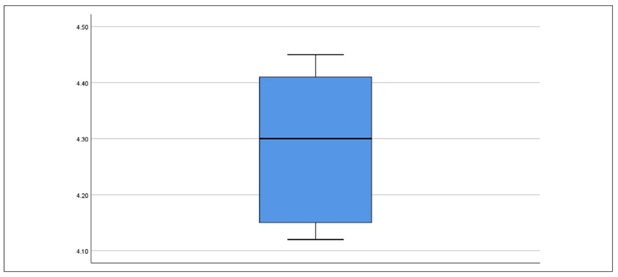
The first research question emphasizes the role of Project-Based Learning (PjBL) in encouraging active student engagement and improving their communication skills. Based on the initial results of the analyzed data, as shown in Figure 1 and Table 3, it appears that educators appreciate the importance of increasing student participation. This finding strengthens the evidence that PjBL is able to create an interactive learning atmosphere (Beier et al., 2019; Bell, 2016; Hernáiz-Pérez et al., 2021; Wan Husin et al., 2016; Warin et al., 2016). It also shows that the PjBL-based learning environment is dynamic, encouraging the exchange of ideas, reflective discussions, collaborative goal setting, and cooperation to achieve optimal learning outcomes. The median value obtained reflects that this approach supports a learning process that is adaptive to differences in student ability levels, while paying attention to aspects of their emotional safety and well-being. Interestingly, student engagement appears to be a more prominent direct benefit of PjBL compared to academic achievement or formal learning outcomes.
Overall, the interview results support the quantitative data from the questionnaire, especially in the context of student engagement. Teachers provided insightful insights into how the learning process becomes more engaging and meaningful when PjBL is implemented appropriately. One teacher shared that ‘in a PjBL environment, students become more motivated and actively interact with their peers’. Several other educators also emphasized that the interactive nature of this approach fosters active participation and a sense of responsibility in students. In line with previous literature, PjBL is known as an approach that supports collaboration, interdependence, effective communication, and social interaction (R. M. Capraro & Slough, 2013; Edmunds et al., 2017; Kingston, 2018; Mahasneh & Alwan, 2018; Siswono et al., 2018; Tsybulsky & Muchnik-Rozanov, 2023). In addition, this approach also has a positive impact on learning motivation, interpersonal relationships, and psychological well-being of students (Ariwibowo et al., 2018; Fabros et al., 2023; Jacques, 2017; Saad & Zainudin, 2022; Zulyusri et al., 2023).
Source: Own elaboration
Figure 1 Spreading about data of ‘project-based learning as a means for learning engagement’. Notes. 4.28 is the median. About 24% of the values are below Quartile I, which is 4.13. Approximately 73% of the values are higher than 4.13, with quartile 3 = 4.40. The lowest = 4.12. The highest = 4.54.
Table 3 Project-based learning as a means of augmenting cultural and social awareness.
| Description | No | Maximum | Minimum | Median |
| - Develops my kids' capacity for teamwork | 144 | 4 | 3 | 4.20 |
| - Develops my students’ social responsibility | 144 | 4 | 2 | 4.08 |
| - Maximizes my students' capacity to learn in a culturally sensitive manner | 144 | 4 | 2 | 4.08 |
| - Helps my students to exhibit collaboration and kindness | 144 | 4 | 3 | 4.31 |
| - Helps my students to exhibit collaboration and kindness | 144 | 4 | 3 | 4.29 |
| - Is a crucial ability for the academic and social success of my students. | 144 | 4 | 3 | 4.34 |
| - assists my kids in becoming into more gregarious people | 144 | 4 | 2 | 4.09 |
Source: Own elaboration.
Several educators also highlighted the heightened sense of involvement that students experience when engaging in group-based activities. One teacher observed that the classroom atmosphere becomes noticeably more energetic, noting that learners actively participate through cooperative learning approaches within a setting characterized by positive dialogue, idea-sharing, and meaningful engagement. This element is considered essential to the effective application of Project-Based Learning (PjBL). From this perspective, students’ active involvement and enthusiasm are seen as direct results of well-organized PjBL implementation, where learners are guided and supported in applying these strategies in a structured manner. As a result, this learning environment encourages natural language acquisition, as communication is seamlessly integrated into classroom activities, promoting a low-stress and engaging experience due to the reduced affective barriers within PjBL contexts. Numerous scholars have recognized the value of PjBL in enhancing academic achievement while simultaneously fostering a psychologically safe space for learners (Beier et al., 2019; Hernáiz-Pérez et al., 2021; Kingston, 2018; Niemiller et al., 2021).
Moreover, a substantial body of research has emphasized the positive influence of PjBL on students’ motivation and active engagement in the learning process (Jääskä et al., 2022; Lam et al., 2010; Pan et al., 2023; Wu & Wu, 2020; Zouganeli et al., 2014). These studies affirm that PjBL plays a critical role in enhancing learners' drive and involvement (Held & Mejeh, 2024; Nordahl-Pedersen & Heggholmen, 2022; Park & Hiver, 2017; Xu, 2024; Zhang & Dai, 2024). Taken together, these findings suggest that incorporating PjBL into classrooms can cultivate a deeper sense of learner ownership, encouraging students to invest more effort into their respective projects and activities. Based on the data and reflections drawn from Research Question 1, it is clear that educators recognize PjBL as a method that effectively nurtures an inclusive and supportive learning environment for all students.
Additional studies further reinforce the role of Project-Based Learning (PjBL) in enhancing student engagement. Research has consistently demonstrated that PjBL effectively stimulates learner motivation and promotes active participation in classroom activities (Ripollés & Blesa, 2024; Wu, 2024; Yu et al., 2024). The participatory and collaborative atmosphere created through PjBL not only boosts engagement but also plays a significant role in developing students’ interpersonal and social competencies (Fajrina et al., 2020, 2023). As a result, PjBL has been increasingly linked to key elements that support academic achievement and student development (Platje et al., 1994).
An important contributing factor to this engagement is the presence of intrinsic motivation, which often emerges from the students' sense of active involvement and teamwork within the learning environment. Moreover, the shared responsibility encouraged by PjBL - combined with the sense of personal ownership over one’s learning-serves as a foundation for fostering deeper engagement (M. M. Capraro & Jones, 2013; Descovich et al., 2013).
Project-based learning as a means of augmenting cultural and social awareness
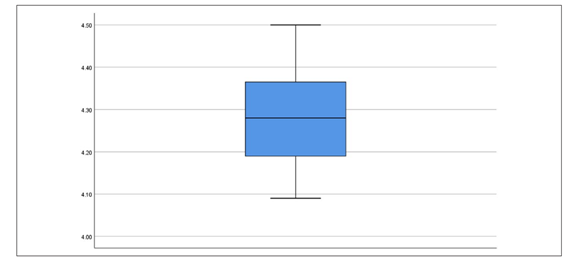
The questionnaire outcomes indicate that educators perceive Project-Based Learning (PjBL) as an instructional approach that not only strengthens students’ interpersonal abilities but also nurtures their social and cultural awareness. This is achieved through collaborative engagement with peers from diverse cultural backgrounds, participation in varied learning contexts, and the cultivation of skills related to knowledge exchange, idea-sharing, and peer mentoring. As depicted in Figure 2 and Table 4, the highest median score was observed for the statement ‘helps my students become more sociable individuals’, reinforcing the relevance of the second research question concerning social and cultural understanding.
Source: Own elaboration.
Figure 2 Spreading about data of ‘project-based learning as an enhancing factor for social and cultural undertanding’. Notes. 4.27 is the median. About 24% of the values are below Quartile I, which is 4.18. Approximately 74% of the values are higher than 4.18, with quartile 3 = 4.34. 4.34 is the highest. 4.08 is the lowest.
Table 4 Project-based learning's function in supporting differentiated education.
| Description | No | Maximum | Minimum | Median |
| - Push the classmates effectively who are above me | 144 | 4 | 3 | 4.32 |
| - Provides opportunities for differentiated activities | 144 | 4 | 3 | 4.31 |
| - Enables my children to react to tasks using their different intelligences | 144 | 4 | 3 | 4.22 |
| - Helps people learn regardless of their aptitudes and preferred methods of learning | 144 | 4 | 2 | 4.02 |
| - Allows me to give my pupils who are performing below level appropriate scaffolding. | 144 | 4 | 3 | 4.23 |
| - Enables my pupils to generate innovative group projects | 144 | 4 | 3 | 4.31 |
| - Allows me to switch from being an information provider to a learning facilitator | 144 | 4 | 3 | 4.33 |
Source: Own elaboration.
Insights from interview sessions further validate educators’ perspectives on PjBL’s role in enhancing students' social competencies, though several participants noted that its influence on cultural awareness appears to be somewhat less pronounced compared to its impact on social interaction. The interview responses mirrored the quantitative findings, with all participants acknowledging PjBL’s positive contribution to students’ development in both social and cultural dimensions. One teacher observed that ‘when students with diverse capabilities and cultural backgrounds collaborate toward shared objectives, they form meaningful social connections’. The same educator emphasized that exposure to such varied group dynamics encourages learners to develop openness and tolerance. Through teamwork in projects and assignments, learners significantly improve their social skills and gain deeper insights into cultural diversity.
Previous studies on Project-Based Learning (PjBL) have highlighted its positive impact on students’ social development and communication abilities (Breslow, 2015). Emphasizing the role of PjBL in enhancing cultural sensitivity, Fajrina conducted research in an Indonesian art classroom, focusing specifically on the integration of cultural elements within the learning environment (Fajrina et al., 2023).
Within the PjBL framework, a socially dynamic atmosphere is cultivated, allowing for the appreciation of diverse viewpoints. Through collaboration, discussion, and collective problem-solving, learners build interpersonal connections and friendships. These interactions often involve individuals from a range of backgrounds - spanning gender, ethnicity, learning styles, and abilities-which fosters a greater sense of empathy among students (Ariwibowo et al., 2018). This notion is supported by the results reflected in Item 4 of Table 4, which centers on compassion, resonating with the studies of Park and Kenny that illustrate how empathetic engagement strengthens communication, supports learning, and enhances personal development (Kenny, 2016; Park et al., 2018). Such environments encourage mutual understanding, cooperation, kindness, and inclusivity within PjBL-based learning spaces.
Overall, insights from both qualitative interviews and quantitative data-reinforced by previous academic findings - underscore the importance of fostering social engagement and cultural awareness through PjBL in art education. These outcomes are closely aligned with theoretical perspectives such as social constructionism, communicative competence theory, and sociocultural learning frameworks. Notably, PjBL creates a structured platform for students to engage meaningfully with societal issues and develop cultural sensitivity. Regardless of learners’ backgrounds, academic levels, personal differences, or individual interests, PjBL encourages active participation and collaborative learning, promoting greater sociability and awareness through authentic interaction in group tasks and projects.
Project-based learning's function in enabling personalized instruction
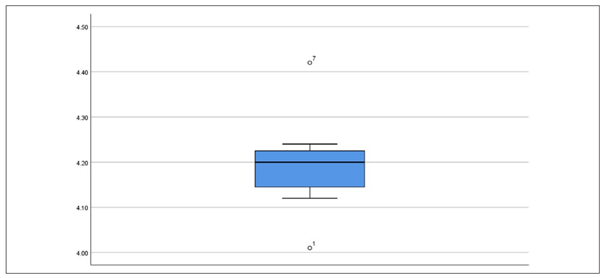
The second research question investigates how Project-Based Learning (PjBL) supports teachers in implementing differentiated or individualized instruction. Based on the data presented in Table 4 and Figure 3, it is evident that all median values recorded exceed the threshold of four. The statement with the highest median value was, ‘allows me to act as a facilitator of learning rather than merely transmitting knowledge’. Conversely, the item with the lowest median score was, ‘effectively challenges my students who perform at advanced levels’. Despite this variation, the overall responses indicate that PjBL contributes positively to efforts in delivering differentiated instruction.
Insights obtained from the interview sessions are consistent with the overall research findings. Educators recognized that Project-Based Learning (PjBL) offers inclusive opportunities for students with varying levels of ability to participate actively in classroom activities. One teacher pointed out that students with higher academic performance are able to support their peers' learning processes through collaborative PjBL tasks. Another noted that engaging less proficient students with tasks involving higher-order thinking gradually helps them develop the necessary competencies. Regarding differentiated instruction, a teacher emphasized that working on group assignments within PjBL settings contributes to building students’ confidence and enhancing academic outcomes. Many educators highlighted the significant role of PjBL in addressing diverse learning needs, while some also acknowledged its contribution to improving students’ self-esteem.
Within PjBL-based classrooms, learning activities are typically adapted to suit each student’s capability, creating a safe and encouraging space where learners feel comfortable sharing ideas and collaborating with one another. The formation of heterogeneous groups fosters peer-to-peer support and cooperative learning. One educator also noted that PjBL acts as an effective medium for peer mentoring, enabling both advanced and developing students to benefit - those performing well feel empowered and included, while others gain motivation and support to progress through peer collaboration.
This viewpoint is supported by Halimatusyadiyah’s study, which revealed that PjBL can help reduce students’ anxiety in art-related language learning contexts. Additionally, Hrelja emphasized that various PjBL models can accommodate learners’ unique needs and preferences (Hrelja & Rye, 2024). It is common for art students to struggle with self-confidence due to performance-related anxiety and fear of failure (Ito et al., 2024). However, PjBL’s adaptive and learner-centered structure can help diminish emotional obstacles and build self-assurance, thereby encouraging more active participation in assignments and learning activities (Fajrina et al., 2023). Similarly, research conducted by Hyojin observed that PjBL environments fostered greater enthusiasm, engagement, and positive learning attitudes among students (Park & Hiver, 2017). These findings suggest that the integration of PjBL with individualized teaching approaches can substantially enhance students’ internal motivation.
Participation in PjBL settings has also been linked to improved self-confidence and interpersonal development, while keeping learners focused on their academic objectives (Kingston, 2018). Students tend to view PjBL classrooms as safe, inclusive, and welcoming environments that reduce stress and anxiety (Zulyusri et al., 2023). Such supportive settings play a vital role in promoting students’ academic progress and inspiring them to reach higher levels of achievement through collaborative efforts.
Source: Own elaboration
Figure 3 Spreading about information from ‘the role of project-based learning in facilitating differentiated instruction’. Notes. 4.19 is the median. About 24% of the values are below Quartile I, which is 4.13. Around 76% of the values are higher than 4.13, with quartile 3 = 4.22. 4.33 is the highest. 4.02 is the lowest.
To summarize, the integrated insights drawn from surveys, interviews, previous studies, and literature reviews highlight art teachers’ views on Project-Based Learning (PjBL) as an effective strategy for applying differentiated instruction while simultaneously reducing learners' common anxiety levels. Moreover, PjBL encourages collaborative learning and mutual assistance among students, allowing progress regardless of their learning abilities, language skills, or individual learning preferences. These findings align closely with Indonesia’s national educational goals, cultural values, and strategic initiatives, which emphasize teamwork, critical reasoning, active communication, cultural awareness, and the preparation of students to become capable global citizens. As a result, Indonesia shows strong interest in adopting educational models that can effectively nurture and reflect these ideals in current and future generations of learners.
Conclusion
This study sought to explore art teachers’ perceptions of how Project-Based Learning (PjBL) contributes to creating an engaging and interactive learning environment, enhances students’ social and cultural awareness, and assists educators in delivering individualized instruction. Adopting a mixed-methods approach, the research combined both quantitative and qualitative data collection techniques. The participants involved were high school art teachers from the West Sumatra region of Indonesia. Data were obtained through the dissemination of questionnaires and the conduction of semi-structured interviews with participating teachers. The findings reveal that educators regard the structured implementation of PjBL as an effective pedagogical approach that promotes student engagement, deepens socio-cultural understanding, and accommodates diverse learner needs.
The outcomes of this study carry significant implications for various stakeholders in the educational field, including teachers, school leaders, curriculum planners, advisors, and policymakers. To further encourage the integration of PjBL and tailored instruction strategies, it is recommended that ongoing and systematic professional development programs be made available to educators. Equally important is the establishment of a learning environment that not only fosters active engagement but also ensures a safe and collaborative space for students. These results also serve as a valuable foundation for future research, suggesting avenues for further investigation into PjBL implementation and differentiation practices. Prospective studies may consider exploring elements such as student academic performance, curriculum effectiveness, learner attitudes, classroom dynamics under PjBL, and other closely related topics.
